Business
Wall Street Set for Rebound as Oil Prices Ease, Inflation Keeps Fed Rate Hike in Focus
NEW YORK — U.S. stocks were positioned to open higher Friday as a pullback in oil prices offered some relief to investors after a week of market pres...
By Wavers Multimedia
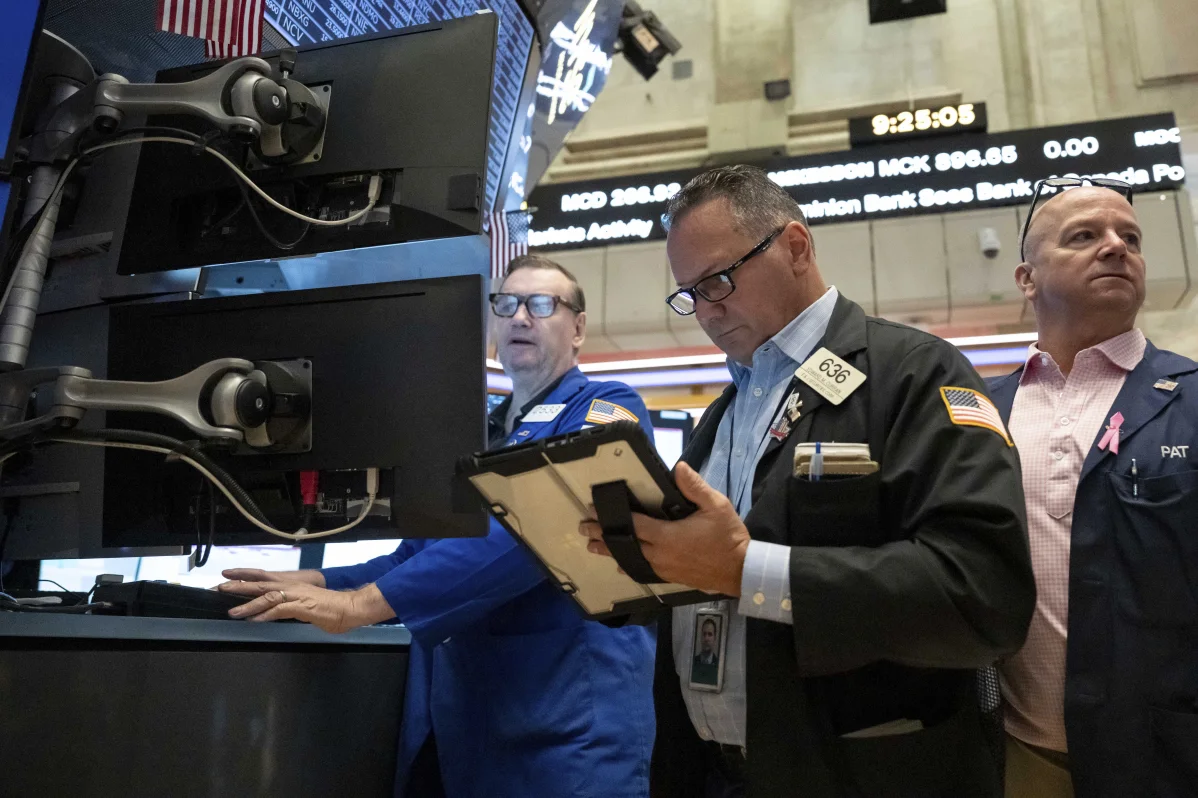
Futures for the S&P 500 and Dow Jones Industrial Average were both up 0.7%, while futures for the Nasdaq 100 gained 0.8% less than an hour before trading began.
The improvement came as oil prices retreated from the sharp increases seen earlier in the week, when concerns surrounding the ongoing war with Iran pushed crude to its highest level since May.
Brent crude, the international benchmark, fell 3% to $104.44 per barrel on Friday.
The decline in oil prices provided some relief for markets because higher energy costs have been adding to inflationary pressures across the U.S. economy.
U.S. inflation remains elevated
A new inflation report showed that U.S. consumer prices were 3.4% higher in August than they were a year earlier.
The increase was driven in part by higher prices for gasoline, food and other costs faced by consumers.
The latest figure has strengthened expectations that the Federal Reserve could raise its main interest rate at its meeting next week as policymakers attempt to prevent inflation from remaining elevated.
The Federal Reserve traditionally responds to persistent inflation by increasing interest rates. Higher rates can make borrowing more expensive for consumers and businesses, slowing economic activity and potentially reducing pressure on prices.
The prospect of another rate increase was reflected in the bond market.
The yield on the two-year U.S. Treasury note, which is particularly sensitive to expectations for Federal Reserve policy, rose to 4.58% from 4.56% late Thursday.
However, longer-term borrowing costs moved in the opposite direction.
The yield on the 10-year Treasury fell to 4.92% from 4.95% late Thursday.
Oil remains a major concern for markets
Oil prices have become one of the biggest sources of uncertainty for financial markets as the war with Iran continues to disrupt the global flow of crude.
Brent crude had climbed sharply earlier in the week, briefly pushing above $108 per barrel on Thursday before retreating.
The increase has raised concerns that more expensive energy could keep inflation elevated and make it harder for the Federal Reserve to ease monetary policy.
Thursday's trading session reflected those concerns, with all three major U.S. stock indexes closing lower.
The S&P 500 fell 0.6%, while the Dow Jones Industrial Average dropped 0.6% and the Nasdaq composite declined 0.7%.
Despite the pressure, the major U.S. indexes remain higher for the year.
Oracle shares jump after strong results
One of the biggest positive factors for Friday's market was Oracle.
The technology company's shares rose 7.1% in premarket trading after Oracle reported quarterly profit and revenue that were stronger than analysts had expected.
The gain gave the technology sector additional support ahead of the opening bell.
European markets move higher
Markets outside the United States also showed mixed but generally positive signals on Friday.
European stocks moved higher, with London's FTSE 100 rising 0.8%.
The increase came after official data showed that Britain's economy grew faster than economists had expected in July.
Asian markets fall
Asian markets moved in the opposite direction.
Japan's Nikkei 225 dropped 1.9%, while South Korea's Kospi fell 1.8%.
The declines came as investors continued to assess the effects of higher oil prices, inflation and expectations surrounding monetary policy.
For U.S. investors, Friday's combination of easing oil prices and fresh inflation data could determine whether Wall Street manages to regain momentum.
The central focus remains on the Federal Reserve, with markets closely watching whether continued inflationary pressure will lead policymakers to raise interest rates at their upcoming meeting.
For now, the retreat in oil prices has provided some breathing room for investors, but the continuing conflict and its impact on energy prices remain a major source of uncertainty for financial markets.