World News
APEC Summit Overshadowed by High-Stakes Meeting Between Trump, Xi and Putin
The 2026 Asia-Pacific Economic Cooperation (APEC) summit in Shenzhen, China, has become a major stage for international power politics, drawing attent...
By Wavers News
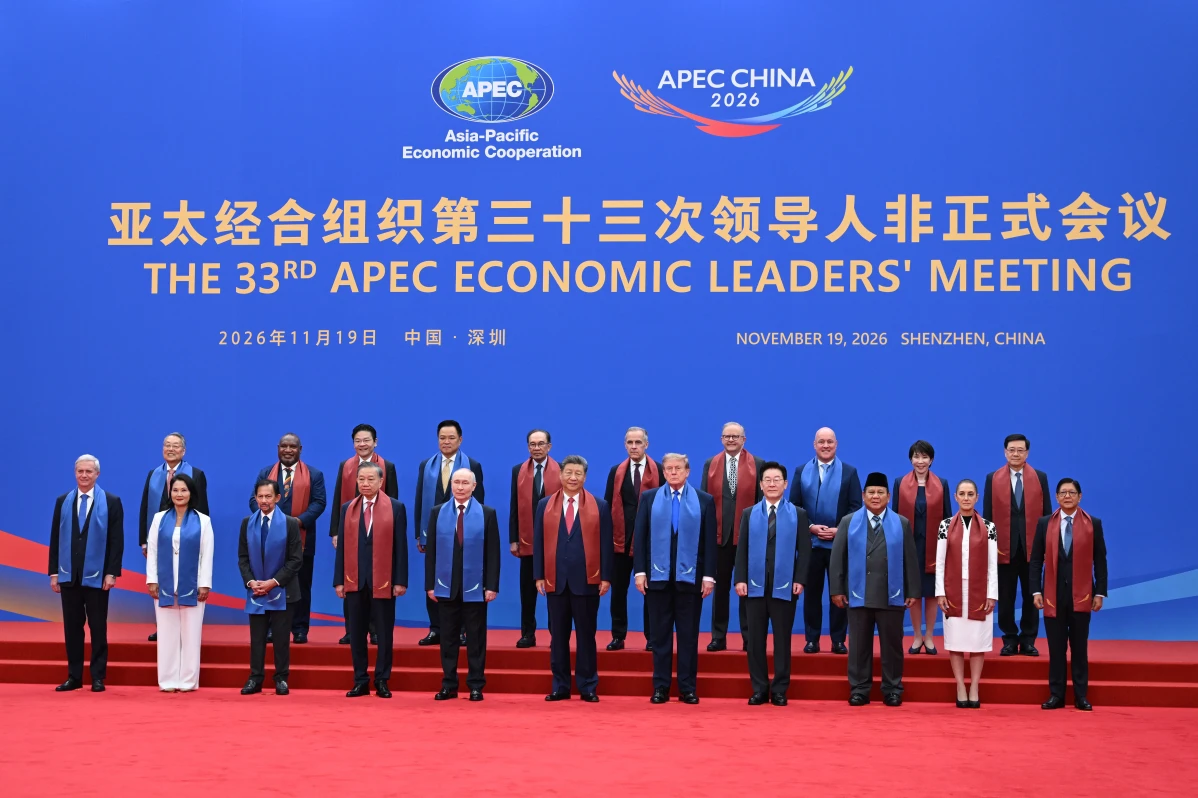
Chinese President Xi Jinping, United States President Donald Trump and Russian President Vladimir Putin took centre stage as they prepared for an unprecedented three-way meeting on Thursday, November 19, bringing together the leaders of three of the world's most powerful countries.
The gathering has raised the political significance of this year's summit, with discussions expected to extend beyond APEC's traditional economic agenda to major international security issues, including nuclear weapons and the conflicts in Ukraine and the Middle East.
XI CALLS FOR GREATER REGIONAL COOPERATION
Speaking at the closed-door leaders' session, Xi urged the 21 APEC member economies to protect open trade and advance technology development through stronger cooperation.
He compared the economies to passengers travelling in the same boat, saying they needed to work together and strengthen their shared interests to navigate challenges across the Pacific.
Xi's remarks reinforced China's effort to present itself as a supporter of international trade and multilateral cooperation at a time when global commerce is facing pressure from tariffs, export restrictions and geopolitical tensions.
Putin also called for unity among APEC members, saying the organisation should promote cooperation and develop a constructive agenda. His appearance marked his first attendance at an APEC leaders' summit in nine years.
Trump used his brief remarks to promote the performance of the United States economy, claiming his administration had attracted trillions of dollars in investment and generated substantial new wealth. He also said he expected to conclude additional trade agreements in the coming period.
The US president further criticised what he described as globalist efforts to regulate or restrict artificial intelligence, referring to the technology as “super intelligence.”
TECHNOLOGY DISPUTE ADDS TO US-CHINA TENSIONS
Artificial intelligence has emerged as another major issue shaping relations between Washington and Beijing.
China has called for AI technology to be shared more fairly and governed in ways that support financial stability, cybersecurity and balanced economic growth. The position reflects concerns that restrictions on access to advanced technology could widen the gap between countries and limit opportunities for developing economies.
The United States, meanwhile, has maintained restrictions on China's access to advanced computer chips and other components used in artificial intelligence systems. The controls remain a major source of disagreement between the two countries.
Washington tightened restrictions earlier in the week on remote access to advanced computing technology. Experts said the move closed a loophole that had enabled access to billions of dollars' worth of high-end Nvidia chips used in AI development.
The issue has also drawn attention following controversy surrounding Nvidia founder and former chief executive Jensen Huang's relationship with a Chinese technology executive.
The competing positions highlight the difficulty of balancing technological cooperation with national security and economic competition. While China is advocating wider access and shared development, the US continues to use export controls to limit China's access to some of its most advanced technologies.
AI INVESTMENT SUPPORTS GLOBAL ECONOMIC GROWTH
The economic discussions at the summit also highlighted the growing influence of artificial intelligence on international trade and economic performance.
International Monetary Fund Managing Director Kristalina Georgieva told APEC leaders that AI was having a significant impact on global growth, helping to offset some of the economic pressure caused by energy disruptions linked to the war in the Middle East.
She said economies in the APEC region were expanding at an annual rate of 3.4 per cent, compared with global growth of 3.1 per cent. Global trade was also growing by 4.6 per cent, with a substantial contribution from increased investment in artificial intelligence.
Georgieva described AI as a lasting force that would shape medium-term competitiveness, productivity and economic growth. She warned that countries and businesses that fail to keep pace with the technology risk falling behind as the global economy changes.
The figures underline the importance of technology investment to the region, which accounts for more than half of global business activity.
APEC'S ECONOMIC AGENDA FACES GEOPOLITICAL PRESSURE
The APEC summit traditionally provides a platform for economies around the Pacific Rim to discuss trade, investment and regional cooperation. Its long-term ambition includes advancing a free trade area across the region, while maintaining dialogue among members despite political disagreements, conflicts and economic challenges.
This year's gathering in Shenzhen has placed China's technological development and economic influence in the spotlight. The city, which has developed into a major centre for technology and manufacturing, has hosted the meetings, formal receptions and discussions involving leaders and business representatives.
The presence of Trump, Xi and Putin has shifted much of the international attention towards their planned discussions, particularly the possibility of addressing nuclear arms and the wars in Ukraine and the Middle East.
The three leaders' meeting is taking place against a background of disagreements over trade, technology restrictions, international security and the future of global cooperation.
While APEC provides an important forum for dialogue, it does not make binding decisions for its members. The summit's broader significance lies in its ability to bring major economies together at a time when international relations are increasingly shaped by competing political and economic interests.
The developments in Shenzhen have placed the relationship between economic cooperation and global power politics at the centre of this year's APEC gathering.