Culture
Philippines’ Carmelle Wins Inaugural Eurovision Asia Contest in Historic Victory
Filipino singer Carmelle Collado has won the first-ever Eurovision Song Contest Asia, making history for the Philippines after defeating representativ...
By Wavers News
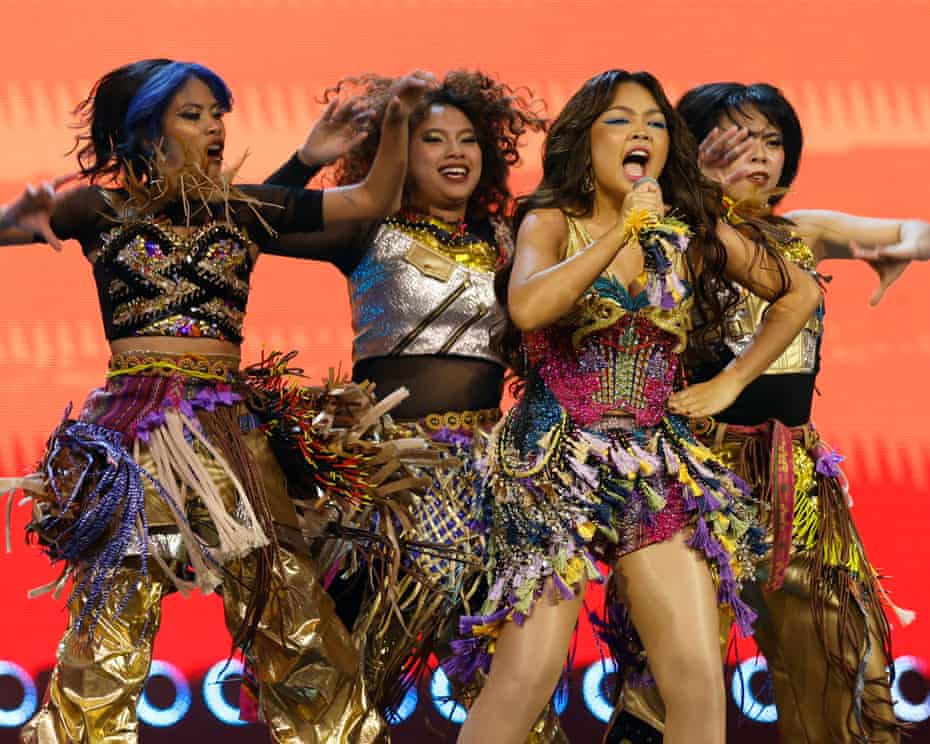
The 19-year-old singer, who performs under the name CARMELLE, secured 211 points with her song Sobra-Sobra during Saturday's grand final at the One Bangkok Forum on November 14.
Thailand's musical duo MANG x DAOU finished second with 169 points for their entry Aroma, while Vietnam's Tóc Tiên took third place with 165 points for EM TIÊN. Malaysia's Aina Abdul and Laos' Thinla completed the top five.
CARMELLE received 93 points from the national juries and 118 points from the public vote, making her the highest-scoring contestant in both voting categories.
The result gives the Philippines the distinction of becoming the first country to win the Asian edition of the international music competition, which was introduced as a new regional expansion of the Eurovision brand.
WINNING SONG CELEBRATES FILIPINO WOMEN
CARMELLE's winning entry, Sobra-Sobra, combines dance-pop and rap influences with traditional Filipino musical elements, including the kubing and kulintang.
Performed in Tagalog and English, the song centres on female empowerment, confidence and independence, with the singer describing it as a tribute to Filipino women and their strength.
Speaking after her victory, CARMELLE said the achievement carried significant responsibility because she was representing her country on an international platform.
The singer has previously appeared in several popular Philippine television competitions. She finished as runner-up on The Voice Kids, won Tawag ng Tanghalan and also participated in Pinoy Big Brother.
Her Eurovision Asia victory marks a major international milestone in her music career.
ELEVEN COUNTRIES FEATURE IN FIRST ASIAN EDITION
The inaugural competition brought together artists from 11 countries, showcasing different musical styles, languages and cultural influences from across Asia.
The participating countries were the Philippines, Thailand, Vietnam, Malaysia, Laos, Cambodia, Mongolia, Bhutan, Bangladesh, Nepal and South Korea.
Each country presented an original musical entry, with performances featuring pop, dance, traditional influences and other contemporary sounds.
The voting combined scores from national professional juries with votes from viewers. The public vote accounted for 50 per cent of the result, while the remaining points came from the jury system, alongside the allocation for the Rest of the World vote.
Organisers confirmed that viewers from 183 countries and territories participated in the voting, extending the competition's reach beyond the 11 participating nations.
The grand final also featured special performances from Thai singer Jeff Satur and Bulgarian singer DARA, who won the 2026 European Eurovision Song Contest earlier this year.
DARA presented the trophy to CARMELLE following the announcement of the results.
WINNER SECURES INVITATION TO EUROVISION 2027
CARMELLE's victory comes with an invitation to perform at the 2027 Eurovision Song Contest in Burgas, Bulgaria, giving her another opportunity to appear before an international audience.
The winner receives a trophy and the performance opportunity rather than a cash prize.
Organisers have also indicated that winning the Asian competition does not automatically mean the victorious country will host the following edition. Future hosting arrangements will depend on the ability of interested broadcasters and locations to meet the production requirements.
The inaugural contest was produced by Voxovation and Bangkok-based S20 Productions, with the event hosted at One Bangkok Forum.
ORGANISERS CONSIDER EXPANDING THE COMPETITION
Following the first edition, organisers are looking towards attracting more countries and territories for future competitions.
Eurovision Asia executive producer Assaf Blecher indicated that between 16 and 17 territories had expressed interest in participating in the next edition, with China, Hong Kong and Taiwan among the potential additions mentioned.
The expansion would increase opportunities for artists across the region to compete on an international platform and introduce their music to audiences beyond their home countries.
The launch also coincides with the 70th anniversary of the original Eurovision Song Contest, which began in Europe in 1956.
With the Philippines securing the first title, CARMELLE's victory has established the country as the inaugural champion of Eurovision Asia and opened a new chapter for the competition's expansion across the continent.