World News
US Pushes for Largest Prisoner Exchange in Russia-Ukraine War as European Nations Set to Join Peace Talks
The United States is working to secure what could become the largest prisoner exchange since Russia launched its full-scale invasion of Ukraine, with ...
By Wavers News
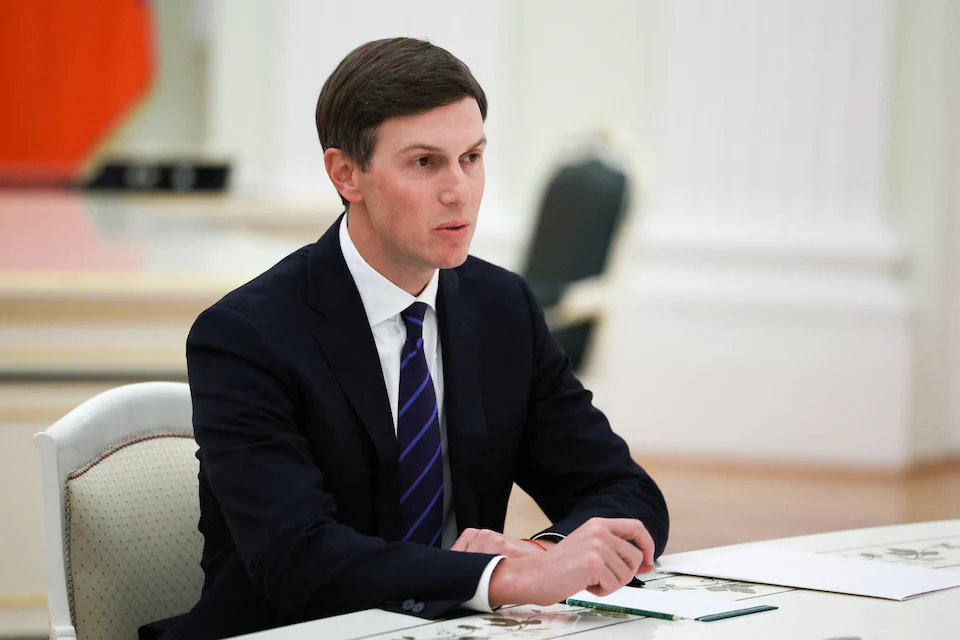
Jared Kushner, US President Donald Trump's son-in-law attends a meeting with Russian President Vladimir Putin, at the Kremlin in Moscow, Russia, November 12, 2026.
US envoy Jared Kushner made the announcement after a series of high-level meetings involving Russian President Vladimir Putin and Ukrainian President Volodymyr Zelenskyy. He also confirmed that Russia and Ukraine had agreed to include European countries in the next round of US-mediated peace negotiations.
In a statement published on Thursday, November 12, Kushner said Washington was working towards an exchange that could reunite thousands of people with their relatives. He did not disclose the proposed number of prisoners, the countries' specific commitments or when the exchange could take place.
The announcement comes after Russian and Ukrainian representatives held two days of negotiations in Abu Dhabi, United Arab Emirates, marking the resumption of direct trilateral discussions involving the United States after a nine-month interruption.
THOUSANDS COULD BE REUNITED WITH THEIR FAMILIES
The proposed exchange is expected to involve prisoners held by both Russia and Ukraine, although the final arrangements have not been publicly established.
Ukrainian officials have also expressed confidence that the negotiations could produce an exchange on an unprecedented scale.
President Zelenskyy said after meeting American representatives in Dublin that Ukraine would have a prisoner exchange and described the expected operation as the largest of the war.
Russia had previously indicated that it was prepared to discuss a substantial exchange. Alexander Zorin, a senior Russian military intelligence official, said the previous largest exchange, involving approximately 1,000 people, would serve as a benchmark for the next arrangement.
Zelenskyy had also raised the possibility of exchanging as many as 1,500 prisoners on each side, although that figure has not been confirmed as an agreed number.
The proposed operation is particularly significant because prisoners of war and their return have remained among the few areas where Moscow and Kyiv have managed to achieve practical agreements despite their wider disagreements.
An earlier understanding reached during the Abu Dhabi negotiations established the basis for a major exchange, but the precise number of people and implementation schedule remained unresolved.
US ENVOYS MEET PUTIN AND ZELENSKYY
The latest diplomatic activity involved Kushner and fellow US envoy Steve Witkoff, who travelled to Moscow on Thursday to meet Putin before proceeding to Ireland for discussions with Zelenskyy.
The meetings were part of Washington's efforts to maintain communication with both sides and identify possible areas of agreement after the Abu Dhabi negotiations.
Kushner said the United States was encouraged by the progress made during the discussions, while acknowledging that substantial differences continued to separate the countries.
He explained that bringing European representatives into the next round would allow negotiators to address wider security arrangements across the continent alongside the territorial dispute between Russia and Ukraine.
Witkoff also indicated that Putin had agreed to European participation in the next discussions, although the precise format and list of participating countries had not been announced.
Zelenskyy welcomed the development, stressing the importance of European involvement in discussions that could shape Ukraine's future security and the wider stability of the region.
EUROPEAN SECURITY AND TERRITORIAL DISPUTES REMAIN MAJOR OBSTACLES
Beyond the prisoner exchange, the negotiations face difficult questions concerning territory, security guarantees and the conditions required to end the fighting.
Russia continues to control approximately one-fifth of Ukrainian territory, including areas seized before and during its full-scale invasion. Moscow has maintained demands involving Ukraine's eastern Donbas region, while Kyiv has rejected surrendering territory that remains under its control.
The territorial disagreement remains one of the most difficult issues preventing a broader settlement.
Kushner said a lasting agreement would require credible security guarantees and reciprocal steps to reduce tensions and prevent another conflict.
The inclusion of European countries could widen discussions to cover the continent's broader security arrangements, an issue Moscow has repeatedly sought to place at the centre of negotiations.
European governments have their own concerns about any settlement that could affect NATO's security commitments, the future of Ukraine and the balance of power across the continent.
PEACE NEGOTIATIONS RESUME AFTER MONTHS OF INTERRUPTION
The Abu Dhabi meetings represented the first trilateral negotiations between Russia, Ukraine and the United States in nine months.
Although the discussions produced progress on prisoner exchanges and plans for further engagement, they did not resolve the central disagreements over territory and the future security framework.
The renewed diplomatic process follows repeated efforts by US President Donald Trump to secure an agreement ending the war, which began with Russia's full-scale invasion in February 2022.
Trump has made ending the conflict a major foreign policy objective, but Washington has yet to secure a comprehensive settlement accepted by Moscow and Kyiv.
The latest developments offer a possible humanitarian breakthrough through the proposed prisoner exchange and an opportunity to broaden negotiations through European participation.
The proposed exchange has not yet been completed, and the details of the next round of negotiations remain subject to further discussions.