Business
Cape Town Records 35% Wealth Growth as Johannesburg Retains Africa’s Richest City Title and Lagos Loses Ground
Africa’s concentration of private wealth is undergoing a significant shift, with Cape Town emerging as one of the continent’s fastest-growing milliona...
By Wavers News
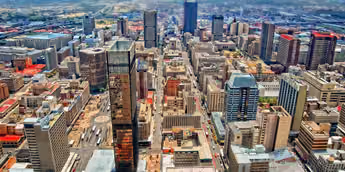
Africa’s wealth map is shifting as Cape Town surges 35% while Johannesburg and Lagos record declines — Africa’s top 10 wealthiest cities in 2026, according to latest ranking
The latest Africa Wealth Report 2026, published by wealth intelligence firm New World Wealth, places Johannesburg at the top of Africa’s wealthiest cities, with an estimated 11,500 high-net-worth individuals. Cape Town follows with approximately 9,700, narrowing the gap between South Africa’s two major economic centres.
Cape Town’s millionaire population has increased by 35 per cent over the past decade, reflecting its growing appeal among wealthy individuals and investors. Lagos, in contrast, recorded a 32 per cent decline in its millionaire population, making it the city with the steepest reported contraction among the leading wealth centres.
The figures are based on estimates as at June 2026 and highlight changing patterns in the distribution of private wealth across Africa.
JOHANNESBURG MAINTAINS ITS LEAD, BUT CAPE TOWN IS CLOSING THE GAP
Johannesburg remains Africa’s wealthiest city by the number of resident millionaires, supported by its established financial sector, major corporations and concentration of wealthy individuals.
Much of its private wealth is concentrated around Sandton, a major commercial district that hosts the headquarters of several prominent companies and financial institutions.
The Waterfall-Midrand area has also developed into an important residential destination for wealthy individuals, with exclusive estates attracting high-net-worth residents.
Despite maintaining the continental lead, Johannesburg has faced a difficult period in wealth growth, with the number of its millionaire residents declining over the past decade.
Cape Town is moving in the opposite direction. Its 35 per cent growth over the same period has strengthened its position as Africa’s second-richest city and increased the possibility of it overtaking Johannesburg in the coming years.
New World Wealth projects that Cape Town could become Africa’s wealthiest city by 2030 if its growth trajectory continues.
The coastal city also attracts wealthy residents through its lifestyle offerings, luxury property market, business opportunities and established financial and technology industries.
LAGOS RECORDS A SHARP DECLINE IN ITS MILLIONAIRE POPULATION
Lagos remains one of Africa’s major commercial centres and the leading wealth hub in West Africa, but its position in the latest figures highlights the pressure facing Nigeria’s private wealth landscape.
The city recorded a 32 per cent decline in its millionaire population, the largest reported reduction among the leading cities and regions featured in the 2026 ranking.
The decline comes against a wider contraction in Nigeria’s high-net-worth population. Earlier wealth estimates also identified a substantial reduction in the country's millionaire numbers, placing Nigeria among the African markets experiencing significant losses in private wealth.
The figures do not mean that Lagos has lost its importance as a commercial centre. The city remains a major destination for banking, technology, real estate, trade and entrepreneurship, with a large concentration of businesses serving Nigeria and the wider West African market.
The millionaire figures measure the estimated number of residents with qualifying liquid assets, rather than the overall economic output or commercial activity of a city.
This distinction is important when comparing Lagos with Johannesburg and Cape Town, as a city can maintain substantial economic activity while experiencing a decline in the number of individuals meeting the report's millionaire threshold.
SOUTH AFRICA DOMINATES AFRICA’S WEALTHIEST CITY RANKINGS
South Africa maintains a strong presence in the continental wealth rankings, accounting for six of the ten cities and regions with the highest estimated millionaire populations.
The country's position is also reflected in its national wealth figures. The 2026 report estimates that South Africa had 48,200 high-net-worth individuals as of June 2026, alongside 131 centi-millionaires and 10 billionaires.
These figures account for approximately 38 per cent of Africa’s millionaire population and 36 per cent of its billionaires.
Beyond Johannesburg and Cape Town, the Cape Winelands has emerged as another major wealth destination, recording a 55 per cent increase in its millionaire population over the past decade.
The region includes affluent locations such as Stellenbosch, Paarl and Franschhoek. Its appeal is linked to luxury residential developments, lifestyle properties, tourism and growing interest from wealthy individuals seeking alternatives to major urban centres.
The Garden Route and Whale Coast have also attracted increasing numbers of affluent residents, further strengthening South Africa’s position in the continent’s private wealth market.
CAIRO REMAINS A MAJOR WEALTH CENTRE OUTSIDE SOUTH AFRICA
Outside South Africa, Cairo remains one of Africa’s leading destinations for wealthy residents.
The Egyptian capital ranks third among Africa’s wealthiest cities, with an estimated 6,800 high-net-worth individuals.
Cairo also has five resident billionaires, the highest number recorded in any African city in the report.
Its position reflects Egypt’s large economy, established business networks and concentration of major commercial and investment activities.
Nairobi, Kenya’s capital, is another important wealth centre, while Casablanca remains a major financial and business hub in North Africa.
The distribution of wealth across these cities demonstrates that Africa’s private wealth is concentrated in a relatively small number of major commercial and lifestyle destinations.
HOW THE WEALTH REPORT MEASURES MILLIONAIRES
The figures in the Africa Wealth Report are based on individuals with at least $1 million in liquid wealth.
This includes assets such as cash, listed shares, exchange-traded funds, bonds, gold and cryptocurrencies that can be converted into cash relatively quickly.
Property, private businesses and private equity are excluded from the calculation. As a result, an individual may own valuable real estate or a substantial private company without having all that wealth counted under the report's definition.
New World Wealth uses a model that considers household income, stock market capitalisation, tax information, family offices, prime property data and its own database of high-net-worth individuals to estimate wealth distribution.
The figures are therefore research estimates rather than a direct census of every millionaire living in each city. The report's city and country figures are based on June 30, 2026 data and are rounded to the nearest 100.
AFRICA’S WEALTH LANDSCAPE CONTINUES TO EVOLVE
The latest findings point to an increasingly competitive landscape among Africa’s leading wealth destinations.
While Johannesburg retains its position at the top, Cape Town’s sustained growth is bringing it closer to the continental lead. Lagos continues to hold an important position in West Africa, but its declining millionaire population highlights the challenges facing wealth creation and retention in Nigeria.
New World Wealth expects Africa’s overall millionaire population to more than double by 2040, with lifestyle destinations, technology, entertainment, financial services and emerging industries expected to contribute to future wealth creation.
The changing figures suggest that the competition among African cities is no longer determined solely by the size of their economies. Their ability to attract investment, retain wealthy residents and provide favourable conditions for businesses and entrepreneurs is also becoming increasingly important.