International
St Kitts and Nevis to End Citizenship-by-Investment Programme After More Than 40 Years
St Kitts and Nevis is preparing to wind down its citizenship-by-investment programme, bringing an end to a scheme that has allowed wealthy foreign nat...
By Wavers News
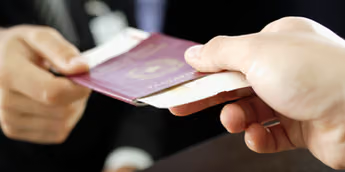
Country that invented citizenship by investment is ending its $250,000 passport scheme after issuing over 55,000 passports in a decade. Simon Marcus Taplin/Getty
Prime Minister Terrance Drew announced the decision on Friday, November 13, 2026, saying his government had formally communicated its position to the European Union following discussions with the bloc and other international partners.
The move is aimed at protecting the Caribbean nation's international reputation, visa-free travel arrangements and access to the global financial system, amid growing international scrutiny of programmes that grant citizenship in return for investment.
A $250,000 PASSPORT PROGRAMME THAT BUILT A MULTIBILLION-DOLLAR REVENUE STREAM
Established in 1984, St Kitts and Nevis introduced the world's first citizenship-by-investment programme, creating a model later adopted by other countries seeking foreign capital through citizenship incentives.
The scheme allows eligible foreign applicants to obtain citizenship by making qualifying financial contributions or investing in approved real estate.
Under its existing requirements, applicants can contribute at least $250,000 to an approved government fund or invest from $325,000 in qualifying real estate. Additional government processing and due-diligence fees also apply.
Successful applicants receive full citizenship and access to a passport that provides visa-free or visa-on-arrival entry to more than 150 destinations, including countries in Europe's Schengen Area.
The programme attracted wealthy individuals seeking greater international mobility, business opportunities and access to different markets.
European Commission figures show that St Kitts and Nevis issued 55,281 passports between 2015 and 2024, including 6,437 in 2024 alone.
PASSPORT SALES GENERATED BILLIONS FOR THE GOVERNMENT
The citizenship programme became a major source of funding for the small Caribbean federation, supporting public infrastructure and government spending.
Drew said it generated approximately US$2.4 billion between 2008 and 2025, representing about half of the federal government's cash revenue over that period.
The proceeds helped finance roads, schools, affordable housing, government operations and the country's recovery following the COVID-19 pandemic.
The prime minister acknowledged that the programme had delivered significant economic benefits but warned that depending heavily on one source of revenue created financial vulnerability.
He said the government had been working to reduce that dependence and prepare the economy for a future in which citizenship sales would no longer provide a major share of public funding.
Drew also said revenue from the programme, which accounted for as much as 70 per cent of government income in 2022, had fallen to less than 20 per cent in 2026 as his administration pursued economic diversification.
EUROPEAN UNION PRESSURE DRIVES THE DECISION
The decision follows changes to European Union visa rules that took effect in December 2025, allowing the bloc to consider citizenship-by-investment programmes as grounds for suspending visa-free access.
In June 2026, the European Commission invited five Eastern Caribbean countries operating similar schemes to phase them out over a transition period to preserve their visa-free access to the Schengen Area.
The countries affected are St Kitts and Nevis, Antigua and Barbuda, Dominica, Grenada and Saint Lucia.
The EU requested that the countries communicate their positions by November 12, 2026, with June 1, 2028, identified as the proposed deadline for winding down the programmes.
Antigua and Barbuda had already indicated its intention to end its programme, proposing a transition period extending to the end of 2030 and requesting financial support to manage the economic impact.
St Kitts and Nevis has now formally communicated its decision to follow the phase-out approach. Saint Lucia has also submitted its position, although the details have not been publicly disclosed.
Drew warned that refusing to cooperate with international partners could expose the country to further scrutiny from financial institutions and threaten its access to international banking networks.
He explained that losing correspondent banking relationships could affect tourism payments, money transfers from citizens living abroad and businesses importing essential goods.
EXISTING CITIZENS WILL RETAIN THEIR RIGHTS
Despite the decision to wind down the programme, the government has assured people who already lawfully acquired St Kitts and Nevis citizenship that their status will not be affected.
Drew said existing citizens would retain their citizenship and established travel arrangements, stressing that the decision was intended to protect the country's international standing rather than withdraw rights from people who had already obtained nationality.
The programme will not close immediately. Applications will continue under existing requirements until the government and European Union agree on a final transition timetable.
Drew also ruled out lowering investment requirements or rushing applications ahead of the closure.
He said the programme would operate under stricter standards during the transition, while projects already approved or underway would continue towards completion.
Employees of the Citizenship by Investment Unit are also expected to be reassigned to other government responsibilities, including efforts to attract conventional foreign investment.
GOVERNMENT PLANS TO REPLACE CBI REVENUE
St Kitts and Nevis is looking to build a more diversified economy through investment in renewable energy, tourism, agriculture, digital services and other industries.
Geothermal energy development in Nevis is among the government's priorities, with plans involving six wells and a power plant that could supply electricity to St Kitts through a proposed connection.
The administration is also pursuing a 50-megawatt solar power project and exploring opportunities to supply energy to neighbouring Caribbean territories.
Tourism development remains another major part of the strategy. Drew highlighted plans involving cruise operations, including the expected home-porting of P&O Cruises' Iona and Arvia vessels in St Kitts from November 2027.
The government is also advancing a new cruise terminal at Port Zante and plans to introduce shore-power facilities that would allow visiting ships to connect to cleaner electricity while docked.
Other areas under consideration include improved regional maritime connections, additional undersea fibre-optic infrastructure, agricultural production and expanded digital government services.
Drew said the government had been preparing for the transition since 2022 and intended to use the period before the programme's closure to accelerate these economic alternatives.
A MAJOR CHANGE FOR THE CARIBBEAN'S INVESTMENT INDUSTRY
The planned closure represents a significant shift for St Kitts and Nevis and the wider Caribbean citizenship-by-investment industry.
For more than four decades, the programme helped the federation attract foreign capital and establish itself as a leading destination for investors seeking alternative citizenship.
Its decision to phase out the scheme also places additional attention on other Caribbean governments facing similar pressure from the European Union.
The final closure date for St Kitts and Nevis has not been announced, and negotiations with the EU remain ongoing.
The government says the transition will be gradual, with existing citizens protected and efforts directed towards building an economy less dependent on the sale of citizenship.