United States
Jury Begins Deliberations in Trial of Former Police Detective Accused of Killing Pregnant Sandra Birchmore
Jurors have begun deliberating in the federal murder trial of Matthew Farwell, a former Massachusetts police detective accused of killing 23-year-old ...
By Wavers News
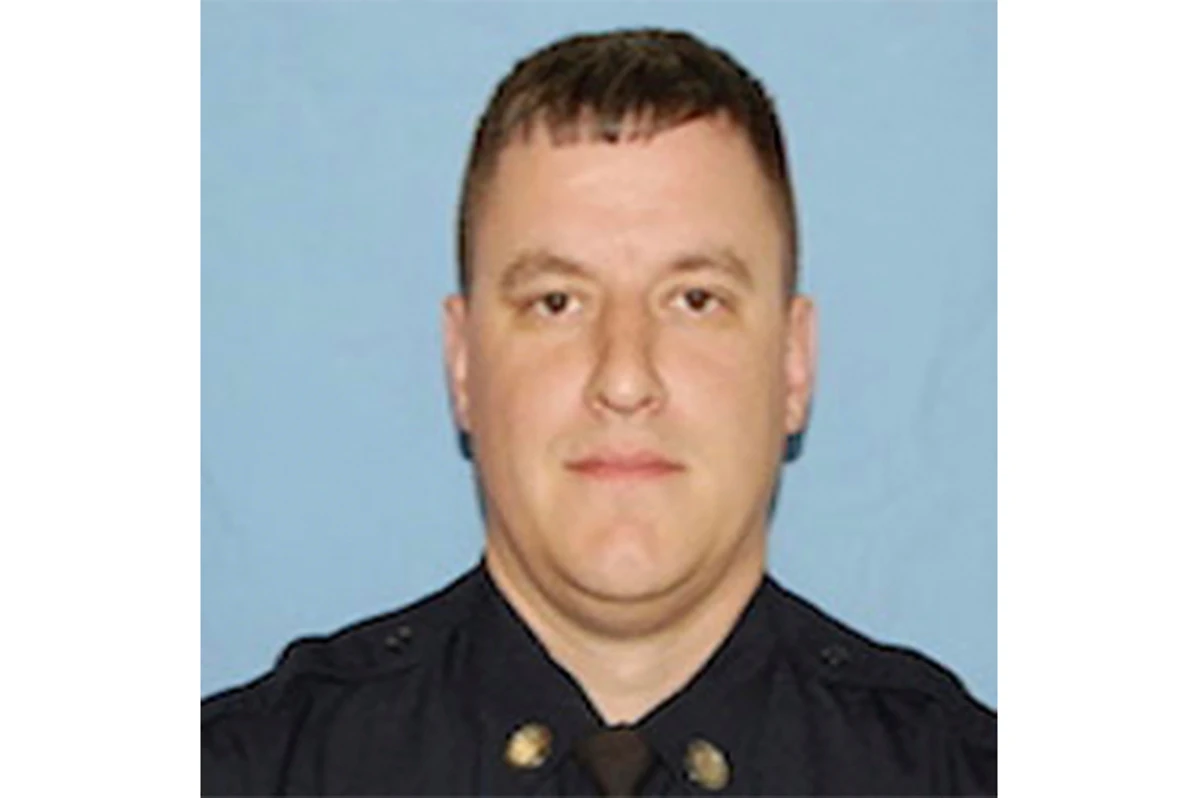
Matthew Farwell, a former Massachusetts police detective accused of murdering 23-year-old Sandra Birchmore and staging her death as a suicide. He has pleaded not guilty. (Photograph: Stoughton Police Department via AP)
The case centres on Birchmore's death in February 2021 and her relationship with Farwell, which prosecutors say began when she was just 15 years old. They allege that he killed her after discovering she was pregnant and fearing she would expose their relationship and the sexual abuse that had taken place over several years.
Farwell, now 40, has pleaded not guilty. His defence team acknowledges that he had an extramarital relationship with Birchmore but denies that he murdered her, maintaining that she died by suicide.
The jury began considering the evidence on Friday, November 6, after a trial that lasted about a month. Following more than three hours of deliberations, jurors stopped for the weekend, with discussions expected to resume when court proceedings continue.
A RELATIONSHIP THAT BEGAN WHEN BIRCHMORE WAS A TEENAGER
Birchmore had participated in a youth programme connected to the Stoughton Police Department, where Farwell worked as a detective.
Prosecutors presented evidence that their sexual relationship began when she was 15 and Farwell was 27. Under Massachusetts law, a 15-year-old cannot legally consent to sexual activity with an adult in the circumstances described in the case.
The relationship reportedly became increasingly difficult as Birchmore sought a more permanent commitment from Farwell. Investigators recovered thousands of messages showing arguments about their future, his marriage and her pregnancy.
Prosecutors said Birchmore had threatened to reveal the relationship to Farwell's wife, increasing the pressure surrounding their situation.
By late 2020, Birchmore had discovered she was pregnant. Prosecutors contend that Farwell believed he was the father and feared the pregnancy would expose their relationship and the alleged abuse.
PROSECUTORS SAY HER DEATH WAS STAGED
Birchmore was found dead inside her apartment in Canton, Massachusetts, on February 1, 2021, with a strap around her neck.
The initial investigation concluded that she had died by suicide. The Massachusetts medical examiner also initially classified the death as suicide, but the official manner of death was later changed to undetermined.
Federal prosecutors subsequently alleged that Farwell strangled Birchmore and arranged the scene to make the killing look like a suicide.
During the trial, a digital forensics expert testified that Birchmore's phone stopped moving at approximately 9:40 p.m. on the night of her death. Building security footage showed Farwell leaving the apartment building three minutes later.
Dr William Smock, a medical expert retained by the prosecution, testified that Birchmore's injuries were consistent with strangulation using a duffel bag strap. He also said the evidence indicated that she struggled before dying.
The defence challenged that conclusion. Its medical expert, Dr Thomas Andrew, a former chief medical examiner in New Hampshire, argued that the findings were more consistent with death by hanging and disputed the prosecution's determination that Birchmore had been murdered.
FBI INVESTIGATION UNCOVERED THOUSANDS OF MESSAGES
The case attracted renewed federal attention after the FBI began investigating Birchmore's death in 2023.
The investigation followed concerns raised by a former deputy chief of the Stoughton Police Department, Brian Holmes, who had previously led an internal affairs inquiry involving Farwell and other officers.
Federal investigators questioned the quality of the original investigation, arguing that important investigative steps had not been properly carried out.
Prosecutors told the court that Farwell was interviewed for only about 15 minutes in a parking lot. Investigators did not document the interview through notes, examine him for possible injuries or collect his DNA at that stage.
Police also examined his phone after messages between him and Birchmore had already been deleted.
The FBI investigation eventually recovered approximately 40,000 text messages exchanged between the pair. Some discussed their sexual relationship, including references to encounters that prosecutors said began when Birchmore was underage.
The messages also revealed growing disagreements over the pregnancy and Farwell's possible involvement in the child's life.
Testimony from Farwell's twin brother, Billy Farwell, further raised questions about the original investigation. He told the court that an investigator who was a longtime family friend had expressed a desire to close the case, describing the investigation as something he wanted to be rid of.
BIRCHMORE'S PREGNANCY AND THE DEFENCE ARGUMENT
A significant part of the trial focused on Birchmore's state of mind before her death and whether she had intended to end her life.
Prosecutors presented testimony from people who said she was excited about becoming a mother. She had reportedly discussed baby names, arranged a maternity photoshoot and searched for a location for a baby shower.
Investigators also found an unopened stroller in her apartment and an ultrasound photograph displayed on her refrigerator.
Farwell's lawyers offered a different account, pointing to Birchmore's history of mental health difficulties and previous suicidal behaviour. They argued that she was under considerable emotional and financial pressure and had taken her own life.
The defence maintained that Farwell visited her apartment to end their relationship, not to kill her.
Another important development was the result of a posthumous paternity test, which established that Farwell was not the biological father of Birchmore's unborn child. An Army recruiter, Jason Pickard, was identified as the father. He testified that he had known Birchmore since 2019 and had a sexual relationship with her.
Prosecutors nevertheless maintain that Farwell believed he was responsible for the pregnancy when Birchmore died.
A MONTH-LONG TRIAL NOW AWAITS THE JURY'S DECISION
The federal proceedings in Boston featured approximately 50 witnesses and 500 exhibits, covering the relationship, the circumstances of Birchmore's death, forensic findings and the handling of the original investigation.
The trial has also drawn attention to allegations of misconduct involving members of the Stoughton Police Department. An earlier internal affairs investigation found that three officers, including Farwell, had engaged in inappropriate sexual relationships with Birchmore.
Farwell resigned from the department before the internal investigation's findings were released.
The federal prosecution proceeded after local authorities did not bring criminal charges over Birchmore's death.
With the evidence and closing arguments now presented, jurors must determine whether prosecutors have proved beyond reasonable doubt that Farwell murdered Birchmore.
As deliberations continue, the case remains unresolved. Farwell is presumed innocent unless and until a guilty verdict is returned.