Politics
US Senator Chris Murphy Discharged After Stroke, Faces Weeks of Rehabilitation Before Returning to Senate
United States Democratic Senator Chris Murphy of Connecticut has been discharged from hospital following a stroke and will spend several weeks undergo...
By Wavers News
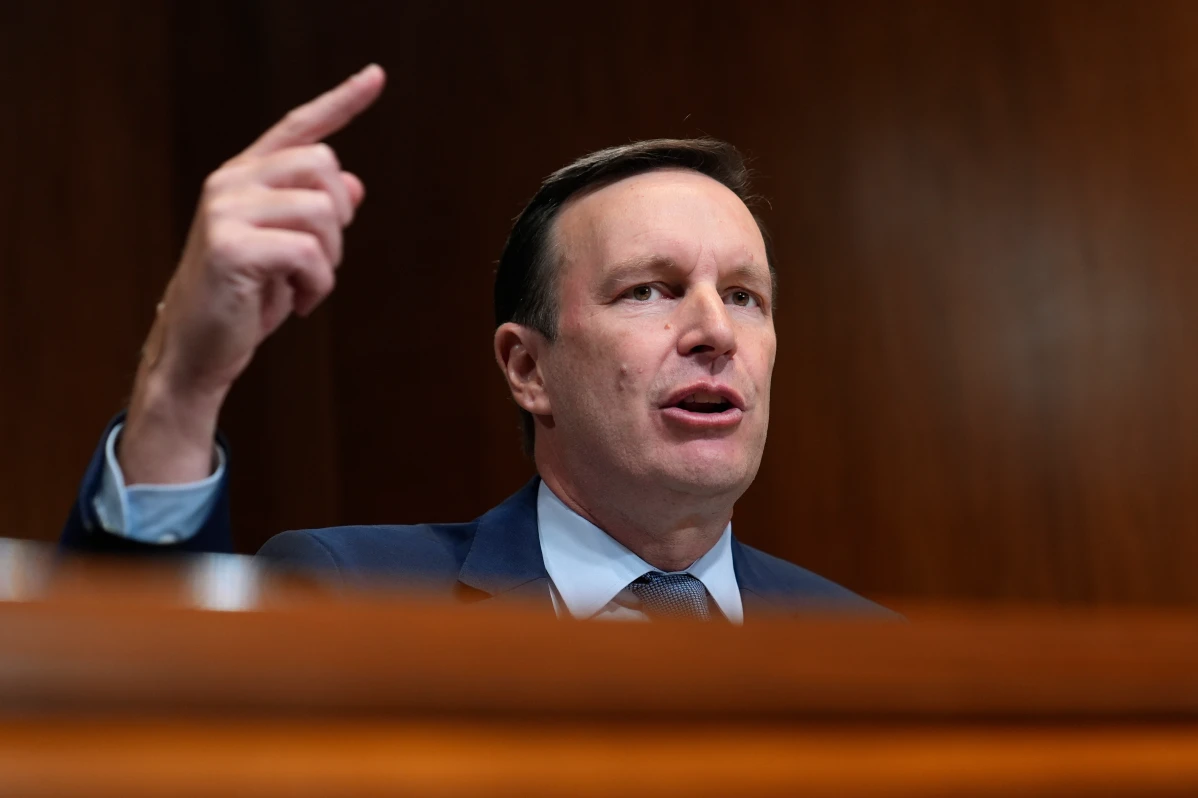
US Senator Chris Murphy speaks during a Senate Appropriations Subcommittee hearing on Capitol Hill in Washington, DC, on April 30, 2024. (Photograph: Susan Walsh/AP)
The 53-year-old lawmaker announced his discharge on Friday, November 6, 2026, providing further details about his medical condition after spending nearly a week receiving treatment at Johns Hopkins Hospital in Baltimore, Maryland.
Murphy disclosed that doctors diagnosed him with a small haemorrhagic stroke, a condition involving bleeding in the brain. He said he initially became concerned about his health on Saturday, October 31, after noticing unusual symptoms and deciding to call emergency services.
In a statement explaining his diagnosis, Murphy said he was glad he had sought immediate medical attention.
HOW THE STROKE OCCURRED
Murphy experienced numbness in his arm while attending his son's hockey game on October 31.
He was taken to a nearby hospital, where doctors discovered that he had suffered a stroke. He was subsequently transferred to Johns Hopkins Hospital for further monitoring and specialist treatment.
The senator later confirmed that the bleeding occurred in the thalamus region of his brain, an area involved in processing and transmitting sensory information.
His hospitalisation was first made public on November 1, when his office announced that he was awake, alert and responding positively to treatment.
The latest update provided the first detailed explanation from Murphy himself about the specific type of stroke he experienced.
DOCTORS EXPECT FULL RECOVERY
Murphy's physician, Dr Jose Suarez, chief of neurosciences critical care at Johns Hopkins Hospital, said the senator had made significant progress since receiving treatment.
Suarez confirmed that Murphy experienced a small haemorrhagic stroke and expressed confidence that he would recover fully after completing rehabilitation.
The physician said the senator's improvement had been encouraging and that his current recovery progress supported expectations of a full recovery following rehabilitation.
Murphy also acknowledged the support he had received from medical professionals, thanking the doctors and hospital staff who treated him and assisted his family throughout the difficult period.
He described the experience as frightening for himself and his family and requested continued respect for their privacy.
REHABILITATION TO KEEP HIM AWAY FROM SENATE VOTES
Despite being discharged from hospital, Murphy will not immediately return to Washington to resume his legislative responsibilities.
He is expected to spend several weeks at a rehabilitation facility, where he will continue receiving care aimed at supporting his recovery.
The senator confirmed that he would miss Senate votes during this period but intended to remain involved in his work remotely.
His absence comes as Congress prepares to return to Washington following a month-long recess.
The Senate is expected to resume its legislative activities on Monday, November 9, with approximately five working weeks remaining in its end-of-year session.
Lawmakers face several important responsibilities before the end of the year, including approving government funding to prevent a potential shutdown in mid-December and considering other essential legislation.
Murphy said he would continue communicating with his colleagues and staff while recovering. He added that his office would remain operational, with his team continuing to serve constituents and advance legislative priorities.
HIS POLITICAL ACTIVITIES BEFORE THE STROKE
Before his hospitalisation, Murphy had been actively campaigning for Democratic candidates ahead of the November 3 midterm elections.
He travelled across Connecticut and several politically competitive states to support candidates seeking election to federal and state offices.
He had also planned to campaign in New Hampshire during the final weekend before Election Day and attend Connecticut Democrats' election night gathering in Hartford.
His medical condition prevented him from participating in those activities.
Although he was hospitalised on Election Day, Murphy had already cast his vote through early voting in Connecticut.
The senator had also travelled to the Middle East in early October, where he held meetings with regional leaders amid the ongoing conflict involving Iran.
A SENATOR WITH AN ACTIVE ROLE IN CONGRESS
Murphy was first elected to the US House of Representatives in 2006 before winning election to the Senate in 2012.
He currently serves on the Senate Appropriations Committee and has become a prominent Democratic voice on immigration, gun violence and other national policy issues.
His medical absence comes at an important period for Congress, particularly as lawmakers prepare to address government funding and other legislative priorities before the end of the year.
For now, Murphy says he remains focused on his recovery while maintaining contact with his colleagues and ensuring that his office continues its work.
Although his precise return date has not been announced, his medical team expects him to make a full recovery after completing rehabilitation.