World News
US Intelligence Suspects Chinese Spy Built Close Ties With Nvidia CEO Jensen Huang
US intelligence agencies have reportedly concluded that a Chinese businesswoman with close ties to Jensen Huang was working as an intelligence asset f...
By Wavers News
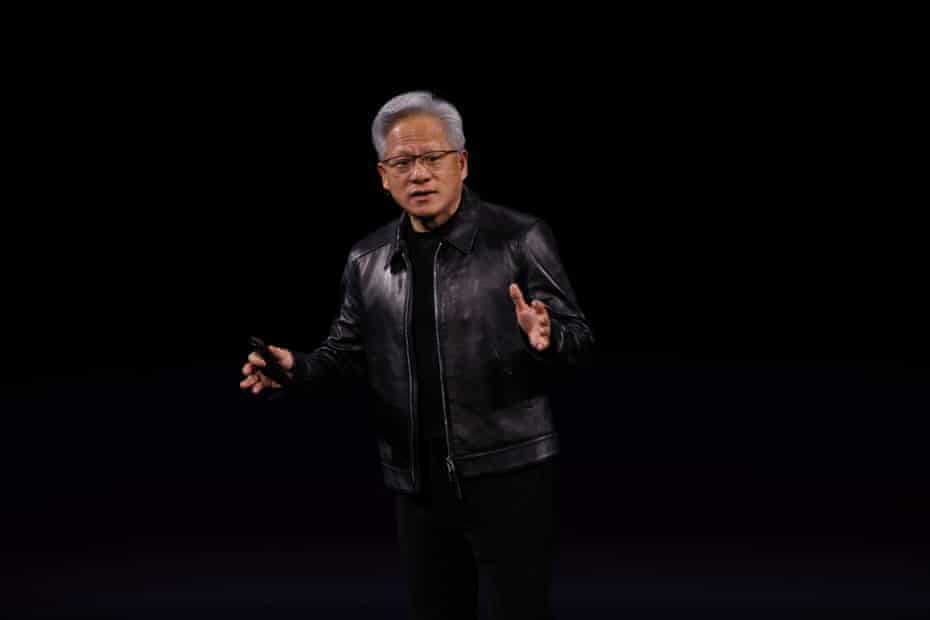
Nvidia CEO Jensen Huang delivers a keynote speech at the company’s GPU technology conference in Berlin, Germany, on 21 October 2026.
The woman, Alice Huang, also known as Huang Le, is a Chinese national and a senior executive associated with Megaspeed, a Singapore-based data centre company that has faced scrutiny over suspected efforts to help Chinese businesses obtain advanced artificial intelligence chips manufactured by Nvidia.
US officials reportedly determined through intelligence surveillance that Alice Huang was passing information to the Chinese government. Investigators subsequently discovered that she had developed a close relationship with Jensen Huang, Nvidia's chief executive, prompting concerns about whether her access to the technology executive could have provided Beijing with commercially valuable information.
The intelligence findings reportedly reached US President Donald Trump approximately a year ago. The president chose not to take action at the time, amid concerns that confronting the issue could disrupt Nvidia's business, affect financial markets and complicate Washington's trade relationship with Beijing.
The allegations have placed renewed attention on the intersection of national security, advanced semiconductor technology and the commercial interests surrounding the global artificial intelligence industry.
There is no public evidence establishing that Jensen Huang knowingly assisted Chinese intelligence, and the allegations against Alice Huang have not been publicly resolved in court.
HOW THE INVESTIGATION REACHED NVIDIA'S CHIEF
The investigation initially focused on Megaspeed and suspicions that the company was helping Chinese businesses gain access to advanced Nvidia processors despite US export restrictions.
American authorities have been concerned that companies operating data centres in Southeast Asia could acquire powerful AI chips and make their computing capacity available to Chinese customers, potentially allowing them to access technology restricted from direct export to China.
During surveillance of Alice Huang, US intelligence agencies reportedly discovered communications involving an American citizen. The subsequent identification of that individual revealed that she had been in contact with Jensen Huang.
The identification was reportedly carried out through a process known as unmasking, which can allow authorised US officials to identify an American whose communications appear incidentally in intelligence collected about a foreign target.
Under US law, intelligence agencies face restrictions on monitoring American citizens, although communications involving US persons can be identified under legally authorised procedures when officials demonstrate a legitimate need for the information.
The discovery that the American citizen was Nvidia's chief executive increased the significance of the investigation because of his position at the centre of the global AI industry and his relationships with senior figures in the Trump administration.
Officials were concerned that a person suspected of gathering intelligence for China had developed access to an executive with extensive knowledge of Nvidia's business and influence over discussions about US semiconductor policy.
The precise information Alice Huang allegedly passed to Beijing, the circumstances in which it was collected and its potential value to the Chinese government have not been publicly established.
RELATIONSHIP DEVELOPED THROUGH TECHNOLOGY INDUSTRY CONNECTIONS
Alice Huang's relationship with Jensen Huang reportedly developed through meetings involving technology executives and business figures.
Photographs shared on LinkedIn showed the two together at a bar in Taipei in June 2024, following a local technology trade event. They were also seen together in May 2025, leaving a restaurant after a business dinner attended by other industry figures.
Their interactions took place against the background of Nvidia's growing importance in the development of artificial intelligence systems.
Nvidia designs graphics processing units and related computing technologies widely used to train and operate advanced AI models. Demand for its products has surged as technology companies and governments invest heavily in AI infrastructure.
Its chief executive has become a prominent figure in the technology industry, regularly meeting customers, investors, government officials and executives from companies seeking access to Nvidia's products.
Nvidia has defended Huang's interactions with Alice Huang, saying meetings with customers are a normal part of the chief executive's responsibilities.
The company has also said that regional customers such as Megaspeed receive ordinary business information rather than sensitive trade secrets or information relevant to national security.
Nvidia's position is that its commercial dealings with customers do not mean those customers have access to confidential company information.
MEGASPEED UNDER SCRUTINY OVER ADVANCED AI CHIPS
Megaspeed's business model has attracted attention because it operates within a regional data centre market that serves customers seeking access to advanced computing resources.
Companies in this sector can purchase AI processors, install them in data centres and rent computing capacity to businesses that need substantial processing power.
The model is not inherently illegal. Concerns arise when equipment is acquired through intermediaries or used in ways that circumvent restrictions governing exports to China.
US authorities began investigating Megaspeed in late 2024 after concerns emerged about the company's activities in Malaysia.
A visit to a data centre reportedly raised questions about equipment that remained packed in boxes rather than being installed for immediate use. Investigators suspected the facility might be involved in arrangements that could allow advanced chips to be redirected elsewhere.
Megaspeed has also been associated with supplying computing capacity to Chinese businesses, including Alibaba, through data centre operations in Southeast Asia.
Investigators have been examining whether some of the company's equipment could have been diverted illegally to China. These concerns remain distinct from the allegation that Alice Huang was gathering intelligence on behalf of Beijing.
Trade records showed that a Malaysian sister company linked to Megaspeed purchased at least $4.8 billion worth of equipment containing Nvidia chips and technology between June 2024 and February 2026.
The scale of the purchases attracted attention because of the size of the company and the sensitivity of the technology involved.
US authorities have restricted exports of advanced AI processors to China since 2022, citing national security concerns and the possibility that the technology could strengthen China's military and strategic capabilities.
The restrictions have created pressure on companies to verify customers, assess the intended use of their products and prevent prohibited transfers.
Nvidia has maintained that it complies with US law and has disputed allegations that its products were being smuggled to China through Megaspeed.
TRUMP WAS BRIEFED BUT DID NOT ACT
The intelligence findings reportedly reached Trump approximately a year before the latest revelations became public.
The president reportedly decided against taking action at the time, with concerns about the potential economic consequences of disrupting Nvidia's business and the impact on US-China trade relations.
Nvidia has become central to the US technology industry, with its processors underpinning a substantial share of the global AI infrastructure market.
The company's performance has also contributed significantly to investor confidence in the AI sector and the broader stock market.
Any action affecting its ability to sell products or maintain international business relationships could have consequences for technology companies, investors and the US economy.
Trump has also developed a close relationship with Jensen Huang as his administration has reconsidered restrictions affecting Nvidia's sales to China.
Huang has lobbied for changes to policies that limit the company's access to the Chinese market, arguing that US businesses should remain competitive in the global AI industry.
The president previously approved arrangements allowing certain Nvidia chips to be sold to China in exchange for a share of the resulting revenue for the US government.
The relationship has raised questions about how the administration balances commercial interests with national security concerns.
The White House, the Central Intelligence Agency and the National Security Agency declined to comment publicly on the intelligence allegations.
It remains unclear whether concerns about protecting the ongoing surveillance operation influenced the decision not to warn Huang. Providing a warning could potentially have alerted Alice Huang that she was under investigation.
NVIDIA CEO HAS NOT RECEIVED A FORMAL WARNING
Despite the reported intelligence findings, Jensen Huang has not received a defensive briefing of the kind US authorities sometimes provide to Americans believed to be targets of foreign intelligence operations.
Such briefings can warn individuals that a foreign government may be attempting to gain access to their information, relationships or professional networks.
The absence of a warning has raised questions about whether officials believed Huang was unaware of Alice Huang's alleged activities and whether notifying him might have compromised the investigation.
At the time Trump was first briefed, officials reportedly did not believe the Nvidia chief knew that Alice Huang was allegedly gathering intelligence for China.
Some senior officials have since expressed doubts about whether Huang could have remained unaware of her suspected role, although the available information does not establish that he knew she was allegedly working for Chinese intelligence.
The surveillance of Alice Huang reportedly continues, while companies associated with her have continued purchasing Nvidia products.
It is not publicly clear which intelligence agency initiated the surveillance, what prompted the initial investigation or precisely how much information was allegedly transferred to Beijing.
Those unanswered questions make it difficult to determine the full extent of the potential security risk.
MEGASPEED LAUNCHES INTERNAL INVESTIGATION
Megaspeed has acknowledged the seriousness of the allegations and said its current leadership is committed to establishing the facts.
The company said it had retained external legal counsel to conduct a thorough internal investigation and had informed the US government that it was willing to cooperate.
Alice Huang did not publicly respond to requests for comment, and it was unclear how closely she remained involved in Megaspeed's operations.
A person familiar with the company's activities indicated that she had become less active following the American investigation.
Singaporean authorities had also questioned Alice Huang in 2025 as part of their own inquiries into Megaspeed before releasing her.
The US investigation into the company's activities was subsequently transferred from the Commerce Department to the Justice Department, according to officials familiar with the matter.
The transfer indicates that the concerns extend beyond routine commercial compliance, although it does not establish that the company or its executives have been found guilty of wrongdoing.
CHINA REJECTS THE ESPIONAGE ALLEGATIONS
The Chinese government has rejected the allegations surrounding Alice Huang and the reported intelligence operation.
Liu Chang, a spokesperson for China's embassy in Washington, accused the United States of pursuing a campaign of what he described as groundless smears and slanders against China.
Beijing has repeatedly criticised US restrictions on advanced semiconductor exports, arguing that Washington is using national security concerns to limit China's technological development.
The latest allegations are likely to add to tensions between the two countries over artificial intelligence, semiconductor manufacturing and access to advanced computing equipment.
Washington has sought to maintain its technological advantage by restricting China's access to certain high-performance chips and related technologies.
Beijing, meanwhile, has invested heavily in developing domestic semiconductor capabilities and expanding its artificial intelligence industry.
The dispute involving Megaspeed illustrates the challenges faced by US authorities as companies increasingly operate through international networks of data centres, suppliers and customers.
Even when a chip is sold to a company outside China, its eventual use and the identity of the businesses accessing its computing capacity can become difficult to monitor.
QUESTIONS OVER EXPORT CONTROLS AND COMMERCIAL INTERESTS
The case has also renewed debate over whether existing export controls are sufficient to prevent advanced AI technology from reaching restricted customers.
Some companies operate data centres in Southeast Asia that purchase Nvidia chips and provide computing services to Chinese businesses. Such arrangements can be legal, depending on the equipment, customers, applicable restrictions and nature of the services provided.
US officials have raised concerns that these arrangements could create pathways for Chinese companies to access computing resources that would otherwise be unavailable to them.
The Trump administration previously rolled back certain rules designed to restrict access to advanced computing resources through overseas data centres. Officials have been considering whether additional controls are necessary.
Nvidia has argued that its products are subject to compliance checks and that it works to prevent unauthorised transfers.
The company has also maintained that Chinese authorities have restricted the use of US AI chips in China, protecting the country's domestic technology industry.
The reported intelligence findings place these policy questions in a more sensitive context because of the alleged connection between a suspected Chinese intelligence asset and Nvidia's chief executive.
They also raise concerns about whether information obtained through commercial relationships could provide Beijing with insights into US technology policy or the operations of a company central to America's AI industry.
There is no publicly established evidence that Nvidia's trade secrets were transferred to China through Jensen Huang's interactions with Alice Huang.
WHAT HAPPENS NEXT?
The investigation remains unresolved, and several important questions have yet to be answered publicly.
Authorities have not disclosed the full nature of the information Alice Huang allegedly passed to Beijing, whether it included sensitive commercial material or what specific benefits China may have gained.
It is also unclear whether Jensen Huang will receive a defensive briefing, whether further enforcement action will be taken against Megaspeed or whether the investigation will lead to criminal charges.
The case highlights the difficulties facing US officials as they attempt to protect sensitive technology while maintaining the commercial relationships that support the country's AI industry.
For Nvidia, the allegations come at a time when its products are central to global investment in artificial intelligence and when its chief executive has become an influential participant in discussions over technology and trade policy.
For Washington, the investigation presents a difficult balancing act between protecting national security, enforcing export restrictions and avoiding unnecessary disruption to a strategically important industry.
Until further details are made public, the allegations against Alice Huang and the questions surrounding her relationship with Jensen Huang remain matters under investigation rather than established findings of criminal wrongdoing by the Nvidia chief.