UK NEWS
UK MPs Warn of Dangerous Dependence on China for Minerals Critical to Military, AI and Clean Energy
The United Kingdom is dangerously dependent on China for critical minerals needed to maintain its military capabilities, develop artificial intelligen...
By Wavers News
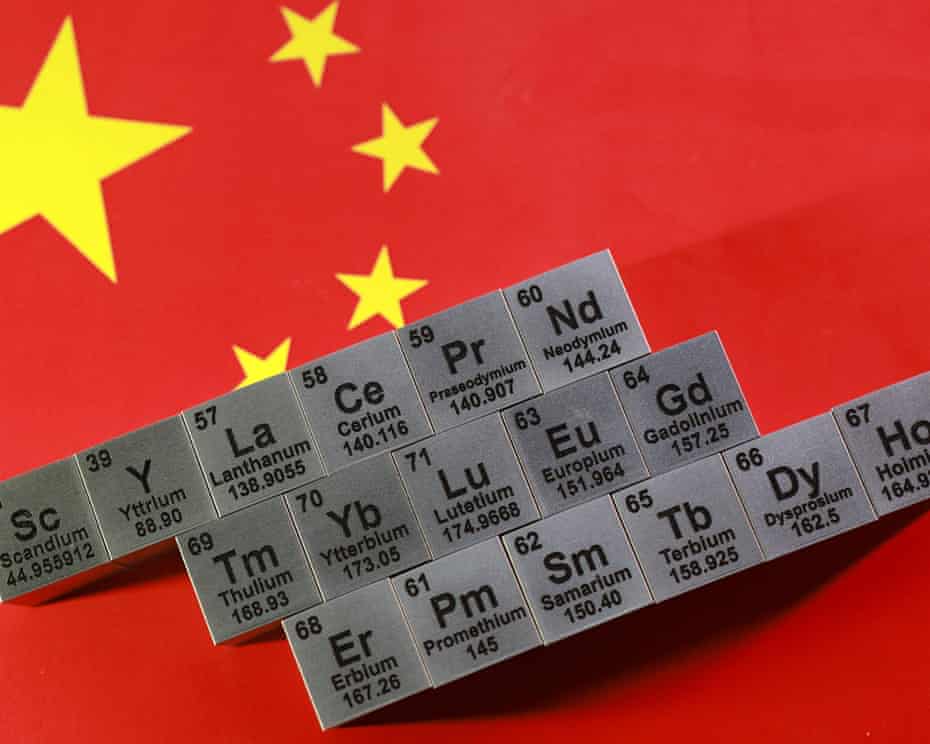
China dominates global supplies of rare earth elements and other critical minerals, including refined materials used in products ranging from military aircraft to household appliances. (Photograph: Dado Ruvić/Reuters)
The warning was issued on Thursday, November 5, by the House of Commons Business, Innovation and Science and Technology Committee, which said Britain's dependence on Chinese mineral supplies exposes its economy and national security to potential disruption and economic pressure.
The committee called for an urgent overhaul of the country's critical minerals policy, arguing that Britain needs stronger domestic production, improved recycling facilities and alternative international suppliers to reduce its vulnerability.
It also proposed establishing a dedicated Critical Minerals Finance Facility to provide financial support for mining, mineral processing and recycling projects in the UK and overseas.
Committee chair Liam Byrne said Britain could not successfully rebuild its military capabilities, develop artificial intelligence or achieve its net-zero ambitions without securing reliable access to the raw materials required by these industries.
CHINA'S CONTROL OVER MINERAL PROCESSING RAISES SECURITY CONCERNS
China occupies a dominant position in the global supply chain for several critical minerals, particularly in the processing and refining stages.
The parliamentary investigation found that China controls the refining of seven categories of minerals, including lithium used in electric vehicle batteries and rare earth elements required for advanced manufacturing.
These materials are essential to products ranging from military aircraft and electric vehicles to household appliances and other industrial equipment.
Rare earth elements are particularly important in the production of permanent magnets used in military aircraft. Some of these materials help aircraft components withstand extreme operating temperatures.
The committee warned that Britain's exposure is especially serious because access to minerals can be disrupted even when the country has established relationships with suppliers.
China demonstrated its ability to restrict access to rare earth supplies in 2025, highlighting the risks associated with relying heavily on a single country for strategically important materials.
The investigation also pointed to previous disruptions involving semiconductor supplies following tensions surrounding the Dutch government’s intervention in the China-owned chipmaker Nexperia. The situation brought parts of the European automotive industry close to production stoppages.
DEMAND FOR LITHIUM AND RARE EARTHS EXPECTED TO SURGE
The investigation highlighted the growing demand for critical minerals as countries accelerate investment in electric vehicles, renewable energy, defence technology and artificial intelligence.
Figures presented to MPs indicated that British demand for lithium could increase 45-fold by 2030.
Demand for rare earth elements required in permanent magnets is also projected to rise 16-fold over the same period.
Such increases could intensify competition among countries seeking secure supplies, particularly as governments expand their defence capabilities and invest in technologies that depend on specialised materials.
The committee warned that Britain risks becoming increasingly vulnerable if it does not develop alternative supply arrangements before demand rises further.
It also noted that the temporary easing of Chinese export restrictions does not provide a lasting solution. The current reprieve is linked to broader diplomatic relations between Washington and Beijing, leaving British supply security partly dependent on decisions made by two other major powers.
MPs PROPOSE NEW FINANCING SYSTEM FOR CRITICAL MINERALS
One of the committee's central recommendations is the creation of a Critical Minerals Finance Facility that would bring together Britain's public financial institutions to support strategically important projects.
The proposed facility would provide funding through loans, equity investments, long-term purchasing agreements and mechanisms designed to protect projects against severe price fluctuations.
The committee believes this would help overcome the financial difficulties associated with developing new mines, processing facilities and recycling operations.
It also recommended allowing British International Investment to take equity stakes in overseas mining projects that could provide alternative sources of critical minerals.
UK Export Finance should also receive a broader mandate to support projects that strengthen the country's economic security.
The report raised concerns about existing investment restrictions, including the National Wealth Fund's minimum equity investment requirement of £25 million, which can make it difficult for smaller and early-stage projects to secure support.
MPs also noted that developing new mines and mineral processing facilities can involve enormous costs, with some major projects requiring investments running into billions of dollars.
They proposed that Britain establish partnerships with other countries to share the financial burden of developing alternative sources of supply.
BRITAIN URGED TO EXPAND DOMESTIC MINING AND RECYCLING
The committee identified weaknesses in Britain's domestic mineral production and recycling capacity as additional obstacles to reducing dependence on China.
It said the country lacks sufficiently updated geological surveys to identify and assess its available mineral resources.
High energy costs also make domestic processing less economically attractive, discouraging investment in facilities that could refine raw materials within the UK.
Another concern is the country's handling of metal waste. According to the committee, approximately 80 per cent of UK metal waste is exported instead of being recycled domestically.
The investigation argued that Britain is losing opportunities to recover valuable materials that could support manufacturing and reduce the need for imported supplies.
To address these problems, MPs called for improved geological research, more investment in domestic processing, lower energy costs for relevant industries and stronger incentives for recycling.
They also recommended reviewing planning and permitting procedures that could delay the development of new mining and processing projects.
COMMITTEE QUESTIONS GOVERNMENT'S PREPAREDNESS
The parliamentary investigation criticised the government's handling of critical mineral security, particularly its lack of transparency about the country's vulnerabilities and the projects being supported to address them.
MPs said they had not received sufficient information about the military and industrial capabilities the government considers essential to protect, the specific supply-chain weaknesses it has identified or the investments being made to reduce those risks.
The committee developed a 10-point assessment framework to examine whether the government has an effective strategy for reducing Britain's most dangerous mineral dependencies.
It concluded that it could not establish that the government currently met any of the 10 tests.
The proposed framework includes identifying opportunities for domestic mining and recycling, improving information about future mineral requirements, diversifying procurement away from China, attracting private investment and addressing regulatory barriers.
The committee also urged Britain to coordinate its efforts with G7 members, European countries and partners in the Indo-Pacific region.
By working together, these countries could combine their purchasing requirements, encourage investment in alternative suppliers and share the costs of developing new mines and processing facilities.
Byrne stressed that completely removing Chinese minerals from British supply chains would be unrealistic. He argued that the priority should be reducing excessive dependence and ensuring that alternative sources are available if supplies are disrupted.
GOVERNMENT DEFENDS ITS CRITICAL MINERALS STRATEGY
The UK government rejected the suggestion that it lacked a critical minerals strategy, pointing to its existing investment programme and international partnerships.
A government spokesperson said £400 million was being committed to increase domestic mineral production and recycling while strengthening cooperation with other countries.
The government also outlined three targets for 2035.
Under the plan, Britain aims to meet 10 per cent of its critical mineral demand through domestic production and obtain another 20 per cent through recycling.
It also intends to ensure that no single country supplies more than 60 per cent of the UK's demand for any critical mineral.
These targets are designed to diversify supply chains and reduce the risks associated with relying too heavily on individual countries.
The committee's report nevertheless argues that additional financial support, stronger coordination and clearer information are necessary to turn the government's ambitions into practical results.
MINERAL SECURITY BECOMES A NATIONAL STRATEGIC PRIORITY
The findings highlight the growing importance of critical minerals to Britain's economic and national security.
As military technology, artificial intelligence, electric vehicles and renewable energy systems become increasingly important, reliable access to the materials used to manufacture them is becoming a major international concern.
For Britain, reducing dependence on China will require more than identifying alternative suppliers. It will also involve improving domestic industrial capacity, making recycling more effective and creating financial conditions that encourage long-term investment.
The committee warned that developing alternative supply chains and establishing new processing facilities could take more than a decade.
It therefore urged the government to act before existing supply-chain weaknesses develop into more serious economic and security threats.