United States
TRUMP TURNS TO NATIONAL SECURITY ARGUMENTS AS RESISTANCE GROWS
US President Donald Trump is increasingly invoking national security as his administration faces legal challenges, political resistance and oppositio...
By Wavers Multimedia
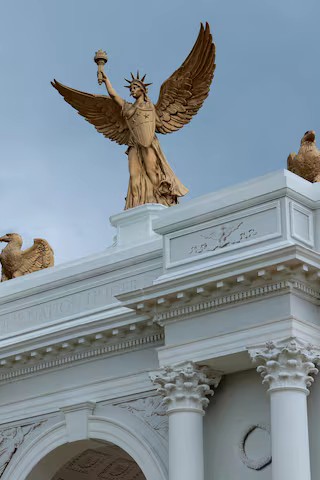
In recent days, Trump has cited national security in defending a proposed 250-foot triumphal arch near Washington and in criticizing news organisations that have been barred from the White House.
The developments are part of a broader pattern in which the administration has used national security arguments to support presidential actions involving areas ranging from construction projects and energy policy to tariffs and the deployment of National Guard troops.
TRUMP LINKS PROPOSED ARCH TO NATIONAL SECURITY
Trump has said his planned 250-foot triumphal arch near Washington would also serve as a military complex.
He described the proposed facility as including security-related features such as snipers, drones and ammunition, saying the arrangement would help protect national security.
The arch project has faced opposition and legal questions as plans for the structure move forward.
Trump's use of national security in defending the project comes as his administration has faced resistance over other initiatives that have required legal or political support.
NATIONAL SECURITY ARGUMENT ALSO USED FOR BALLROOM PROJECT
The administration has separately used security considerations in defending plans for a roughly $400 million ballroom at the White House.
Officials have said the project includes security enhancements developed with the White House Military Office and Secret Service.
The ballroom and the proposed Washington arch are separate projects, although both have featured national security arguments from the administration.
Trump has also cited national security in supporting the cancellation of offshore wind projects, the deployment of National Guard troops to Democratic-led cities and several tariffs on foreign goods.
MEDIA BAN TRIGGERS LEGAL CHALLENGE
Trump has also described CNN, MS NOW and Politico as a national security threat after his administration barred the three organisations from the White House.
The president said the outlets posed a threat to national security, but did not provide evidence establishing such a threat.
The three media organisations filed a lawsuit against Trump and his administration on September 21, arguing that the ban violates constitutional protections for freedom of speech and the press.
A hearing on their request for a temporary restraining order is scheduled in federal court.
The White House has defended Trump's authority, arguing that journalists who seek classified information or disclose sensitive details can act against national security interests.
BROADER USE OF NATIONAL SECURITY POWERS
US presidents have long relied on national security arguments when exercising executive authority, particularly in matters involving defence, intelligence and classified information.
Legal experts cited in the current debate have argued that Trump's administration is applying the justification more broadly and frequently, including to issues with less direct connections to traditional national security matters.
A senior White House official told Reuters that the administration sees security justifications as a way to strengthen Trump's position when his priorities face legal challenges.
The official acknowledged that using national security as a broad defence is not ideal but said it can change the legal and political circumstances surrounding a dispute.
LEGAL AND POLITICAL RESISTANCE CONTINUES
The national security arguments come as several parts of Trump's agenda face challenges in courts and from political opponents.
The disputes involve construction projects, energy policy, media access, tariffs and the use of federal forces.
The administration maintains that Trump, as commander-in-chief, has broad responsibility for protecting US national security.
The continuing legal challenges will help determine how far that authority can extend when national security arguments are used to support presidential actions beyond traditional defence and intelligence matters.