United States
Trump’s Economic Optimism Contrasts With Vance’s Acknowledgement of Rising Living Costs Ahead of Midterms
WASHINGTON — President Donald Trump is promoting what he describes as a period of unprecedented economic success in the United States, while Vice Pre...
By Wavers News
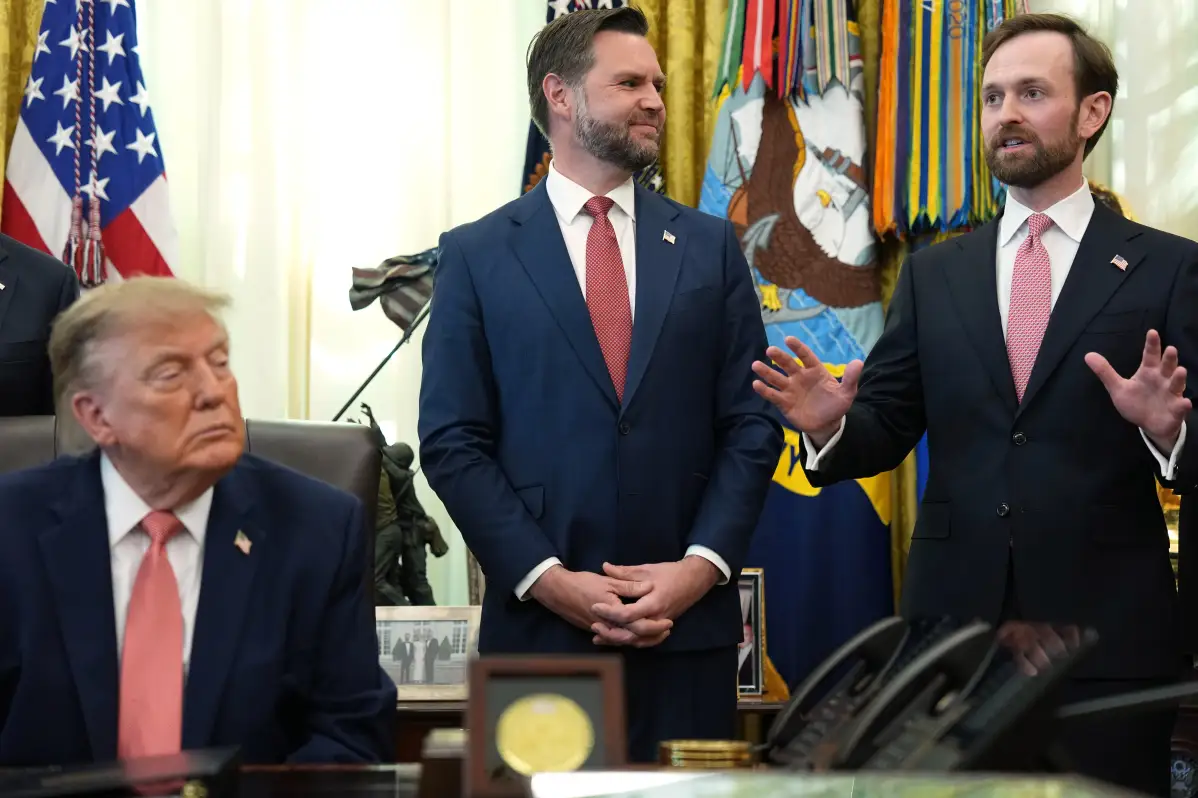
The difference in their public messaging comes as economic concerns remain a major political challenge for Republicans seeking to retain control of Congress. While Trump has emphasised investment and his administration’s achievements, Vance has adopted a more cautious tone, conceding that improvements are taking time and that more work remains.
Recent economic indicators have added to the pressure. Consumer confidence fell to its lowest level in more than a decade in October, long-term mortgage rates reached their highest level in nearly three years, and unemployment increased in the previous month.
Higher gasoline prices have also become a concern, with rising energy costs contributing to inflationary pressure and affecting the prices consumers pay for other goods and services.
TRUMP CONTINUES TO DEFEND HIS ECONOMIC RECORD
Trump has repeatedly described the current period as a “golden age of America”, arguing that the country is performing exceptionally well under his leadership.
During a campaign appearance in Kentucky on Saturday, he again presented an optimistic assessment of the economy while campaigning for Republican candidates ahead of the November 3 elections.
The president has also dismissed affordability concerns as a political “hoax”, drawing criticism from people who say the cost of everyday necessities remains a serious burden.
Although Trump has occasionally acknowledged that gasoline prices are high, he has defended the expense as a price worth paying for national security amid the conflict involving Iran.
His approach has centred on promoting economic achievements and new investments while pushing back against claims that his policies have failed to ease financial pressures on American families.
However, the gap between the administration’s positive economic message and the concerns expressed by some consumers remains a challenge as Republicans prepare for the midterm elections.
VANCE ACKNOWLEDGES THAT MORE WORK IS NEEDED
Vance has taken a more measured approach, recognising that Americans are experiencing financial difficulties despite the administration’s claims of progress.
During a televised town hall on Saturday, the vice president acknowledged that gasoline prices were too high and said the administration was working to address the problem.
He also drew on his working-class upbringing, recalling how high fuel prices affected his grandmother and expressing an understanding of the pressure households face when essential expenses increase.
Vance has argued that the administration’s investment plans will take time to produce tangible results. New factories and other projects, he has explained, must be built before they can generate employment and deliver their anticipated economic benefits.
The vice president has also blamed some of the country’s economic difficulties on policies inherited from previous Democratic administrations, arguing that reversing those problems cannot happen immediately.
Nevertheless, his acknowledgement that the government needs to do more contrasts with Trump’s repeated emphasis on the country’s economic success.
The two officials continue to defend the administration’s overall direction, but their different approaches reflect the challenge of reassuring voters who are concerned about the cost of living.
ECONOMIC PRESSURES SHAPE THE POLITICAL DEBATE
The economic outlook has become an important issue in the campaign leading up to the November elections.
Falling consumer confidence suggests that many Americans remain pessimistic about economic conditions. At the same time, higher mortgage rates can make home purchases and refinancing more expensive, while rising fuel prices put additional pressure on household budgets and businesses.
An increase in unemployment has added another concern for workers and job seekers.
These indicators do not, by themselves, determine how Americans will vote. However, they provide important context for understanding why affordability has become a prominent issue in the political debate.
The administration has continued to promote investment announcements and its broader economic agenda, arguing that the benefits will become clearer over time. Critics, meanwhile, have questioned whether those promised gains are reaching households quickly enough to offset current expenses.
For voters dealing with higher prices, the immediate impact on their finances may carry more weight than promises of future economic improvement.
VOTERS OFFER DIFFERENT ASSESSMENTS
Reactions among voters illustrate the challenge facing Trump as he promotes his economic record.
Conda Little, a 76-year-old retiree who attended a Trump rally in Dalton, Georgia, said she believed the president tended to exaggerate his achievements and considered Vance more realistic in his assessment of economic conditions.
Little continued to support Trump’s position on the conflict involving Iran but acknowledged that the resulting financial pressures were difficult for consumers, particularly those facing higher gasoline and grocery bills.
Other supporters have remained firmly behind the president.
Cindy Massengill, a 67-year-old attendee at the Dalton rally, said she believed Trump was doing the best he could under the circumstances. Her position reflects the view among some supporters that the administration is working to address inherited economic problems.
Mary Bunker, a 67-year-old Republican who attended a Trump rally near Wichita, Kansas, also expressed support for the president. Although she works multiple jobs and feels the effects of higher fuel costs, she said she valued the tax breaks introduced under his administration.
Not all voters share that confidence.
Santiago Rodriguez, a 19-year-old college student in Texas preparing to vote for the first time, said Trump appeared disconnected from the financial difficulties experienced by working-class Americans. Rodriguez, who attended a campaign event for Democratic Senate candidate James Talarico, said the president’s economic messaging influenced his willingness to consider Republican candidates.
The differing views show that economic concerns do not translate into a uniform political response. Some voters continue to support Trump despite rising costs, while others believe his public statements do not adequately reflect their financial experiences.
MIDTERM ELECTIONS COULD TEST REPUBLICAN SUPPORT
The November 3 midterm elections will determine control of the US House of Representatives and Senate, shaping the administration’s ability to advance its legislative agenda during the remainder of Trump’s presidency.
Republicans are seeking to persuade voters that the administration’s economic policies will deliver lasting benefits. Democrats, meanwhile, have opportunities to challenge the president’s record by focusing on household expenses and the public’s assessment of economic conditions.
The election outcome will depend on several issues, including the economy, healthcare, immigration and candidates’ positions on matters affecting individual states and communities.
For Trump and Vance, the immediate challenge is to maintain Republican support while addressing concerns about prices and the pace of economic improvement.
Their contrasting messages highlight the difficulty of promoting long-term economic ambitions when many households remain focused on the cost of meeting their everyday needs.
As election day approaches, the administration’s ability to convince voters that its policies are producing meaningful results could become an important factor in the contest for control of Congress.