Politics
Trump Pledges $5,000 Payment to Every U.S. Adult if Republicans Win Midterms
WASHINGTON — President Donald Trump has pledged to give every American adult a $5,000 payment if Republicans retain control of both the House of Repre...
By Wavers Multimedia
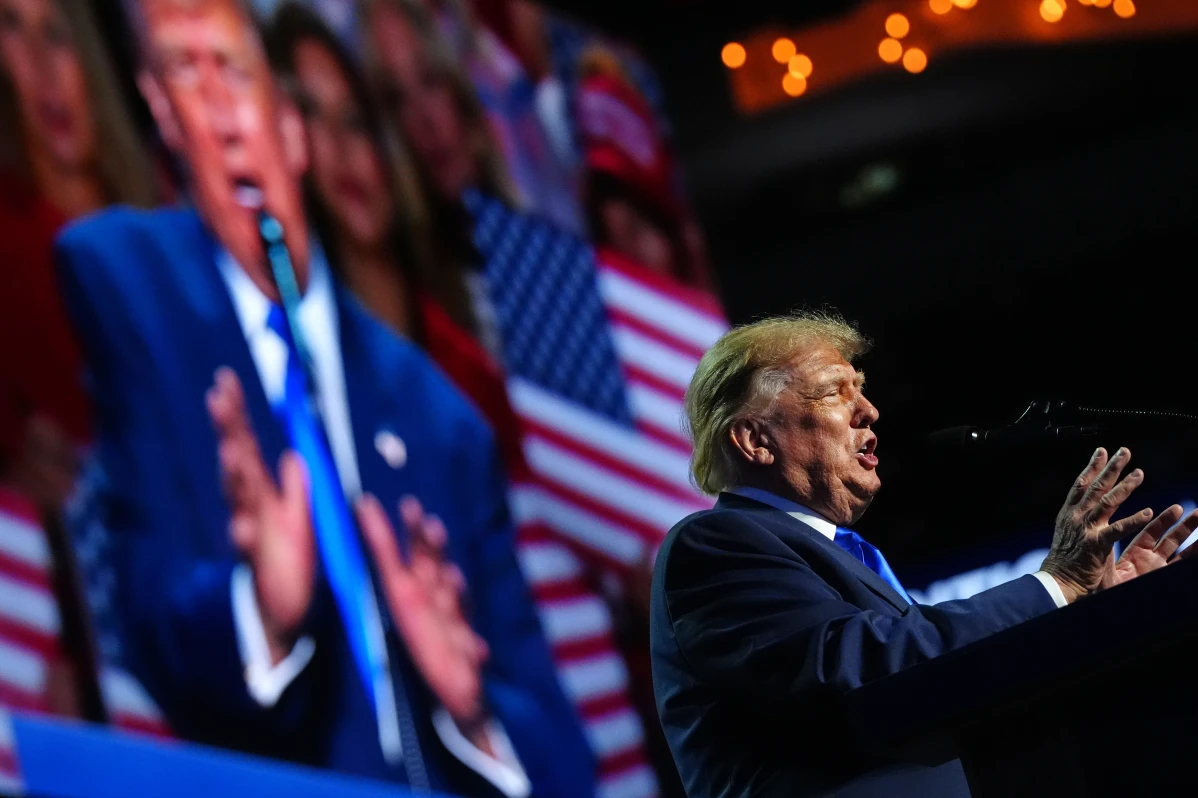
Trump made the promise during the Republican Party’s midterm convention in Dallas, presenting the proposed payment as a reward tied to what he described as the country’s economic strength and success.
“If the Republicans win, you win with us and you get $5,000,” Trump said at the convention.
He compared the proposed payments to dividends distributed by corporations to their shareholders, arguing that Americans would receive a share of the country’s economic gains.
However, the proposal immediately raised questions about its cost, legality, funding and potential effect on the U.S. economy.
Proposal could cost more than $1 trillion
Providing $5,000 to every American adult would likely cost more than $1 trillion, according to the report.
The enormous expense would come as the U.S. government is already running an annual budget deficit of nearly $1.8 trillion, while the country's national debt surpassed $40 trillion last month.
Marc Goldwein, senior policy director at the Committee for a Responsible Federal Budget, said Trump does not have the authority to distribute such money without congressional approval.
Goldwein also questioned the description of the payments as a dividend, noting that the federal government is operating with large deficits rather than a surplus.
Congress would have to approve the payments
Trump cannot simply authorize the $5,000 payments on his own.
Congress would need to approve the spending or otherwise provide the necessary authorization for the payments to be made.
The proposed amount would also be far greater than the revenue the United States has collected from tariffs, despite suggestions from Vice President JD Vance that tariff revenue could be used to finance the payments.
Vance appeared to partially walk back the proposal shortly after Trump announced it, suggesting that the payments would not go to wealthy Americans.
The White House did not immediately provide details about how the program would work or how it would be funded.
Concerns over inflation
Economists and fiscal policy experts have raised concerns that such a large government payment could add further pressure to inflation.
The proposed dividend comes at a time when the U.S. economy is already facing concerns about rising prices and the government's growing debt burden.
A payment of $5,000 to every adult would also be significantly larger than the direct government payments Americans received during the COVID-19 relief programs carried out during Trump's first term.
Trump has proposed similar payments before
This is not the first time Trump has discussed sending money directly to Americans.
Earlier this year, he proposed a $2,000 dividend and said he did not believe congressional approval would necessarily be required.
Last year, Trump also gave members of the U.S. military a $1,776 payment, which he described as a “warrior dividend.”
The latest proposal, however, is different because Trump has directly connected the $5,000 payment to the outcome of the midterm elections.
Republican Sen. Bernie Moreno of Ohio said he would prepare legislation to establish the payment after the November 3 election if Republicans win.
“I will get a bill ready so that we can get the Trump Dividend passed immediately after the November 3rd election,” Moreno wrote.
Republicans face difficult midterm battle
Trump's proposal comes as Republicans attempt to maintain their narrow majority in the House and defend their position in the Senate.
Republicans are facing significant political headwinds, with Trump remaining unpopular and the party confronting opposition over several major issues, including the ongoing war with Iran.
The Senate, which Republicans had previously been considered well positioned to retain, is also now considered competitive.
Trump has repeatedly expressed frustration with the historical tendency for the president's party to lose congressional seats during midterm elections.
His $5,000 proposal represents another attempt to energize Republican voters ahead of November's elections.
Payment would not legally depend on how people vote
Despite the political circumstances surrounding the announcement, legal experts said the proposed payment would not itself constitute an illegal payment for votes because it would be offered to Americans regardless of whether they voted or which candidate they supported.
New Mexico attorney John Day described the proposal as a campaign promise rather than a payment directly tied to an individual's vote.
“This is a campaign promise,” Day said. “It’s not a payment to individuals to try to get them to vote in a particular way.”
For now, the proposal remains a pledge rather than an approved government program. It would require congressional action before the promised payments could become a reality, while questions remain over how the government would finance a program potentially costing more than $1 trillion.