International
Tiriane Noah Takes Over Cameroon’s MRC as Party Prepares for 2027 Elections
YAOUNDÉ — Cameroon’s opposition Cameroon Renaissance Movement (MRC) has elected Tiriane Balbine Nadège Noah as its national president, marking a chan...
By Patience
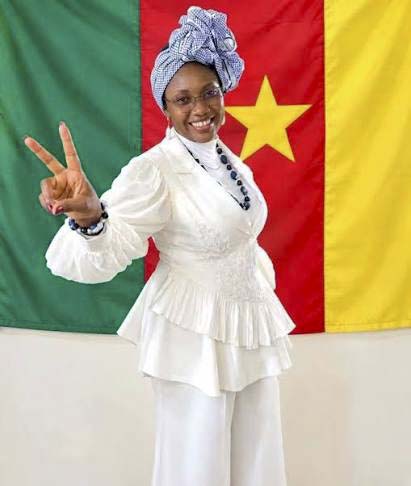
Noah
Noah was elected on Saturday, October 17, during an extraordinary national convention held at the party’s headquarters in Odza, Yaoundé. She succeeds Maurice Kamto, who led the movement for 14 years before resigning in September.
Her election makes her the first woman to head the MRC since its establishment. She previously served as the party’s second vice-president and assumed interim leadership following the resignations of Kamto and first vice-president Mamadou Mota on September 8.
The leadership transition comes as the opposition party seeks to reorganise its structures and prepare for the next legislative and municipal elections, expected in 2027.
NOAH WINS OVERWHELMING SUPPORT
Noah secured 1,246 votes out of 1,286 ballots cast, representing 96.89 per cent of the vote. Pierre Emmanuel Binyam received 29 votes, while 11 ballots were declared invalid.
Binyam had announced his withdrawal from the contest before the convention, citing alleged irregularities in the electoral process. The election proceeded despite his withdrawal.
The result gives Noah a renewable five-year mandate to lead the party.
The convention brought together approximately 1,200 delegates at the party headquarters in Yaoundé. Members gathered to choose a successor to Kamto and determine the movement’s direction following the departure of its previous leadership.
In her address after the election, Noah recognised party activists who had faced difficulties because of their political involvement and paid tribute to the movement’s outgoing president.
Her election places responsibility for the party’s next phase of political activity in the hands of a leader who has already served in its senior ranks.
LEADERSHIP CHANGE FOLLOWS KAMTO’S RESIGNATION
Kamto’s departure marked the end of a 14-year period at the head of the MRC. His resignation, alongside that of Mota, was announced on September 8.
Noah became interim president following the resignations and subsequently emerged as the party’s choice to lead it permanently.
The transition comes after years of political difficulties for the MRC, including disputes over electoral participation and restrictions that the party and its supporters have said affected their political activities.
The movement boycotted Cameroon’s 2020 legislative and municipal elections. That decision left it without elected representatives from those contests and shaped its position in the country’s political landscape.
The party also faced difficulties over its participation in the 2025 presidential election after Kamto’s candidacy was rejected.
Noah now faces the task of strengthening the party’s organisation while addressing the challenges that have limited its participation in electoral politics.
MRC TARGETS THE 2027 ELECTIONS
One of the new president’s immediate priorities is preparing the MRC for the next legislative and municipal elections expected in 2027.
The party has indicated that it intends to return to the electoral process after its previous boycott of local elections.
That objective will require the movement to strengthen its presence across the country, organise its supporters and prepare candidates for constituencies where it intends to compete.
The party will also need to maintain unity following the leadership contest and address concerns raised by Binyam over the election process.
A stronger organisational structure could help the MRC prepare for the next electoral cycle, although its ability to compete will also depend on the conditions governing political participation and the electoral process in Cameroon.
Noah’s leadership will therefore be tested by the party’s ability to translate its announced intentions into practical preparations for the 2027 polls.
A NEW CHAPTER FOR CAMEROON’S OPPOSITION
Noah’s election introduces a new leader at a significant point in the MRC’s political history.
The party must now move beyond the leadership transition and focus on rebuilding its electoral presence after years marked by boycotts, disputes and difficulties surrounding political participation.
Her five-year mandate gives her responsibility for guiding the movement’s organisation, maintaining internal cohesion and preparing it for future elections.
The immediate challenge is to establish a clear direction for the party and ensure that its structures are ready for the next electoral cycle.
Whether the MRC can regain a stronger position in Cameroon’s political landscape will depend partly on the decisions taken under its new leadership and the conditions under which opposition parties are able to compete.