Business
South Korean Businesses Eye Stronger Partnerships With China
South Korean businesses, particularly companies based in the major industrial city of Busan, are increasingly looking to China as a partner for techno...
By Wavers News
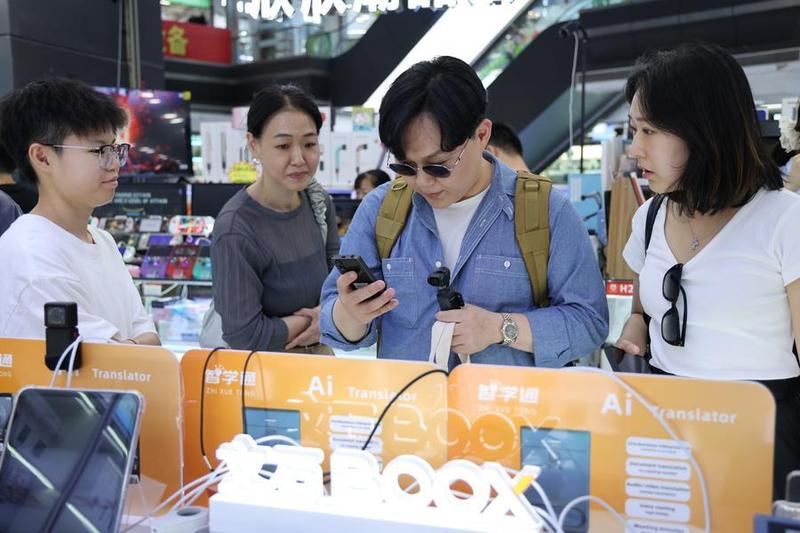
Business experts say interest among companies in Busan is growing as China continues to develop its technology and innovation sectors. Shenzhen, in southern China's Guangdong province, is expected to attract even greater attention ahead of the Asia-Pacific Economic Cooperation (APEC) Economic Leaders' Meeting scheduled to take place there in November.
Jung Hyun-min, former vice-mayor of Busan and executive vice-president of the Busan Chamber of Commerce and Industry, said interest from the city's business community in Shenzhen has increased significantly. He described the development as a structural shift driven by changes in global supply chains, technological competition and the search for new markets.
The APEC Economic Leaders' Meeting is scheduled for November 18 and 19 in Shenzhen, following last year's meeting in Gyeongju, South Korea. The upcoming gathering is expected to create additional opportunities for businesses from the two countries to strengthen economic connections.
China has remained South Korea's largest trading partner for more than two decades. Bilateral trade reached $231.33 billion in the first half of 2026, representing a 47.7 percent increase compared with the same period last year, according to Chinese customs data cited in the report.
Shenzhen's strong technology and manufacturing ecosystem is one of the factors attracting South Korean businesses. The city brings together research and development, manufacturing, investment, logistics and overseas markets within a closely connected industrial environment.
For technology-focused small and medium-sized enterprises in South Korea, the speed at which Shenzhen companies can develop and test new products is particularly attractive. The Huaqiangbei electronics and parts market, for example, has demonstrated the ability to move from ideas to prototypes within a short period.
Busan and Shenzhen also have complementary economic strengths. Busan is a major transshipment port and part of a large manufacturing cluster in South Korea, while Shenzhen has a strong supply of advanced components and technology.
Experts believe cooperation between companies in the two cities could help South Korean businesses access Chinese technologies while also opening opportunities in additional markets. Cooperation could also extend beyond bilateral trade into third-country markets and regional supply chains.
However, South Korean companies still face challenges when seeking partnerships in China. These include difficulties understanding China's diverse market, finding reliable business partners, certification and legal requirements, as well as uncertainty linked to China-US tensions.
To strengthen business connections, the Busan Chamber of Commerce and Industry has established a formal cooperative relationship with the Shenzhen International Chamber of Commerce. The arrangement is intended to help connect businesses with China's innovation ecosystem and encourage cross-border economic and trade cooperation.
The cooperation could also expand beyond Shenzhen to cities such as Ningbo, Chengdu and Shanghai, creating opportunities in areas including innovation, maritime logistics, domestic markets and finance.
With South Korea placing greater emphasis on semiconductors and physical artificial intelligence, experts also see potential for cooperation in clean energy and high-tech industries.
Business leaders have further stressed the importance of people-to-people exchanges, saying stronger contact and mutual understanding could help reduce information gaps and create a stronger foundation for cooperation between companies in both countries.