Technology
Robots Are Becoming More Autonomous as They Learn to Work Without Human Control
Robots are increasingly being developed to perform complex tasks on their own, with advances in autonomous perception and decision-making allowing th...
By Wavers News
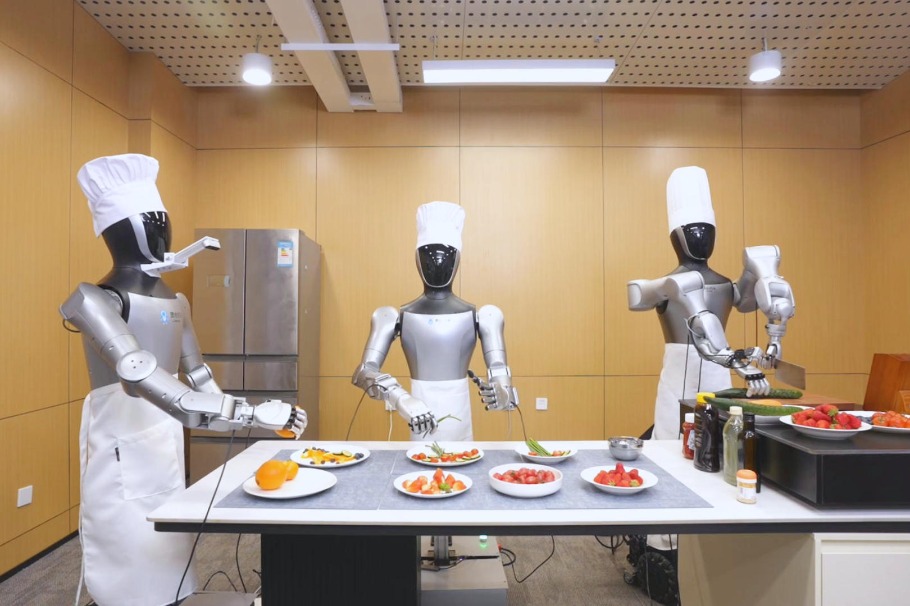
The latest generation of dexterous robots can assess their surroundings, make decisions and carry out tasks without direct human intervention, marking another step in the development of autonomous robotics.
The technology is moving beyond controlled laboratory environments and into competition settings, where robots are being tested on their ability to handle demanding tasks independently.
Unlike machines that simply repeat a fixed sequence of programmed movements, autonomous robots are designed to respond to the conditions they encounter. Their ability to perceive objects and surroundings and then determine how to act is central to this development.
From research labs to real-world tasks
Robotics researchers have been working to give machines greater independence, particularly in tasks that require precise movement and interaction with physical objects.
Dexterous robotic hands are an important part of that effort. They allow robots to manipulate objects while their autonomous systems determine how the task should be completed.
The progress is also being demonstrated through robotics competitions, where machines face practical challenges that test their movement, coordination and ability to complete tasks without human intervention.
Could robots work independently at home?
Greater autonomy could eventually expand the role of robots in everyday environments.
For robots to become useful household assistants, they would need to understand changing surroundings, identify objects, decide what actions are appropriate and complete those actions safely.
That makes autonomous decision-making just as important as physical capability. A robot may have a highly capable mechanical hand, but it also needs to understand what it is expected to do and adjust its actions when circumstances change.
The latest advances point toward a future in which robots could move from performing isolated demonstrations to handling a wider range of tasks with much less human supervision.
As autonomous perception and decision-making continue to improve, the boundary between robots that require constant instructions and those capable of acting independently is becoming increasingly narrow.