International
QATAR SIGNS AGREEMENTS FOR FOUR PRIVATE SCHOOLS EXPECTED TO PROVIDE 5,000 STUDENT PLACES
Qatar has signed agreements with four private school operators to develop and run new educational institutions expected to provide 5,000 additional st...
By Wavers News
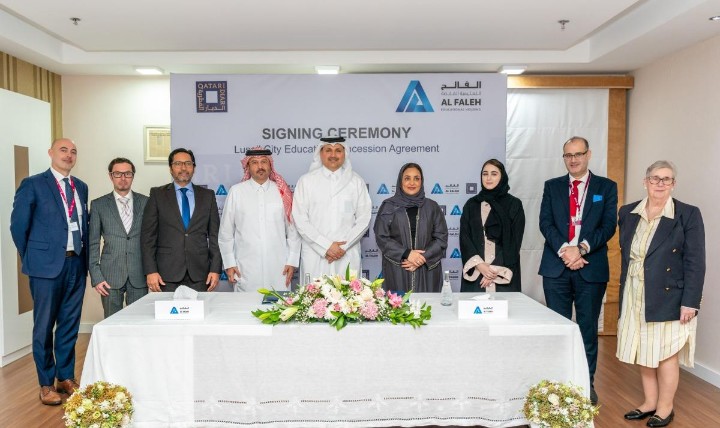
Qatar signs agreements for four new private schools expected to provide 5,000 student places.
The agreements were signed on Thursday, October 22, 2026, by the Ministry of Education and Higher Education with representatives of the four schools. The institutions will be built on government-allocated land in Al Wukair, Al Mansoura and Al Sailiya.
The projects will offer Indian and Egyptian curricula and are intended to provide families with additional educational options at affordable tuition rates. All four schools are planned as co-educational institutions covering all educational stages.
The agreements form part of Qatar’s efforts to increase school capacity through cooperation between government bodies and private investors.
FOUR SCHOOLS PLANNED ACROSS THREE AREAS
The projects involve four schools distributed across three locations in Qatar.
Two institutions are planned for Al Wukair, while Al Mansoura and Al Sailiya will each receive one school.
The schools identified in the agreements are:
Indian Islamic School: Located in Al Wukair and following the Indian curriculum.
Cardiff International School: Located in Al Wukair and following the Egyptian curriculum.
Pearl Podar School: Located in Al Mansoura and following the Indian curriculum.
Al Zaytoun International School: Located in Al Sailiya and following the Indian curriculum.
The planned locations were selected following an assessment of population density and geographical distribution across the country. The intention is to expand educational opportunities in areas identified as suitable for additional school capacity.
The agreements were signed by Omar Abdulaziz Al Naama, Assistant Undersecretary for Private Education Affairs at the Ministry of Education and Higher Education, on behalf of the minister, alongside representatives of the four schools.
The signing ceremony was attended by senior government officials, including Education and Higher Education Minister Lolwah bint Rashid Al Khater, Commerce and Industry Minister Sheikh Faisal bin Thani bin Faisal Al Thani, and Public Works Authority President Mohammed bin Abdulaziz Al Meer.
PROJECTS EXPECTED TO ATTRACT QR1.48 BILLION
The four projects are expected to attract approximately QR1.48 billion in private-sector capital and operating expenditure over 25 years.
The figure represents projected investment and operating expenditure over the stated period. It is not a confirmed government payment or a figure limited to construction costs.
Under the arrangements, private investors will be responsible for financing, designing, constructing, operating and maintaining the schools.
Government institutions will support the projects through the allocation of land and coordination of the relevant arrangements for developing educational infrastructure.
Saleh Majed Al Khulaifi, Assistant Undersecretary for Industry and Business Development Affairs at the Ministry of Commerce and Industry, said the initiative would strengthen public-private partnerships and increase private-sector participation in development projects.
The arrangements are intended to draw investment into education while expanding the range of services available to students and families.
PRIVATE EDUCATION SECTOR SERVES MORE THAN 271,000 STUDENTS
The new projects come as Qatar’s private education sector serves a substantial number of students across a range of curricula.
Figures cited by the Ministry of Education and Higher Education show that the sector includes 354 private schools and kindergartens, offering 25 curricula and serving more than 271,090 students.
The sector also employs approximately 25,372 people.
The four planned schools would add a combined capacity of 5,000 student places to the country's private education infrastructure. These are expected places, not students who have already enrolled.
The schools will provide additional options for families seeking Indian or Egyptian curricula. Their eventual contribution to available places will depend on construction, readiness and the commencement of operations.
GOVERNMENT INCENTIVES SUPPORT PRIVATE EDUCATION INVESTMENT
Qatar has introduced a range of incentives to encourage private-sector investment in education.
These include customs exemptions, exemptions from electricity and water charges, the allocation of land and school buildings, and educational vouchers for eligible Qatari students.
The incentives are intended to encourage investment while supporting the development of educational services.
The Ministry of Education and Higher Education has also indicated that further partnerships and initiatives will be announced to support investment and diversify private education services.
The new school projects are linked to Qatar National Vision 2030, the country's long-term development framework. Expanding educational capacity and increasing private-sector participation are among the objectives associated with the initiative.
OPENING DATES AND ADMISSIONS NOT YET CONFIRMED
Although the agreements have been signed, the four schools should not be described as already operating. The announcement concerns projects to be developed and operated under the agreed arrangements.
Specific opening dates, admissions schedules and individual tuition fees were not provided in the report detailing the agreements.
Families interested in the schools will therefore need to await further announcements from the operators and relevant authorities before making enrolment plans.
The agreements establish the planned schools, their locations, the curricula they will follow and their expected combined capacity. The next stages will involve delivering the projects and preparing the institutions to begin educational operations.