News
Paris Protests Turn Violent as More Than 400,000 Demonstrate Across France Over Living Costs and Education
Thousands of demonstrators took to the streets of Paris on Saturday, October 24, as protests over education funding, rising living costs and public se...
By Wavers News
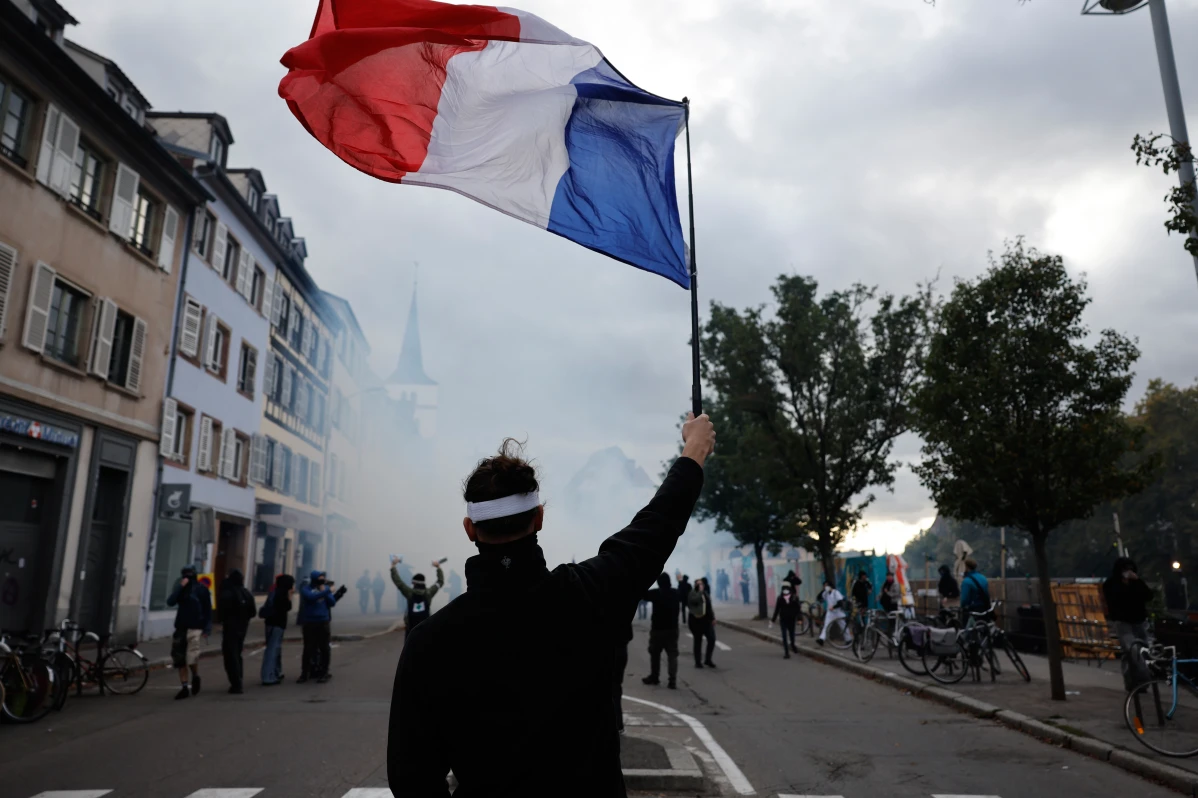
The demonstrations formed part of a nationwide mobilisation involving students, teachers, trade unions and workers demanding improvements to schools and universities, stronger public services and measures to ease financial pressure on households.
France’s Interior Ministry estimated that approximately 410,000 people participated in protests nationwide, including around 110,000 in Paris. The CGT trade union, which helped organise some of the demonstrations, estimated national participation at nearly 800,000, substantially higher than the government’s figure.
Although much of the Paris march proceeded peacefully, violence erupted near its endpoint in the eastern part of the capital. Some masked individuals threw stones, bottles and fireworks towards police officers, who responded with tear gas, water cannons and stun grenades.
The unrest has intensified pressure on President Emmanuel Macron’s government as France faces continuing social tensions in the final months of his presidency.
PROTESTS OVER SCHOOL FUNDING SPREAD NATIONWIDE
The demonstrations grew out of student protests that began last month over staff shortages and deteriorating conditions in schools.
Students and education campaigners have demanded more teachers, improved school buildings and greater financial support for those pursuing higher education. Their concerns have since attracted support from workers and trade unions campaigning over the cost of living and the condition of public services.
Organisers have also called for increased student financial assistance and measures to address housing costs, including a proposed freeze on rents in public student accommodation.
For many participants, the demonstrations have become an opportunity to express broader dissatisfaction with economic inequality and the government's handling of public services.
The movement has expanded beyond Paris, with rallies and confrontations reported in several major French cities.
The scale of Saturday's mobilisation demonstrated that the concerns driving the protests extend beyond education, encompassing the financial pressures facing households and demands for greater government support.
PARIS MARCH BEGINS PEACEFULLY BEFORE CLASHES
The main Paris demonstration took place along the southeastern edge of the capital after authorities restricted the permitted route.
The march was largely peaceful for much of the afternoon, with students, families, workers and union members carrying banners criticising government policies and demanding the right to demonstrate.
However, tensions rose as the crowd approached the march's endpoint near Porte de Vincennes.
Groups of masked individuals dressed in black threw objects and fireworks at police. Officers responded with tear gas, water cannons and stun grenades as they attempted to disperse the crowd.
Riot police also charged into a larger group of demonstrators near the end of the march, using batons during the operation.
The violence disrupted what had largely been a peaceful demonstration earlier in the day. Authorities had increased security in anticipation of renewed unrest following widespread rioting and looting during protests the previous weekend.
The clashes highlighted the difficulty facing police as they attempted to contain disorder while managing large demonstrations involving people with different demands and intentions.
NEARLY 1,000 ARRESTS REPORTED
French Interior Minister Laurent Nuñez said police had made nearly 1,000 arrests in connection with Saturday's demonstrations, with the total expected to change as authorities processed additional cases.
The protests were not limited to Paris. Clashes and other disturbances were also reported in several cities, including Marseille, Lyon, Nantes and Rennes.
In Marseille, some young people reportedly set fire to rubbish bins and threw stones and bottles at security forces. Police in several locations used tear gas to disperse crowds, while water cannons were deployed in other cities.
Authorities had mobilised approximately 70,000 police officers and gendarmes nationwide to manage the demonstrations and prevent a repeat of the previous weekend's extensive property damage.
Some cultural institutions and businesses in Paris also closed or restricted their activities because of security concerns.
The reported arrests do not mean that every person detained was accused of the same offence. The circumstances and allegations relating to individual cases will depend on the investigations conducted by the authorities.
DISPUTE OVER THE RIGHT TO DEMONSTRATE
The restrictions imposed on demonstrations in Paris and other French cities have drawn criticism from trade unions and civil liberties advocates.
Authorities defended tighter controls as necessary to prevent violence and protect the public following the previous weekend's unrest.
However, union representatives argued that limiting where demonstrations could take place risked undermining the right to protest and prevented campaigners from bringing their concerns to prominent public locations.
In Paris, the decision to confine the main march to the southeastern outskirts of the city became another source of frustration for some participants.
The dispute reflects a broader challenge for the French government: balancing public safety with the right of citizens to assemble and express opposition to government policies.
The protests have also exposed divisions over how authorities should respond to unrest involving both peaceful demonstrators and individuals accused of attacking police or damaging property.
MACRON FACES GROWING PRESSURE
The protests present another political challenge for Macron, whose presidency is approaching its final months before France's next presidential election, scheduled for 2027.
The movement has brought together different groups, including students concerned about education, workers worried about living costs and campaigners critical of the government's approach to public services.
The demands are not identical, but their convergence has increased the pressure on the administration to respond.
Macron met student representatives on Friday, October 23. Student participants subsequently said that discussions had included changes to university admissions, although they continued to call for concrete measures addressing their wider concerns.
The government now faces pressure to demonstrate that discussions with students and other groups will produce practical results.
Meanwhile, political opponents have sought to use the unrest to challenge the government's record on security, economic management and social policy.
COST OF LIVING REMAINS A CENTRAL CONCERN
Rising household expenses have helped broaden the protests beyond the education sector.
Participants have expressed concern about the cost of fuel, housing and other necessities, alongside frustration over inequality and access to employment.
France's national statistics agency reported that energy prices were 21.3% higher in September than a year earlier, while overall inflation reached 3.1%.
These figures help explain the financial pressures cited by demonstrators, although individual households experience changes in living costs differently depending on their income, location and spending patterns.
Trade unions and campaigners have called for stronger support for people struggling with essential expenses and for improvements to public services.
The government must now contend with the combined effects of these economic concerns and the continuing security challenges associated with the demonstrations.
FURTHER DEMONSTRATIONS POSSIBLE
Organisers have indicated that mobilisation could continue if authorities fail to address the demands raised by students and workers.
The scale of any future demonstrations, and whether they remain peaceful, will depend on decisions by organisers, government responses and the security measures adopted by local authorities.
For now, Saturday's events have left France confronting renewed debate over education funding, household affordability, policing and the limits placed on public demonstrations.
While the majority of the Paris march proceeded peacefully, the clashes at its conclusion and the large number of arrests reported nationwide demonstrate the continuing difficulty of containing the unrest.
The government's next steps will be closely watched by students, trade unions and other campaigners seeking concrete changes to education and public services.