World News
Norway Targets TikTok, Snapchat and Roblox in Proposed Digital Restrictions for Children
Norway is expanding its proposed restrictions on children's access to social media to include potentially harmful online games and messaging services,...
By Wavers News
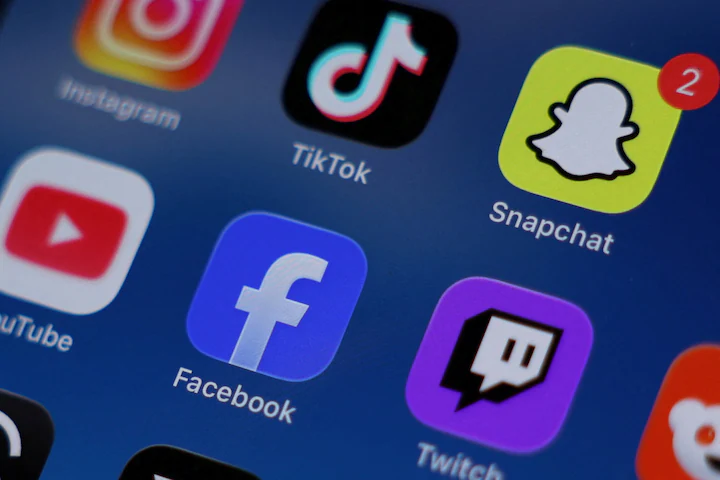
The Norwegian government announced the change on Monday, 19 October 2026, naming TikTok, Snapchat and Roblox as platforms likely to fall under the proposed legislation in their current forms.
The revised approach is intended to address concerns that children face risks across a wider range of digital services, not just conventional social networking applications. Platforms that combine entertainment with messaging, social interaction and features designed to keep users engaged could also come under scrutiny.
However, the restrictions are not yet in force. The government is working towards presenting the legislation to Norway's parliament, the Storting, before the end of the year.
WHY NORWAY IS EXPANDING THE PROPOSAL
The government had already announced plans to introduce an age limit of 16 for social media use. Its latest revision addresses a potential gap in the earlier approach, under which messaging services and online games were expected to receive broader exemptions.
Officials now want the law to distinguish between services according to the risks they pose to children rather than automatically exempting entire categories of digital platforms.
This means some online games and messaging services could be covered if their design, features or content create risks for young users. Services considered harmless would not automatically be prohibited simply because they offer messaging or gaming functions.
Children and Families Minister Lene Vågslid said the revised approach was intended to strengthen protection while preserving children's ability to participate in digital life.
The government believes the change will allow the legislation to address services that function partly as social networks, even when they are presented primarily as games or other forms of entertainment.
THREE MAJOR PLATFORMS IDENTIFIED
TikTok, Snapchat and Roblox are among the services the government expects to be covered by the proposal as they are currently designed.
The inclusion of Roblox is particularly notable because the platform is widely recognised as an online gaming service. It also allows users to interact socially, communicate with others and participate in shared digital experiences.
Snapchat combines messaging with social networking features, while TikTok centres on short-form video and algorithm-driven content recommendations.
Norwegian officials argue that risks to children can arise from features such as exposure to harmful content, addictive design, unlawful marketing and unwanted contact with strangers.
The government has not yet published a complete list of every platform that could be affected. Other services may therefore be assessed as the legislative process continues and authorities examine their features and potential risks.
TECHNOLOGY COMPANIES FACE GREATER RESPONSIBILITY
A central part of the proposed law is the expectation that technology companies will take responsibility for ensuring users meet the applicable age requirements.
Digitalisation and Public Governance Minister Torgeir Micaelsen said effective age-verification systems would be necessary to enforce the restrictions.
The government also expects these systems to respect privacy and comply with relevant data-protection requirements. Companies will therefore need to find ways to establish users' ages without unnecessarily exposing their personal information.
The legislation is intended to operate alongside Norway's planned implementation of the European Union's Digital Services Act framework. This framework provides tools for regulating digital services and enforcing obligations on relevant platforms.
By placing responsibility on companies rather than relying exclusively on children and parents, the government hopes to make the age limit more effective in practice.
HOW THE PROPOSED AGE LIMIT WOULD WORK
Under the government's plan, the age limit would apply until 1 January of the calendar year in which a child turns 16.
This means eligibility would be determined by the year of birth rather than the child's exact birthday. The government says this approach is intended to treat children in the same age group consistently.
The proposal does not mean every digital service would automatically become unavailable to children under 16. Instead, the restrictions would target services covered by the law, with the potential for certain games and messaging platforms to be included if they are considered harmful.
The government has also stressed that the assessment of harmfulness should reflect evidence and changes in technology. This could allow authorities to consider new platform features and emerging online risks rather than relying on a fixed list that quickly becomes outdated.
LEGISLATION STILL AWAITING PARLIAMENTARY CONSIDERATION
The Norwegian government aims to submit the bill to the Storting before the end of 2026. The proposal has undergone public consultation, and work on the legislation is continuing.
Until the legislative process is completed, the announcement should not be interpreted as a ban that is already legally enforceable.
The final legislation and its implementation will determine how the rules apply to individual services, how companies must verify users' ages and how compliance will be enforced.
Norway's revised proposal reflects a wider debate across Europe about protecting children online while preserving access to digital communication, education and entertainment.
For technology companies, the development signals that governments may increasingly examine what their platforms enable users to do, rather than relying solely on whether a service is labelled social media, gaming or messaging.
The next major step will be the presentation of the bill to parliament, where the proposed restrictions can proceed through the legislative process.