News
Mozart to Meet Chinese Rock as Beijing Music Festival Blends Classical and Contemporary Sounds
Classical music and Chinese rock are set to share the spotlight as the 29th Beijing Music Festival brings together works by Wolfgang Amadeus Mozart an...
By Wavers Multimedia
The 12-day festival, scheduled for October 9 to 20, will mark Mozart's 270th birth anniversary with a programme designed to connect different musical traditions, generations and styles. Performances will take place across Beijing, including concert halls, theatres and public spaces.
Mozart will remain at the centre of the festival, with several of his major works included in the programme. The opening concert at the National Centre for the Performing Arts will feature Mozart's Piano Concerto No. 22, alongside Respighi's Roman Trilogy. Swiss conductor Charles Dutoit, 90, will lead the festival orchestra, with pianist Elisabeth Leonskaja appearing as soloist.
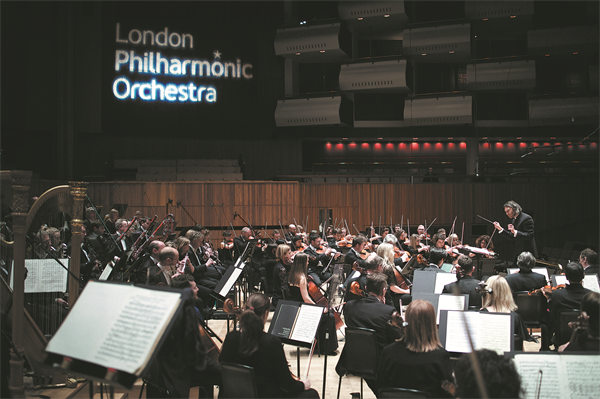
The London Philharmonic Orchestra will also serve as the festival's orchestra-in-residence. Under principal conductor Edward Gardner, the orchestra will perform works spanning composers including Mendelssohn, Brahms, Mozart and Mahler.
Another major attraction will be a concert featuring Mozart's Symphony No. 40 in G Minor alongside Mendelssohn's Symphony No. 3. Chinese baritone Liao Changyong is also scheduled to perform four arias from Mozart's The Marriage of Figaro.
The festival's opera programme will feature Mozart's The Magic Flute and Handel's Giulio Cesare in Egitto. A new production of The Magic Flute will move the story from its traditional fairy-tale setting into a modern city, while Handel's opera will receive its first Chinese stage production since its original premiere in London in 1724.
But the festival will not be limited to European classical traditions.
Its closing concert on October 20 will bring together conductor Yang Yang, the Beijing Symphony Orchestra, young pianist Ju Xiaofu and Cui Jian, one of the most influential figures in Chinese rock music.
The programme will begin with music connected to Mozart before shifting toward Cui's rock repertoire. His well-known songs, including Flower Room Girl and Fake Monk, will be reworked with a symphonic orchestra, creating a meeting point between Chinese rock and Western orchestral music.
The festival will also broaden its international reach with a performance by Indian sitar player Anoushka Shankar, who will make her first appearance in China as part of a tour beginning in Beijing. Her programme will combine Indian classical traditions with contemporary sounds, improvisation and collaborative works.
Younger Chinese musicians will also receive attention through the festival's long-running Blue Bird Project, which supports emerging artists and provides opportunities for them to reach international audiences.
Some performances will even leave conventional concert venues behind. Classical music will be presented outdoors in Sanlitun, one of Beijing's major commercial and entertainment districts, giving audiences a different way to experience the genre.
With Mozart, Chinese rock, Indian classical music and contemporary performances sharing one programme, this year's Beijing Music Festival is positioning music as a space where different cultures and generations can meet.
The event also reflects the continuing evolution of classical music in China, where traditional European works are increasingly being presented alongside local and international contemporary sounds.