World News
Molly Carlson Makes History as First Woman to Dive From a Free-Standing Iceberg
Canadian professional cliff diver Molly Carlson has made history after completing a daring backward dive from a towering iceberg into the freezing wat...
By Wavers News
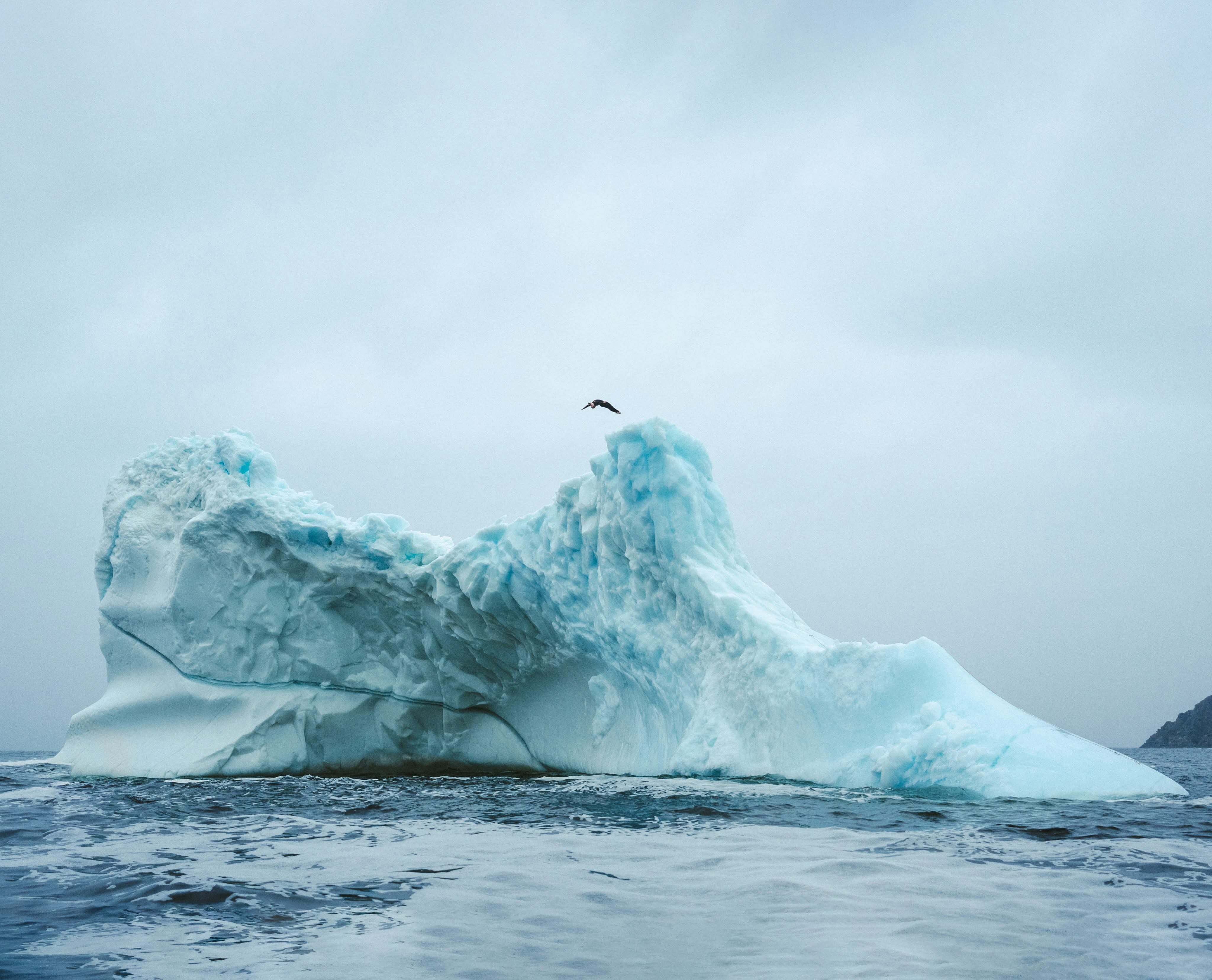
Canadian cliff diver Molly Carlson performs a daring backward dive from a towering iceberg into the Atlantic Ocean near Twillingate, Newfoundland, Canada.
Carlson became the first woman to dive from a free-standing iceberg, plunging approximately 15 metres into the ocean near Twillingate, a coastal community on the island of Newfoundland. The achievement has drawn international attention following the release of footage documenting the challenge in October.
The dive was part of Red Bull’s Iceberg Dive project, which brought together the Canadian athlete and experienced ice climber Will Gadd to attempt a challenge unlike Carlson’s usual competitive dives.
A DIVE UNLIKE HER USUAL COMPETITIONS
Carlson is an established athlete on the Red Bull Cliff Diving World Series circuit, where competitors perform dives from elevated platforms. She finished runner-up in the 2026 series.
However, diving from a floating iceberg presented a different set of challenges. Unlike a purpose-built diving platform, an iceberg is an unstable natural structure that can shift, crack, break apart or overturn without warning.
The iceberg selected for the project stood approximately 15 metres above the water. Carlson completed a backward dive from its elevated edge, making it her highest backward dive to date.
The feat required her to contend with the height of the jump, the cold Atlantic water and the unpredictable movement of the ice beneath her feet.
Carlson described the experience as the scariest thing she had ever done, while also expressing pride in overcoming the fear associated with the challenge.
MONTHS OF PREPARATION BEFORE THE ATTEMPT
Before attempting the dive, Carlson spent months preparing under the guidance of Gadd, a Canadian ice climber with more than three decades of experience.
The preparation began in Canmore, Alberta, where Gadd introduced her to the fundamentals of ice climbing. She learned how to use climbing equipment, including crampons and ice tools, and how to move across frozen surfaces.
Her training progressed from a 10-metre practice wall to more demanding climbs. She also completed a longer climbing challenge to build the skills and confidence needed for the iceberg attempt.
The preparation did not end with climbing. Carlson also had to adapt to the cold water by testing a wetsuit and practising dives in controlled conditions in Montreal, Quebec.
The protective clothing was essential because the Atlantic water was close to freezing. The conditions were substantially different from those she normally encounters during cliff-diving competitions.
Gadd's role extended beyond teaching climbing techniques. He helped assess the challenges of reaching the top of the iceberg and guided Carlson through the preparations required before the jump.
FINDING AN ICEBERG SUITABLE FOR THE DIVE
The team travelled to the coast near Twillingate, Newfoundland, where icebergs drift south from northern waters each year.
Selecting the right iceberg was one of the most critical parts of the operation. The team needed a structure with suitable boat access, a steep edge from which Carlson could dive, a clear landing area in the water and a climbing route that could be navigated safely.
The crew examined numerous icebergs before settling on one they nicknamed No Name.
Even after the selection, conditions had to be monitored carefully. Ocean swells, changing weather and the iceberg's movements could affect whether the attempt could proceed.
Specialists from Ocean Quest Adventures and Crosby Marine Film Services contributed marine safety and operational expertise to the project.
Gadd installed a temporary rigging system to help the pair reach the top of the iceberg. Carlson then climbed the ice before preparing for the jump.
The team emphasised that icebergs remain dangerous even when conditions appear favourable. Their movements cannot be predicted with complete certainty, making careful assessment and preparation essential.
THE MOMENT THAT MADE HISTORY
After reaching the top, Carlson removed her climbing equipment and prepared for the dive in her wetsuit.
She positioned herself at the edge, with the Atlantic Ocean below, and launched herself backwards into the water.
Once she surfaced, Carlson quickly swam away from the iceberg before returning to the support boat. The team had to ensure she was clear of the ice because the structure could move or break apart.
The achievement brought an emotional reaction from the athlete, who reflected on the fear she had faced throughout the project.
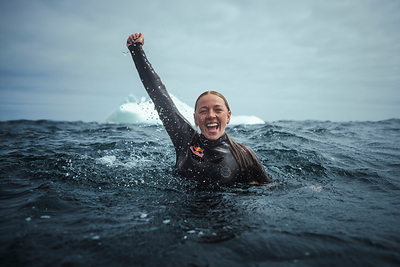
Carlson said the experience had shown her the importance of continuing to challenge herself even when anxiety and uncertainty are present.
For her, the dive represented more than a physical accomplishment. It was also an opportunity to demonstrate that courage does not require the absence of fear.
A MESSAGE ABOUT FEAR AND PERSONAL GROWTH
Carlson has used her public platform to encourage people to speak openly about their fears and insecurities. Through her BraveGang community, she promotes vulnerability, mutual support and the idea that people can find strength in facing difficult experiences.
She connected the iceberg challenge to that message, explaining that much of what people struggle with can remain hidden beneath the surface.
The symbolism of the iceberg became part of the project's broader story: only a small portion of an iceberg is visible above water, while much of its mass remains concealed below.
Carlson said the experience reinforced her belief that people can accomplish meaningful things even when they feel anxious or afraid.
Although the dive attracted attention for its physical danger, her reflections also placed emphasis on personal growth and learning to move forward despite uncertainty.
WHY ICEBERGS MAKE THE CHALLENGE SO DANGEROUS
Icebergs are enormous masses of freshwater ice that break away from glaciers and drift through the ocean. Their visible surfaces reveal only part of their total size, and their balance can change as ice melts, breaks away or shifts.
An iceberg may roll over or fragment without warning. Such movement can create powerful waves and expose new sections of ice, making climbing or approaching one extremely hazardous.
These risks meant Carlson's attempt required more than diving ability. The project depended on the combined experience of climbers, marine specialists and the support crew to assess the conditions and plan the operation.
The team also had to consider the consequences of entering near-freezing water, where the initial shock and reduced ability to move comfortably can add to the danger.
The successful dive therefore represented a carefully planned undertaking in an unpredictable natural environment, rather than a stunt that could safely be attempted without specialist support.
A NEW MILESTONE IN CARLSON'S DIVING CAREER
Carlson's iceberg dive adds another milestone to a career built around high diving and challenging physical limits.
Becoming the first woman to dive from a free-standing iceberg places her achievement at the intersection of cliff diving and ice climbing, two activities that require different technical skills.
The project also demonstrated the importance of preparation and collaboration when attempting an unusual feat in a remote marine environment.
The documentary released in October has now allowed a wider audience to witness the challenge and the work that preceded the jump.
For Carlson, the achievement stands as both a personal triumph and a reminder that confronting fear can require preparation, support and a willingness to step beyond familiar territory.