World News
LIBYA UNITY TALKS UNDER PRESSURE AS HAFTAR’S SON LINKED TO DRONE ATTACKS
Efforts to bring Libya’s rival political authorities closer together have suffered a setback after allegations emerged linking Saddam Haftar, son of ...
By Wavers News
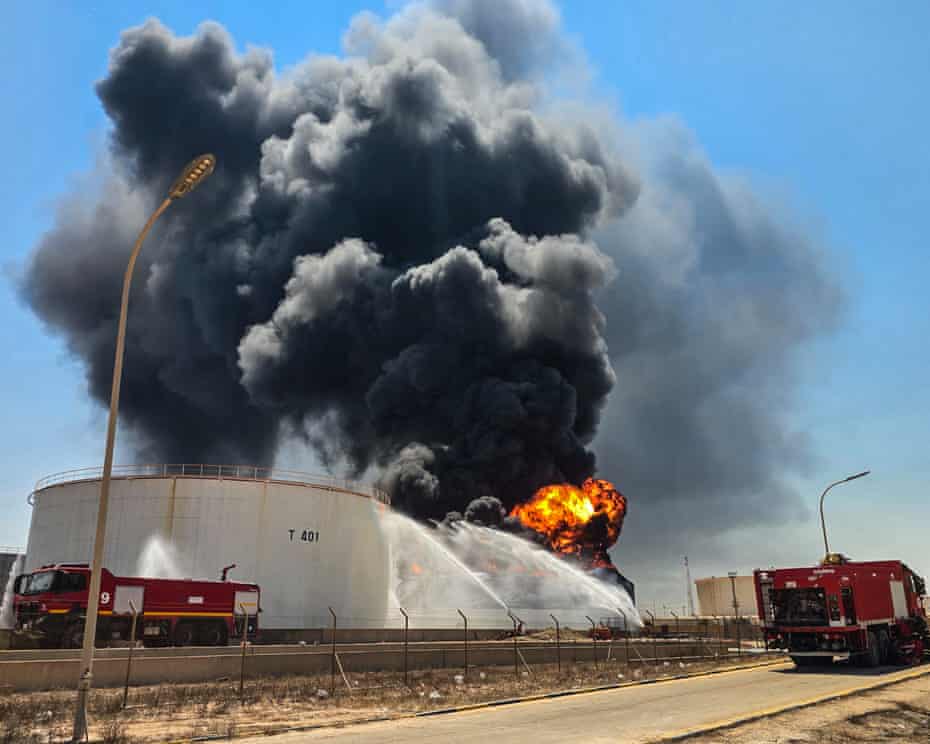
Zawiya oil station in western Libya hit by drone attack
Saddam Haftar, who serves as deputy commander of the Libyan National Army (LNA), has been involved in US-backed efforts aimed at bringing Libya’s divided institutions together. The allegations surrounding the August attacks have now complicated those efforts and raised fresh questions over the proposed political arrangement.
DRONE ATTACKS HIT WESTERN LIBYA
The attacks took place over more than five days in August, targeting the Zawiya oil station and other fuel storage facilities in western Libya.
One strike hit a gasoline storage tank at the Zawiya oil complex west of Tripoli, triggering a major fire and causing the tank to collapse. Libya’s National Oil Corporation said the tank contained about 4.5 million litres of fuel when it was hit.
The attacks also contributed to worsening electricity blackouts in western Libya, increasing public pressure on the Tripoli-based Government of National Unity (GNU), led by Prime Minister Abdul Hamid Dbeibah.
ARRESTS FOLLOW ALLEGED PLOT
On September 5, the GNU arrested three Libyans and a Spanish citizen in southern Tripoli over an alleged plot that was intended to include an attack on Tripoli airport.
The three Libyan suspects were allegedly affiliated with the Tareq ben Ziyad brigade, an LNA formation. Sources within the GNU subsequently alleged that the suspects were working for Saddam Haftar.
The allegations have led officials within the GNU to question whether cooperation with Saddam Haftar can continue.
UNITY PLAN UNDER PRESSURE
The developments have also affected a US-backed proposal aimed at unifying Libya’s rival administrations.
The plan, developed by US adviser Massad Boulos, envisaged Khalifa Haftar taking the position of president while a member of the Dbeibah family would become prime minister.
Boulos has defended the proposal, saying it was not intended to establish a political arrangement based simply on family names.
The allegations surrounding the drone attacks have nevertheless complicated the plan and placed Saddam Haftar’s role in the proposed political process under greater scrutiny.
UN-BACKED ELECTION TALKS ALSO AFFECTED
The controversy comes as separate UN-sponsored talks involving Libya’s four main political institutions seek to establish a route toward elections.
An agreement reached in August provided for elections to take place within two years and was subsequently endorsed by the UN Security Council.
Walid Ellafi, Libya’s minister of state for political affairs, said the UN-sponsored process should lead toward elections and institutions whose legitimacy comes from the will of voters.
He also opposed an east-west political arrangement that could overlook longstanding grievances, including the displacement of thousands of families during Libya’s 2014 conflict.
HAFTAR FAMILY POWER STRUGGLE
The allegations could also deepen competition among Khalifa Haftar’s three sons.
Saddam Haftar has emerged as a prominent figure in political and security discussions surrounding eastern Libya, while his brothers Khaled and Belqasim have increasingly challenged his position.
The dispute adds another layer of uncertainty to efforts to unify Libya’s divided political and security institutions.