World News
Jordan Admits Civilian Deaths After Airstrikes in Syria, Claims 20 Islamic State Militants Killed
Jordan has acknowledged civilian casualties following airstrikes against suspected militant positions in southern Syria, while maintaining that its mi...
By Wavers News
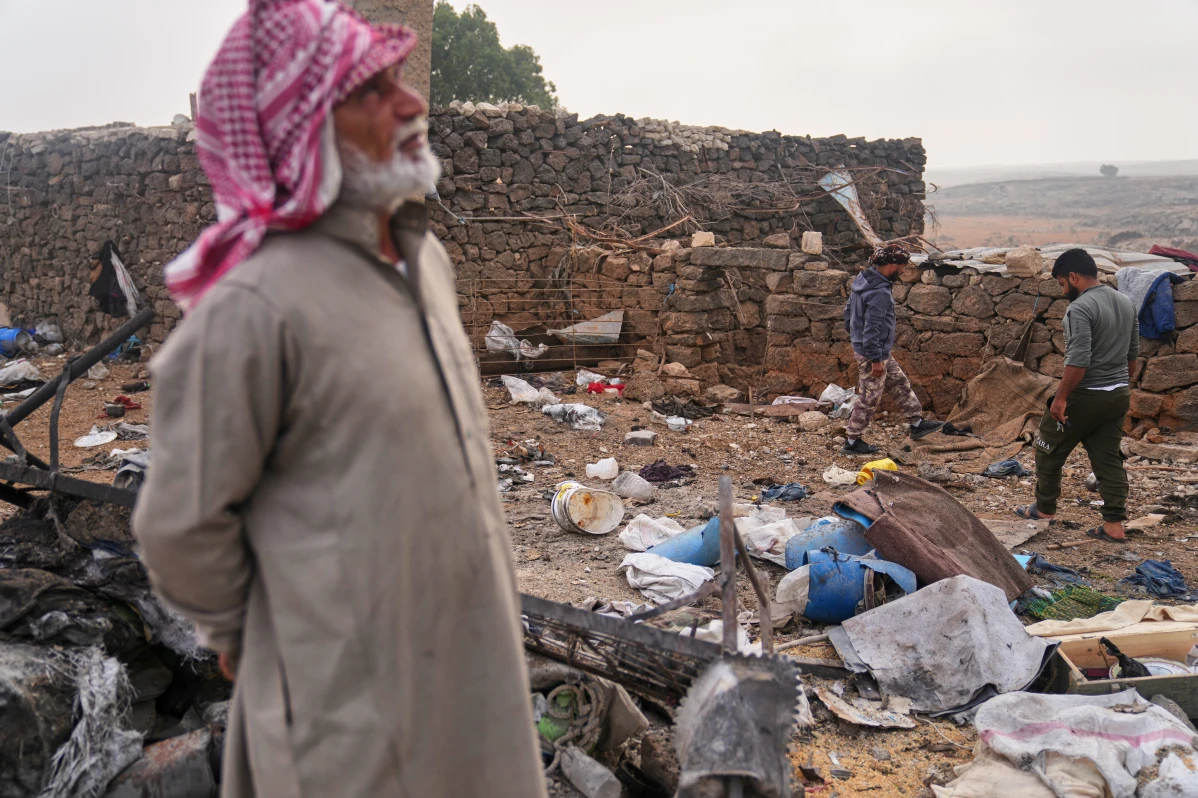
The strikes were carried out late Monday, October 26, after Jordanian authorities linked the operation to a deadly attack at a Greek Orthodox church in the southern Jordanian region of Karak. The church attack killed nine people and wounded more than 30 others, according to Jordanian authorities.
The cross-border military action has sparked a diplomatic dispute between Amman and Damascus. Jordan said the strikes targeted Islamic State positions connected to the attackers, but Syrian authorities said the operation took place without prior coordination and raised objections over the violation of Syrian territory.
Syrian emergency officials reported that seven people were killed in the strikes in Daraa and Sweida provinces, including three children and other members of a family. Jordanian officials expressed regret over the civilian deaths while defending the operation as a response to security threats.
The incident has placed renewed attention on security cooperation between the neighbouring countries, whose relations had improved following the overthrow of former Syrian president Bashar al-Assad in December 2024.
JORDAN SAYS OPERATION TARGETED ISLAMIC STATE POSITIONS
Jordan's military initially announced that its air force had struck hideouts belonging to what it described as terrorist organisations in south-eastern Syria.
The military said the operation was conducted in retaliation for the deaths in the church attack and claimed that the strikes killed and wounded members of the targeted groups while destroying vehicles and other facilities.
Jordanian authorities subsequently identified the targets as Islamic State positions. The country's communications minister said an estimated 20 members of the group had been killed and that a large weapons depot had been destroyed.
The government has presented the operation as a security measure intended to disrupt militant activity linked to the attack in Karak and prevent further threats against Jordan.
The precise locations of all the targets and the full details of the military operation have not been independently established. The reported militant death toll is based on Jordanian officials' account and has not been independently verified.
The Syrian government has also challenged Jordan's account of how the operation was coordinated, creating uncertainty over the extent of cooperation between the two countries before the strikes.
SYRIAN AUTHORITIES REPORT SEVEN CIVILIAN DEATHS
Syria's Civil Defence agency reported seven deaths following the airstrikes across Daraa and Sweida provinces in the country's south.
Among those killed were five members of one family who were reportedly struck while inside a tent. The victims included three children, a man and a woman. Authorities also reported the deaths of two elderly men in separate incidents.
The deaths were reported in areas affected by the Jordanian operation, although details about each strike and the circumstances surrounding the casualties remain limited.
In the border village of Al-Tuff, resident Masoud al-Salim said an airstrike destroyed his home and killed his wife, son and three grandchildren.
The accounts from residents and Syrian emergency officials have intensified concerns about the impact of cross-border military action on people living in the affected communities.
Jordan said it had sought to avoid civilian casualties and expressed regret over the deaths reported by Syrian authorities.
The acknowledgement did not resolve the dispute over the operation. Damascus has continued to object to the strikes, particularly because it says they were conducted without advance coordination with Syrian authorities.
STRIKES FOLLOW DEADLY ATTACK AT GREEK ORTHODOX CHURCH
The Jordanian operation followed a shooting at a funeral gathering at a Greek Orthodox church in the Hamoud area of Karak on Friday, October 23.
Jordanian authorities said nine people were killed and more than 30 others injured when gunmen opened fire during the gathering. The attack shocked a country where such mass-casualty violence is relatively uncommon.
The incident took place about 90 kilometres south of the capital, Amman, in an area with a Christian minority population.
No group had publicly claimed responsibility for the attack as of Tuesday, and investigators had not established that the suspects belonged to a particular organised militant group.
Jordanian authorities declared three days of mourning and increased security following the killings. King Abdullah II ordered a forceful response against those responsible, describing the attack as an assault on the country's security and social unity.
The church attack prompted widespread condemnation and intensified pressure on Jordan's security services to identify and arrest the perpetrators.
The subsequent airstrikes marked a significant escalation, extending the response beyond Jordan's borders into southern Syria.
THREE SUSPECTS ARRESTED IN JORDAN
Jordanian security forces arrested three men on Monday in connection with the church attack following a shootout at an abandoned house in Karak.
Officials identified the suspects as two brothers, Hazzah Zaidan Mohammad and Mishal Zaidan Mohammad, and their brother-in-law, Ahmad Sami Hussein. All three are Jordanian nationals.
According to Jordan's Public Security Directorate, the suspects were located while hiding in the abandoned property. Authorities said they refused to surrender and opened fire on security personnel, who returned fire before arresting them.
All three suspects were wounded during the confrontation. Security officials said no members of the security forces were injured and that firearms and ammunition were recovered from the property.
Jordanian officials described the suspects as adherents of extremist ideology but said there was no confirmed evidence at that stage connecting them to other militant cells.
Interior Minister Mazen al-Faraya said the investigation remained open and that authorities had not established links between the suspects and other groups.
The arrests provided investigators with suspects to question over the church attack, but the precise motive and any wider connections remained under investigation.
Jordan has not publicly established that the three suspects were members of Islamic State. The military operation in Syria was justified by Jordanian officials on the basis of their assessment that militant positions across the border were connected to the threat.
DAMASCUS DISPUTES CLAIM OF PRIOR COORDINATION
One of the most significant consequences of the strikes has been the disagreement between Jordan and Syria over whether the operation was coordinated in advance.
Jordan's military said the strikes were carried out in coordination with the Syrian government. Syrian officials disputed that account, saying the operation took place without prior notification or coordination.
Syria's Foreign Ministry conveyed its objections to Jordan and described the strikes as an unacceptable violation of Syrian sovereignty. The government said it had opened an investigation into the circumstances and was communicating with Jordan to address the consequences.
The disagreement is particularly sensitive because the two countries have sought to improve relations and strengthen security cooperation since the fall of the Assad government in December 2024.
Both countries face concerns involving cross-border militant activity, weapons trafficking and instability in southern Syria. Their security relationship is important for managing threats along the shared frontier.
The latest incident has exposed differences over how that cooperation should operate, particularly when one country believes it faces an immediate security threat originating from the other's territory.
Jordan has defended its decision to strike, while Syria has insisted that operations on its territory require proper coordination and respect for its sovereignty.
SYRIA CLOSES KEY BORDER CROSSING
Following the airstrikes, Syrian authorities announced the temporary closure of the Nassib border crossing with Jordan on Tuesday.
The crossing is the principal passenger and commercial land route between the two countries. Its closure suspended passenger and commercial traffic in both directions.
Syrian officials cited developments on the ground in Daraa province as the reason for the measure. The closure came as authorities dealt with the aftermath of the strikes and the diplomatic disagreement with Amman.
The border crossing is economically important for trade and transport between Jordan and Syria, as well as for broader regional movement of goods.
A disruption to traffic can affect businesses and travellers who depend on the route, although the authorities had not provided a detailed assessment of the economic impact or a confirmed reopening timetable.
The closure also underlined how quickly the military operation had affected relations and practical cooperation between the neighbouring countries.
JORDAN PROMISES CONTINUED COOPERATION WITH SYRIA
Despite the dispute, Jordan has said it remains committed to maintaining strong relations with Syria.
Jordanian officials said a joint committee would be formed to follow up on the consequences of the operation and address outstanding concerns.
The proposed mechanism could provide a channel for both governments to discuss the strikes, civilian casualties and future security coordination along the border.
The announcement suggests that the two countries are seeking to contain the diplomatic fallout even as they maintain differing accounts of the operation.
The central challenge is balancing Jordan's stated determination to prevent attacks against its territory with Syria's demand that its sovereignty and civilian population be protected.
Any future cooperation will depend partly on whether the two governments can establish a shared understanding of the threat posed by militant groups and agree on procedures for responding to cross-border security concerns.
REGIONAL SECURITY CONCERNS GROW
The airstrikes highlight the continuing security challenges facing southern Syria, where militant activity and instability have complicated efforts to establish lasting security following years of conflict.
Jordan has previously conducted strikes in southern Syria against suspected drug-trafficking networks. The latest operation differs in its stated connection to the church attack and its focus on suspected Islamic State positions.
The reported civilian deaths have also raised questions about the risks of military operations in populated areas and the difficulty of distinguishing militant targets from civilians during cross-border attacks.
For Jordan, the operation was presented as a response to a deadly attack at home and a measure intended to prevent further violence. For Syria, the strikes have raised concerns about sovereignty, civilian protection and the need for coordination between neighbouring governments.
The two countries have signalled that communication will continue, but their conflicting accounts of the operation remain unresolved.
For now, Jordan maintains that its strikes killed about 20 Islamic State members and destroyed a weapons depot, while Syrian authorities report seven civilian deaths. The full circumstances of the operation, the identities of all those killed and the extent of the damage remain subjects of continuing scrutiny.