World News
Iranians Fear Renewed War and Continued Repression After Trump’s Midterm Election Defeat
Iran is facing growing uncertainty following the Republican Party’s heavy defeat in the United States midterm elections, with residents expressing con...
By Wavers News
While Iranian government supporters have celebrated the Republican losses, many ordinary citizens remain anxious about the country’s future. Their concerns extend beyond the possibility of another war to worsening economic conditions, rising living costs and continued government repression.
IRANIAN LEADERSHIP CELEBRATES REPUBLICAN DEFEAT
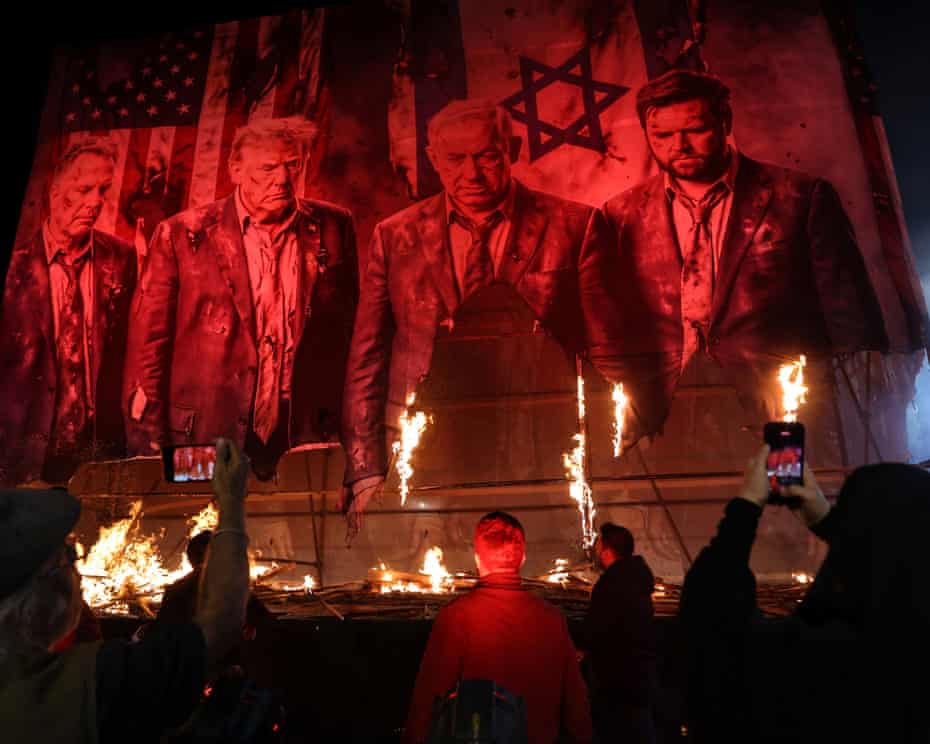
Following the US election results, pro-government supporters gathered at Tehran’s Enghelab Square, where a large banner featuring US President Donald Trump, Vice-President JD Vance, US envoy Steve Witkoff and Israeli Prime Minister Benjamin Netanyahu was set on fire.
Iranian officials presented the Republican Party’s defeat as a rejection of Trump’s military campaign against Iran.
Supreme Leader Mojtaba Khamenei, who succeeded his father, Ali Khamenei, after the latter was killed in February’s strikes, declared that the results showed the United States was experiencing an accelerated decline.
Iranian state television also broadcast footage of a staged hanging of Trump in Tehran’s Tajrish Square. The display featured an actor wearing a mask resembling the American president and an orange prison uniform.
The celebrations have reflected the Iranian government’s attempt to portray the American election outcome as a political setback for its adversaries.
FEARS OF ANOTHER MILITARY CONFRONTATION
Despite the celebrations, Iranians opposed to the government have expressed mixed views about what the election result means for the possibility of another full-scale conflict.
Some fear Trump could become more willing to continue military operations because he is serving his second presidential term and does not need to seek re-election.
Mehnaz, a journalist based in Tehran, said people around her were struggling to understand what might happen next. She described an atmosphere of fear and uncertainty, with some residents hoping that pressure from the United States and Israel could eventually bring political change inside Iran.
She also expressed concern about the increasing number of executions carried out by Iranian authorities, warning that the situation could deteriorate regardless of whether military action resumes.
Other residents believe the Republican defeat could reduce the likelihood of another major war.
Alborz, a 36-year-old writer in Tehran, said people around him appeared to think that the election result, combined with political developments in Israel, had reduced the chances of a renewed full-scale conflict.
He stressed that there was no certainty about what would happen next.
RISING COSTS DEEPEN ECONOMIC ANXIETY
Economic hardship is adding to the uncertainty facing households across Iran.
Alborz described a situation in which shops remain open and people continue to browse for goods, but many can no longer afford to make purchases.
He said the price of an ordinary T-shirt had risen to a level that could previously have bought an entire suit, illustrating the pressure inflation and economic difficulties have placed on consumers.
Residents are also discussing ways to prepare for possible damage to essential infrastructure if another military confrontation occurs.
Some have begun considering alternative heating arrangements, including kerosene and wood-burning heaters, as they prepare for the possibility that basic services could be disrupted.
The preparations reflect the anxiety of people who have spent much of the year anticipating further instability.
EXECUTIONS AND DOMESTIC REPRESSION REMAIN MAJOR CONCERNS
For many Iranians, the prospect of continued government repression is a more immediate concern than the outcome of the American election.
According to Norway-based human rights organisation Iran Human Rights, Iranian authorities had carried out at least 696 executions in 2026 as of November 6.
The organisation had separately documented 691 executions between January and the end of October, including people convicted in cases involving murder, drug-related offences and national security charges.
Noor, a 24-year-old resident of Karaj, said she had spent three weeks in prison after participating in protests in January.
She believes the country's security apparatus will continue operating regardless of developments in Washington or the possibility of renewed military action.
Noor said the authorities' system of repression had become firmly established and would not simply stop because the international situation changed.
She also warned that nobody inside Iran could confidently predict what would happen next, adding that people had been preparing for the worst throughout the year.
CONCERNS OVER THE STRENGTH OF IRAN'S SECURITY APPARATUS
Moein, a medic based in central Iran, said Western governments had underestimated the capabilities and internal loyalty of the Islamic Revolutionary Guard Corps (IRGC).
He explained that his own understanding of the organisation had changed after observing its ability to withstand prolonged pressure and maintain its strategic position.
The IRGC has played a central role in Iran's military and security structure and has been involved in suppressing domestic protests.
Moein said the organisation's ability to endure sanctions and confront powerful foreign military forces existed alongside its willingness to use force against people inside the country.
His assessment reflects concerns that Iran's security institutions remain firmly established despite the country's economic difficulties and military confrontation with foreign powers.
Mehnaz also suggested that the Republican defeat had given Iran's hardline establishment renewed hope of political survival, helping explain the celebrations among government supporters.
UNCERTAIN FUTURE FOR IRAN
The US midterm results have created a new political situation for Trump, but their consequences for Iran remain difficult to predict.
While some residents believe the Republican defeat could reduce the likelihood of another major military operation, others fear the president could respond to his domestic political setback by continuing or intensifying the conflict.
For many people inside Iran, the uncertainty extends beyond relations with Washington and Israel. Economic hardship, executions and restrictions on political freedoms remain pressing concerns.
Despite the celebrations by pro-government supporters, the experiences described by residents suggest that the election result has not brought a sense of relief to much of the population.
Instead, many continue to prepare for further instability, uncertain whether the coming months will bring renewed conflict, deeper economic hardship or an intensification of repression at home.