Business
INDIA CHANGES UPI FEE RULES: WHAT USERS AND MERCHANTS NEED TO KNOW
India is set to change the way some transactions on its Unified Payments Interface (UPI) network are charged, ending more than six years of a broad z...
By Patience
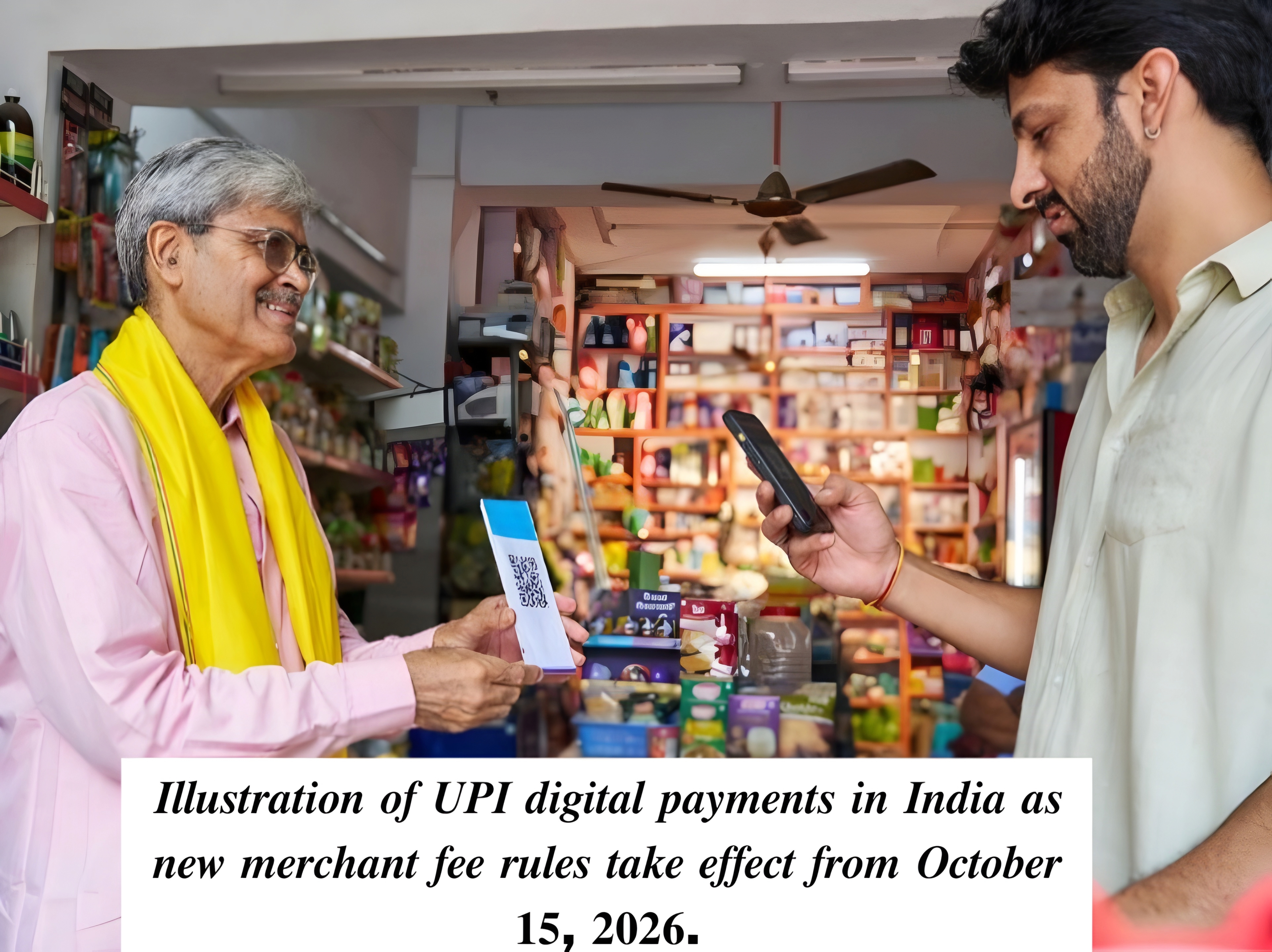
From October 15, 2026, a 0.4% Merchant Discount Rate (MDR) will apply to specified UPI payments made to merchants above ₹2,000, subject to exemptions and special rates for some sectors.
The change does not mean that UPI users will generally start paying a fee whenever they transfer money. Person-to-person payments will remain free, while the Indian government says about 96% of merchant transactions will also remain unaffected.
WHAT IS CHANGING?
Under the new framework, eligible person-to-merchant (P2M) UPI transactions above ₹2,000 will attract an MDR of 0.4%.
For example, a qualifying ₹5,000 merchant payment would generate an MDR of ₹20, while a ₹10,000 transaction would generate ₹40 before the applicable cap.
The MDR is a charge within the payments ecosystem rather than a new government tax. The proceeds are expected to be distributed among participating banks, payment companies and other service providers supporting UPI transactions.
The standard MDR is capped at ₹300 per transaction for payments of ₹75,000 and above.
WHEN WILL THE NEW RULE START?
The new fee structure will take effect on October 15, 2026.
It represents a significant change for India's digital-payment system, which has operated under a zero-MDR model for most UPI transactions for more than six years.
The new framework is intended to provide a revenue stream for the companies and financial institutions that maintain and operate the country's large digital-payments infrastructure.
WHO WILL PAY THE MDR?
The MDR applies to the merchant side of eligible transactions, rather than being a direct fee charged to consumers.
Indian authorities have also directed that the new charges should not simply be transferred to customers as an additional UPI payment fee.
This distinction means that a customer making an eligible ₹10,000 purchase through UPI should not see a separate 0.4% UPI charge added simply because the payment exceeds ₹2,000.
The economic impact, however, could still be felt indirectly if businesses adjust their pricing or payment practices in response to higher transaction costs. That possibility has already become part of the public debate around the policy.
WHAT WILL REMAIN FREE?
Several major categories of UPI transactions will continue without MDR.
Person-to-person payments will remain completely free, regardless of the amount transferred.
Merchant payments of ₹2,000 or less will also remain free under the framework. Transactions covered by existing zero-MDR arrangements for qualifying small merchants will continue to receive protection.
The Finance Ministry says approximately 96% of all person-to-merchant UPI transactions will remain unaffected by the new arrangement.
There are also no monthly quotas or volume limits on free person-to-person UPI transfers under the new framework.
SPECIAL RATES FOR SOME SECTORS
The new system does not apply the standard 0.4% rate to every type of large merchant payment.
Certain sectors considered essential or relatively low-margin will receive a different treatment. These include areas such as railways, fuel and telecom, where qualifying transactions above ₹2,000 will attract a flat MDR of ₹5 rather than the standard percentage rate.
Capital-market-related payments will also have a lower MDR of 0.02%, with a maximum charge of ₹300.
Small merchants are also being protected through exemptions linked to their UPI business volumes. Reuters reported that merchants earning up to ₹100,000 a month through QR-based UPI payments will be exempt from the new MDR.
WHY IS INDIA CHANGING THE MODEL?
UPI has grown into one of the world's largest real-time payment systems, processing billions of transactions every month.
The previous zero-MDR structure helped encourage rapid adoption by removing transaction costs for users and merchants. But maintaining such a large payment infrastructure also requires spending on technology, cybersecurity, banking systems and customer support.
The new MDR framework is intended to create a more sustainable financial structure for the ecosystem while retaining free access for most everyday transactions.
UPI processed about 24 billion transactions worth roughly $311 billion in August 2026, according to Reuters, illustrating the enormous scale of the network.
WHAT DOES IT MEAN FOR MERCHANTS?
The biggest immediate change will be felt by businesses that process qualifying UPI payments above ₹2,000.
For merchants covered by the standard rate, the cost of accepting a large UPI payment will now include the 0.4% MDR.
That could make payment costs more significant for businesses handling high-value transactions, although exemptions and lower rates for specific categories are designed to reduce the impact on small businesses and essential services.
The new revenue generated through MDR is also expected to flow through the wider payments ecosystem, potentially giving banks, payment applications and service providers additional income from UPI transactions.
WHAT DOES IT MEAN FOR CONSUMERS?
For ordinary UPI users, the immediate change is more limited than some reports of a new "UPI fee" might suggest.
A person sending money to another individual will continue to use UPI without a transaction fee.
A person paying a merchant ₹2,000 or less will also continue to make the payment without MDR.
For larger merchant purchases, the new charge is imposed within the merchant-payment ecosystem rather than as a direct consumer fee. The authorities have stated that the cost should not be passed directly to customers as a separate UPI charge.
WHY THE CHANGE MATTERS FOR INDIA'S DIGITAL PAYMENTS
The policy marks a shift in the economics of India's UPI system.
For years, the zero-cost model helped make UPI an attractive alternative to cash and other payment methods. Introducing MDR on selected large merchant transactions could provide additional financial support for the banks, payment applications and infrastructure companies that operate the system.
At the same time, the government has retained exemptions and free categories in an effort to prevent the new system from affecting most routine digital payments.
The balance between maintaining affordable digital payments and ensuring the long-term financial sustainability of the UPI ecosystem will therefore remain an important issue as the new rules take effect.
WHAT HAPPENS NEXT?
The new MDR framework is scheduled to begin on October 15, 2026.
Banks, payment applications, merchants and payment-service providers will need to implement the revised rates and exemptions before the start date.
For consumers, the most important point is that UPI is not becoming a universally paid service. Person-to-person transfers remain free, payments to merchants of ₹2,000 or less remain free, and the government says roughly 96% of merchant transactions will not be affected.
The main change is the introduction of charges for specified larger merchant transactions, with different rates and exemptions depending on the type of payment and merchant.