United States
Foiled Hindu Temple Shooting Plot Raises Fears Among South Asian Community Near Chicago
A suspected mass shooting plot targeting a Hindu temple in suburban Chicago has heightened security concerns among South Asian communities in the Unit...
By Wavers News
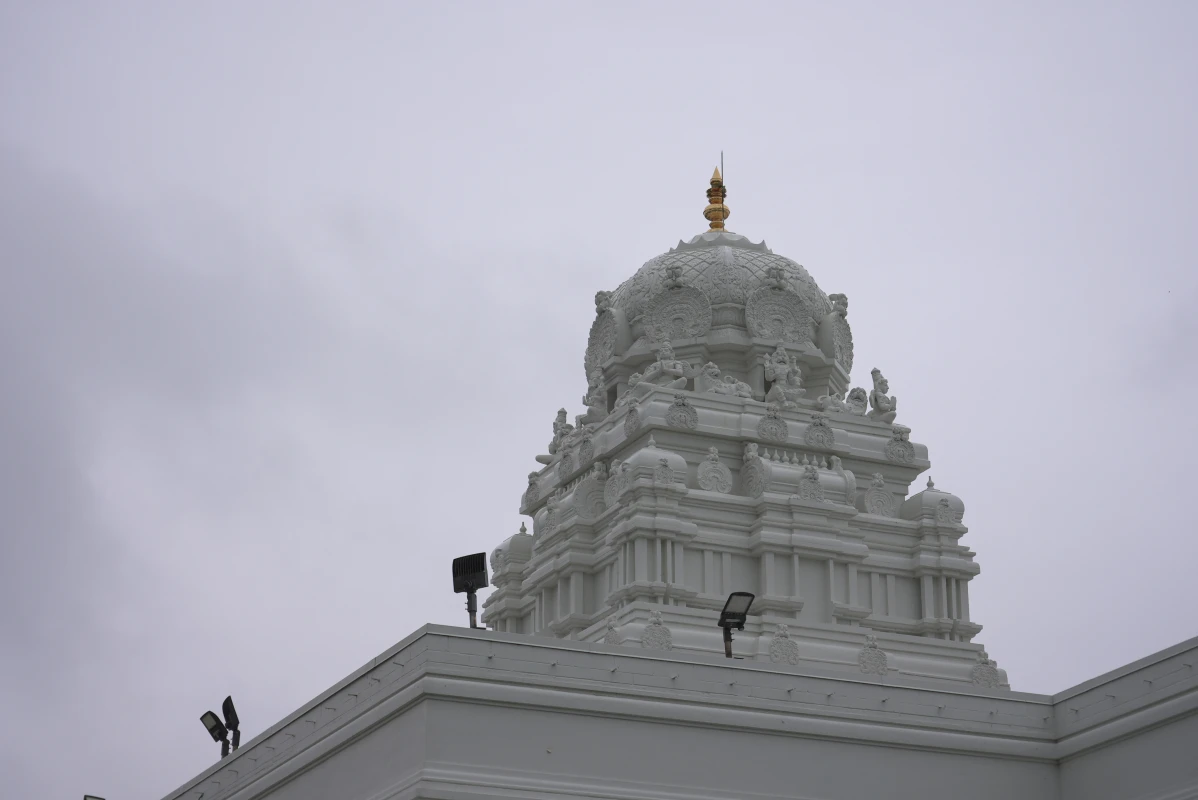
The upper section of Sri Venkateswara Swami (Balaji) Temple in Aurora, Illinois, is seen on October 15, 2026, as concerns over an alleged attack plot raise security concerns.
The alleged plan was disrupted on October 11, 2026, after a co-worker alerted authorities to threatening statements made by 19-year-old Alexandros Paporakis, who was subsequently arrested near his home in Palatine, Illinois. Prosecutors allege that he intended to attack Indian people at the Sri Venkateswara Swami (Balaji) Temple in Aurora, approximately 40 miles west of downtown Chicago.
Investigators believe Paporakis visited the temple’s parking lot on the day of the alleged plot but left without firing his weapon after his rifle malfunctioned. No shooting occurred at the temple.
The case has alarmed worshippers and community leaders at a time when Hindu families are gathering to observe Navaratri and prepare for Diwali, two important periods in the religious calendar.
The incident has also intensified calls for investigators to examine whether the alleged plot constitutes a hate crime, particularly because prosecutors say the suspect expressed white supremacist and neo-Nazi views and made threats against Indians and other minority groups.
HOW AUTHORITIES UNCOVERED THE ALLEGED PLOT
The investigation began after a co-worker at a Taco Bell restaurant reported concerning statements and communications involving Paporakis.
Prosecutors allege that the teenager expressed an intention to kill Indian people and told colleagues that October 11 would be a significant day for his planned attack.
According to investigators, a co-worker contacted police after receiving information about the suspected plan. The communications reportedly included a document outlining a proposed mass shooting and images of tactical equipment.
Authorities later arrested Paporakis near his home in Palatine, a suburb northwest of Chicago, on the same day the alleged attack was planned.
Investigators subsequently established that a vehicle registered to him had entered the parking lot of the Sri Venkateswara Swami (Balaji) Temple in Aurora at approximately 12:25 p.m. and left less than 15 minutes later.
Police believe he was alone in the vehicle during the visit. The car was later seen near his home.
Authorities said Paporakis told a co-worker that his gun had jammed and that he had left the temple area quickly without being noticed.
The allegations suggest the temple may have been a target of the planned attack, although investigators have continued examining the evidence surrounding his intentions and movements.
SUSPECT FACES FELONY CHARGES
Paporakis faces felony charges of making a terrorist threat and unlawfully possessing a firearm.
Prosecutors allege that he described himself as a white supremacist and neo-Nazi and expressed hatred towards Indians and other minority groups.
A search of his home reportedly uncovered an AR-style rifle without a serial number, loaded magazines, hundreds of rounds of ammunition, a tactical vest and other items associated with the alleged plan.
Investigators also reported finding a gas canister marked with an anti-South Asian slur and items displaying Nazi symbols.
Authorities said they recovered an eight-page document in which Paporakis allegedly described plans for mass violence. The document reportedly expressed a desire to kill large numbers of people from racial and ethnic minority groups.
The material is central to the investigation because it may help establish the suspect’s intentions and whether the alleged plot was motivated by racial or religious hatred.
Paporakis has not been convicted of the charges. The allegations against him must be established through the legal process.
A judge ordered him to remain in custody while the case proceeds. His next court appearance was scheduled for Friday, October 30.
HINDU WORSHIPPERS STRENGTHEN SECURITY
The alleged plot has forced members of the targeted temple and the wider South Asian community to reconsider how they protect themselves during religious gatherings.
Temple leaders have been in contact with local law enforcement and introduced additional security measures, including an increased armed security presence.
The temple serves worshippers who gather for religious ceremonies, festivals and community events. Its significance extends beyond regular prayer services, as families also use the premises to maintain cultural traditions and connect with other members of the Hindu community.
The suspected attack has therefore raised concerns not only about the safety of the building but also about the security of people attending religious activities.
Community members have responded by remaining vigilant while insisting that the alleged threat should not prevent them from observing their faith.
Asha Rao, executive director of The Chicago Kasam, a nonprofit organisation that brings together members of the area's South Asian community, said the alleged plot had left people shocked and disturbed.
She described the period as one that should allow families and friends to gather peacefully, celebrate their traditions and spend time together without fear.
Rao also acknowledged that some people had become more hesitant about leaving their homes to attend celebrations.
At the same time, she said the incident had strengthened the determination of many community members to preserve their traditions and support one another.
NAVARATRI AND DIWALI CELEBRATIONS CONTINUE AMID FEARS
The timing of the alleged plot has added to its emotional impact.
Navaratri is a nine-night Hindu festival dedicated to the worship of Goddess Durga. The celebration concludes with Dussehra, also known as Vijayadashami, which marks the triumph of good over evil in Hindu religious tradition.
The period is often marked by prayers, fasting, cultural programmes and gatherings involving families and community members.
Diwali, another major Hindu festival associated with light overcoming darkness, follows several weeks later.
For many South Asian families in the Chicago area, these celebrations provide opportunities to maintain religious practices, pass traditions to younger generations and strengthen community ties.
The alleged plot has introduced security concerns into what is normally a festive period.
Avatans Kumar, a freelance columnist who occasionally attends the targeted temple, said people had become more alert to possible disturbances and were paying closer attention to their surroundings.
Community members have discussed ways to improve security at religious gatherings without abandoning celebrations that hold significant cultural and spiritual importance.
Some worshippers have expressed concern about attending events, while others have emphasised the importance of continuing their traditions and refusing to allow threats to dictate how they live.
LEADERS CALL FOR HATE CRIME INVESTIGATION
The alleged plot has prompted calls from South Asian community leaders and elected officials for federal authorities to investigate whether the case should also be prosecuted as a hate crime.
US Representative Raja Krishnamoorthi, a Democrat whose congressional district includes the targeted temple, has called on the FBI to investigate the alleged attack and pursue appropriate charges if the evidence supports them.
Krishnamoorthi has expressed concern that anti-Indian hatred and white supremacist ideology can lead to violence if threats are not taken seriously.
The calls for further investigation reflect concerns that the alleged plan was not simply a threat against an individual or institution but may have been directed at people because of their racial, ethnic or religious identity.
Determining whether a crime qualifies as a hate crime requires investigators and prosecutors to establish evidence of a legally relevant bias motive. The presence of hateful statements can be important evidence, but the final legal determination rests with the authorities and courts.
The case has also drawn attention to the need for places of worship to have adequate security and for people who encounter credible threats to report them promptly.
Community advocates say the investigation should establish the full extent of the alleged plan and whether additional individuals were involved.
ANTI-SOUTH ASIAN HOSTILITY RAISES CONCERN
The suspected plot has renewed wider concerns about hostility directed at South Asians in the United States, including Indians and members of other communities with roots across South Asia.
A September 2026 report by Stop AAPI Hate found that the use of anti-South Asian slurs online increased by 109 per cent between January 2023 and December 2025.
The organisation also reported that 48 per cent of surveyed South Asian adults said they had experienced an act of hate because of their race, ethnicity or nationality during 2025.
The findings point to the extent of the hostility reported by South Asian communities, although the survey figures do not mean that every respondent experienced the same type of incident or that every case involved a criminal offence.
Community advocates say hateful language can contribute to an environment in which racial and religious minorities feel unwelcome or unsafe.
Rishab Chatty, who leads the Chicago chapter of Hindus for Human Rights, said hatred directed at Hindus and South Asians had increasingly moved beyond online spaces and school bullying into more serious forms of hostility.
He said members of the community were questioning what it meant to belong in a country where they feared being targeted because of their identities.
The alleged shooting plot has intensified those concerns because investigators say the suspect expressed a desire to kill people from minority groups.
Community leaders have urged authorities to take threats seriously before they develop into physical attacks.
SOUTH ASIAN POPULATION IN ILLINOIS
Illinois has a substantial and growing South Asian population, including residents of Indian, Pakistani, Bangladeshi, Sri Lankan, Nepali and other South Asian backgrounds.
Data cited by the South Asian American Policy and Research Institute showed that Illinois' South Asian population increased from more than 242,000 in 2010 to more than 337,000 in 2020, representing approximately 2.5 per cent of the state's population.
South Asian residents contribute to the state's professional, educational, cultural and business communities. Religious institutions such as the Sri Venkateswara Swami (Balaji) Temple also serve as important gathering places for families seeking to maintain their traditions.
Members of the community have reported experiences ranging from racial insults and bullying to more serious threats.
For community organisations, the challenge is to address those concerns while ensuring that people can participate in public life and religious activities without intimidation.
The alleged plot has reinforced calls for stronger action against racial hostility and for better protection of religious institutions.
COMMUNITY DETERMINED NOT TO GIVE IN TO FEAR
Despite the concerns, community leaders say the alleged attack will not prevent them from continuing their religious and cultural activities.
For many worshippers, maintaining traditions is a way of supporting one another and affirming their place in American society.
The response has included greater vigilance, discussions about security and renewed efforts to bring community members together.
The investigation is ongoing, and authorities have not announced a conviction in the case. The evidence recovered from the suspect's home and the reported communications with his co-workers are expected to remain central to the legal proceedings.
For the South Asian community near Chicago, the case has become a reminder of the importance of addressing threats before they lead to loss of life.
As Hindu families prepare for Diwali, community members are seeking to balance understandable safety concerns with their determination to celebrate their faith without intimidation.