Business
Etim-Effiong Urges Nollywood Actors to Negotiate Profit-Sharing Deals for Bigger Earnings
Nollywood actors could earn significantly more from successful film productions by negotiating agreements that allow them to share in a movie's commer...
By Patience
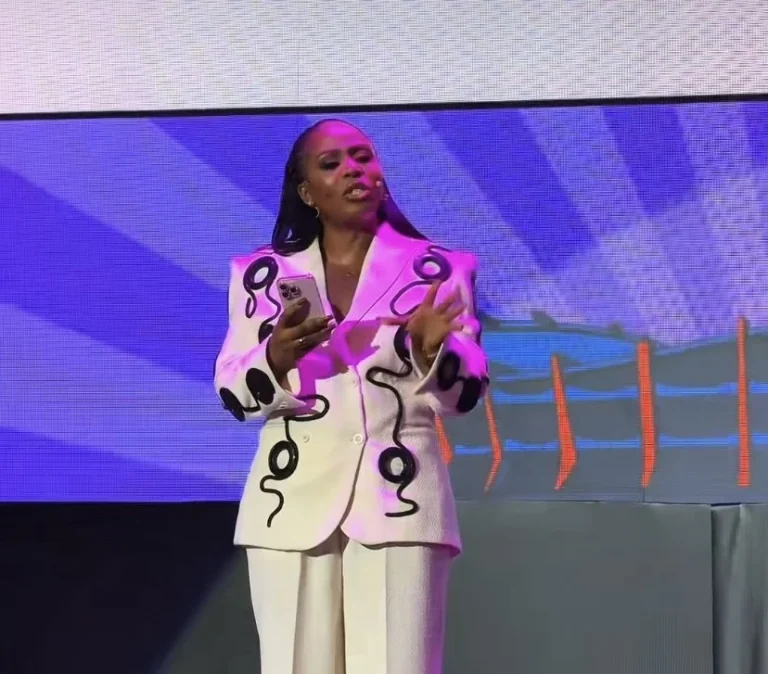
Talent manager and media entrepreneur, Toyosi Etim-Effiong at the 2026 Moonshot by Tech Cabal.
She believes actors should look beyond the upfront payments they receive for accepting film roles and work with professional talent managers who can negotiate additional compensation tied to a production's financial performance.
Etim-Effiong made the remarks during an interview following a session on the Creative Economy Stage at Moonshot 2026, organised by TechCabal in Lagos on Thursday, October 29.
The discussion, titled Africa’s Creative Economy: The Numbers and the Next Bet, examined opportunities, challenges and possible pathways for strengthening Africa's creative industries.
PROFIT-SHARING COULD GIVE ACTORS ADDITIONAL INCOME
Etim-Effiong explained that talent managers could negotiate back-end agreements that guarantee actors extra payments when films achieve specific commercial milestones.
Under such arrangements, an actor could receive an agreed share or additional payment if a movie generates revenue beyond a predetermined threshold.
She illustrated the possibility with a scenario in which an actor receives an additional amount if a film earns more than ₦1 billion in the market, on top of the initial fee already paid for the role.
According to her, some professionals in Nollywood have started negotiating such arrangements, but they remain uncommon across the industry.
She wants the practice to become a more established part of film contracts so that performers can benefit financially when productions achieve major commercial success.
The proposal would require clear agreements specifying how revenue is calculated, what qualifies as a commercial milestone and when additional payments become due. Such details would help protect both actors and producers from disagreements over earnings.
MUSIC INDUSTRY OFFERS A MODEL FOR NOLLYWOOD
Drawing comparisons with Nigeria's music industry, Etim-Effiong pointed to royalty arrangements as an example of how creative professionals can generate income beyond their initial payments.
Musicians can earn royalties from the commercial use of their recordings and compositions under applicable agreements and licensing arrangements.
She argued that these structures did not emerge automatically. Rather, industry professionals worked over time to establish systems that allow artistes to receive financial returns from the continued use and commercial exploitation of their work.
She believes Nollywood can pursue a similar development by creating stronger contractual and business arrangements that give actors a stake in the success of the films they help produce.
For the film industry, this could mean moving towards agreements that recognise an actor's contribution beyond the period spent on set.
TALENT MANAGERS HAVE A BIGGER ROLE TO PLAY
Beyond the need for improved contracts, Etim-Effiong identified professional talent management as an important part of building a more financially sustainable entertainment industry.
She observed that considerable attention had been devoted to developing creative skills among actors, singers, videographers and cinematographers, while comparatively less emphasis had been placed on training professionals who can turn those abilities into profitable careers.
She maintained that skilled managers are needed to identify opportunities, negotiate favourable commercial terms, build professional relationships and develop long-term career strategies for the people they represent.
Etim-Effiong, founder and chief executive officer of That Good Media, said the industry needed more professionals capable of representing actors, musicians, content creators and other creative talents.
She also founded and directs TGM Academy, an institution focused on training talent managers.
Her position is that developing the creative economy requires more than producing talented individuals. It also requires people with the business knowledge and professional experience to manage their careers and secure financial opportunities.
MANAGERS ADVISED TO LIMIT THEIR CLIENT LIST
Etim-Effiong further explained that talent management demands substantial attention because managing a creative professional involves treating their career like a business.
She advised managers to be careful about the number of clients they represent, suggesting that handling no more than three talents could help them provide adequate attention, depending on the demands of each client's career.
She noted that a manager could represent different categories of creatives, including actors and musicians, provided they had the capacity and expertise to manage their professional commitments effectively.
Her comments highlight the need for a more structured relationship between creatives and their representatives, particularly as Nollywood continues to explore new commercial opportunities.
MOONSHOT 2026 BRINGS CREATIVE INDUSTRY STAKEHOLDERS TOGETHER
The discussion took place during Moonshot 2026, a technology and innovation conference organised by TechCabal at the National Theatre in Lagos from October 28 to 29.
The event brought together entrepreneurs, investors, technology professionals and creative industry stakeholders to examine developments and business opportunities across Africa.
Etim-Effiong's contribution placed particular emphasis on the financial structures needed to help creative professionals benefit more directly from the commercial success of their work.
Her proposal adds to ongoing conversations about professional representation, fair compensation and the development of sustainable business models within Nigeria's entertainment industry.