International
Egypt Seeks Return of 4,000-Year-Old Priest's Remains from Scottish Museum After More Than a Century
Egypt is seeking the return of the remains of an ancient priest excavated from Middle Egypt more than a century ago and held at a museum in Glasgow, S...
By Wavers News
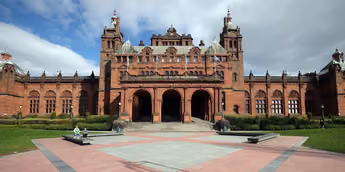
Glasgow’s Kelvingrove Museum removed the ancient Egyptian remains from public display before receiving a repatriation request. PA Archive/PA Images
The remains, commonly identified as those of an Egyptian priest named Nekht, were previously displayed at the Kelvingrove Art Gallery and Museum before being removed from public view amid changing ethical standards surrounding the exhibition of human remains.
Glasgow Life, the organisation responsible for managing the city's museums, confirmed on November 2 that it had received a request seeking the return of the remains to Egypt.
Although reports have attributed the request to Egyptian authorities, Glasgow Life has not publicly identified the individual, institution or government body that submitted it.
Egyptian Tourism and Antiquities Minister Sherif Fathy subsequently confirmed that the country was taking steps towards securing the remains' return, saying discussions and the necessary procedures were underway.
The request does not mean that Glasgow has approved the repatriation. The matter must first pass through the city's established review process.
ANCIENT REMAINS HAVE BEEN IN GLASGOW SINCE 1923
The remains date to Egypt's 12th Dynasty, approximately 1985 to 1797 BC, and were excavated from Tomb 130 at Beni Hasan, an ancient burial site in Middle Egypt.
The excavation was carried out by British archaeologist John Garstang in the early 20th century.
The wooden coffin was subsequently donated to Glasgow in 1923 by the Egyptian Research Students' Association's Glasgow branch.
Although commonly described as a mummy, the museum's catalogue provides a more complicated account of the remains.
The coffin was originally made for a child but contains the skeleton of an adult man. The museum's records indicate that the priest's original mummified body had probably deteriorated before his remains were placed inside the coffin again.
The coffin's inscriptions identify him as Nakht, also commonly spelt Nekht in recent reports, and describe him as a sem-priest.
This was a senior religious position in ancient Egyptian society, associated with important funerary ceremonies, including the Opening of the Mouth ritual. The ceremony was intended to restore the deceased's ability to breathe, speak and receive nourishment in the afterlife.
MUSEUM REMOVED REMAINS OVER ETHICAL CONCERNS
The repatriation request follows a decision by Glasgow Life to remove several ancient Egyptian human remains from public exhibitions at Kelvingrove.
The organisation said displaying human remains without documented, informed consent from the deceased or, where appropriate, their descendants was no longer considered respectful.
Alongside Nekht's remains, a mummified male head, right hand and right foot recovered from the Valley of the Kings in Luxor were also removed from public view.
Glasgow Life explained that the decision reflected changing museum practices and the need to recognise the dignity of deceased individuals.
The move is connected to revisions made to the International Council of Museums' ethical guidelines in June 2026, which emphasised the importance of respecting the inherent dignity of human remains.
The organisation has indicated that remains removed from exhibitions will eventually be kept in specially designated storage facilities with restricted access.
GLASGOW MUST FOLLOW FORMAL REPATRIATION PROCEDURE
Glasgow City Council owns the museum collections, while Glasgow Life manages and administers them.
Under the city's established procedure, requests to return human remains or historical objects are assessed individually, taking into account their legal status, provenance, ethical considerations and the identity of the claimant.
The request involving Nekht is expected to be examined first by Glasgow City Council's Working Group for Repatriation, Restitution and Spoliation.
The matter would then be referred to the City Administration Committee or another appropriate council committee for a final decision.
Glasgow Life has confirmed that it will follow the established procedure but has not announced a decision on whether the remains will be returned.
The organisation's confirmation that it received a request is therefore an important development, but it does not amount to an agreement to transfer the remains to Egypt.
DEBATE GROWS OVER THE DISPLAY OF ANCIENT HUMAN REMAINS
The decision to remove Nekht's remains has contributed to a wider discussion in Scotland about how museums should handle human remains acquired through historical archaeological excavations.
Supporters of the removal argue that displaying the bodies of ancient people without evidence of consent raises serious ethical questions, particularly when the remains were taken from their original burial places.
Critics, meanwhile, believe removing such materials from public exhibitions could limit opportunities for education and historical research.
The debate is not limited to Kelvingrove.
The nearby Hunterian Museum in Glasgow has also covered the mummified remains of Lady Shep-En-Hor with a specially designed textile following an internal ethical review, while leaving her sarcophagus visible to visitors.
Other museums in the United Kingdom have similarly reconsidered how ancient Egyptian remains should be displayed and cared for.
EGYPT SEEKS GREATER ACCESS TO ITS HISTORICAL HERITAGE
The request for Nekht's remains comes amid continuing efforts by Egypt to strengthen the protection of its ancient heritage and pursue the return of historical objects held in foreign collections.
The country has repeatedly called for the repatriation of significant antiquities taken abroad during earlier periods of archaeological excavation and colonial-era collecting.
The opening of the Grand Egyptian Museum near the Giza pyramids has also renewed international attention on Egypt's archaeological heritage. The institution houses more than 100,000 objects, including the complete collection recovered from the tomb of Pharaoh Tutankhamun.
For Egypt, securing the return of Nekht's remains would represent more than the recovery of an archaeological item. It would also raise questions about the responsibilities of museums holding the remains of people removed from their original burial places.
The Glasgow case will now depend on the outcome of the city's formal review, with no final decision on repatriation announced as of November 6, 2026.