Technology
China Pushes Ahead With Embodied AI as Humanoid Robots Move Toward Real-World Use
China is accelerating the development of embodied artificial intelligence, a technology that combines AI systems with physical machines capable of sen...
By Wavers News
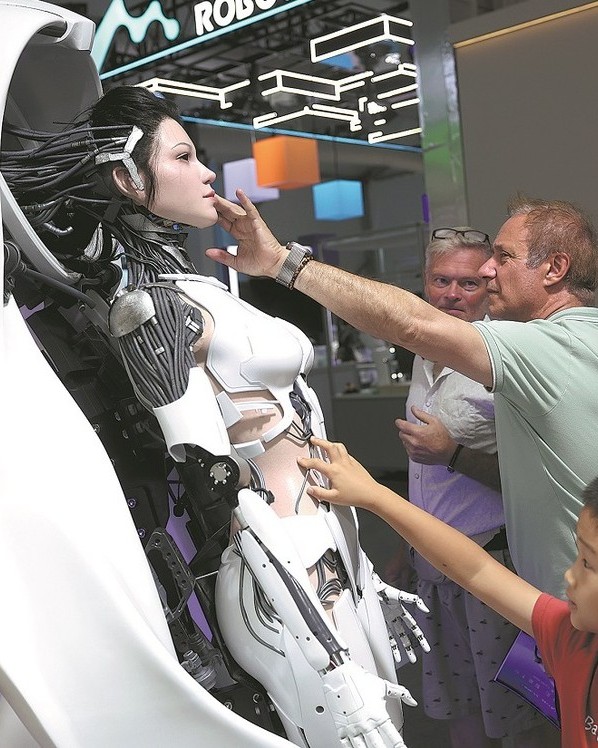
The push is placing humanoid robots and other intelligent machines at the centre of China's broader technology ambitions, with companies increasingly working to move robotics beyond demonstrations and into factories, homes and other practical environments.
From AI Software to Intelligent Machines
Unlike conventional generative AI, which primarily operates through text, images or other digital information, embodied AI gives artificial intelligence a physical form.
These systems are designed to interpret information from their surroundings and respond through physical actions. That can include recognising objects, navigating spaces, manipulating equipment and learning from interactions with the environment.
China has identified embodied intelligence as an important area for technological development, while its large manufacturing base gives domestic robotics companies an environment in which to test and deploy new systems.
Humanoid Robots Gain Momentum
Humanoid robots have become one of the most visible parts of China's robotics push.
Chinese companies are developing machines capable of walking, running, handling objects and performing tasks that previously required human workers. Some robots are now moving from research facilities and demonstrations toward early commercial and industrial applications.
Recent developments have also highlighted the rapid improvement in robot mobility. China's TianGong Ultra humanoid robot, for example, recently attracted international attention after recording a 100-metre running time faster than Usain Bolt's human world record.
However, speed and impressive demonstrations are only part of the challenge. Developers still need to make robots reliable, safe and capable of performing useful tasks consistently in unpredictable environments.
Factories Could Become a Major Testing Ground
Manufacturing is expected to remain one of the most important markets for embodied AI.
China already has the world's largest installed base of industrial robots, providing domestic companies with extensive experience in automation and a large market for new robotic technologies.
Humanoid robots could eventually be used for activities such as transporting materials, handling repetitive tasks and assisting workers in industrial facilities.
The transition will depend on whether manufacturers can make the machines affordable and dependable enough to justify large-scale deployment.
Companies Look Beyond Industrial Use
The ambitions are not limited to factories.
Robotics companies are increasingly exploring the possibility of using smaller and more capable machines in homes. Developers envision robots that could eventually assist with everyday activities such as household chores and other routine tasks.
That goal, however, presents a much more difficult technological challenge because homes are less predictable than controlled factory environments.
Robots operating in households would need to understand changing surroundings, safely interact with people and objects, and perform a wide range of tasks without constant human supervision.
China Seeks a Stronger Position in the Global Robotics Race
China's progress in embodied AI is part of a wider effort to strengthen its position across artificial intelligence and advanced manufacturing.
The country's combination of a large manufacturing ecosystem, growing AI capabilities and government-backed investment has helped create favourable conditions for the development of robotics.
Analysts have described embodied AI as an area where China hopes to combine its strengths in hardware manufacturing with advances in AI software.
Challenges Still Remain
Despite rapid progress, humanoid robotics remains an emerging industry.
Robots still face challenges involving battery life, movement, perception, safety, reliability and their ability to adapt to unfamiliar situations. A machine performing a controlled demonstration does not necessarily mean it is ready for widespread everyday use.
The biggest test for China's robotics industry will therefore be whether it can turn impressive prototypes into machines that deliver reliable economic value at scale.
What This Means for the Future of AI
The growth of embodied AI could mark a major shift in the development of artificial intelligence.
Instead of AI remaining primarily a digital tool used through computers and smartphones, increasingly capable systems could interact directly with the physical world.
For China, the development of humanoid robots could also strengthen the connection between its AI industry and its manufacturing sector.
As companies continue improving perception, reasoning, movement and physical control, the competition over the next generation of AI may increasingly involve not only who builds the most powerful models, but also who can successfully put those models into machines that work in the real world.