International
British Columbia Conservatives Win Historic Election, Ending Nine Years of NDP Government
The Conservative Party of British Columbia has won a majority government in the Canadian province, ending nine years of New Democratic Party (NDP) rul...
By Wavers News
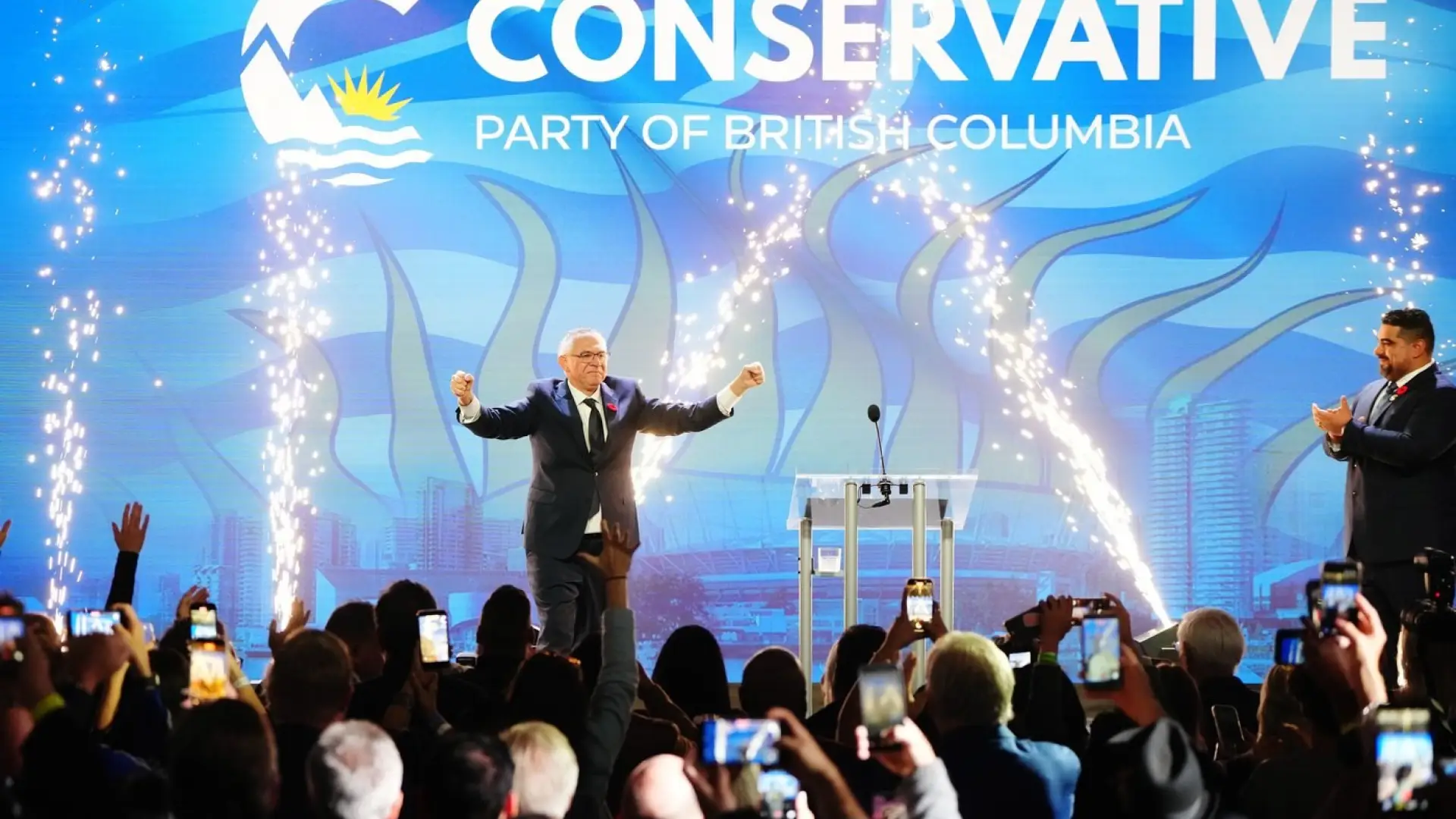
B.C. Conservative interim Leader Lorne Doerkson arrives to address supporters on election night, in Vancouver, on Saturday, Oct. 24, 2026.
The result followed a snap election held on Saturday, October 24, 2026, after outgoing NDP Premier David Eby called voters to the polls two years ahead of the province’s next scheduled election.
Provisional results reported on Sunday showed the Conservatives winning 64 of the 93 seats in the provincial legislature, while the NDP secured 27 seats. The Green Party won two seats.
The outcome places interim Conservative leader Lorne Doerkson in line to become British Columbia’s next premier. The result represents a major change in the province’s political direction, particularly in its approach to energy development, taxation and economic policy.
Eby conceded defeat on election night and announced that he would step down as leader of the NDP, although he won re-election in his own constituency.
CONSERVATIVES CAPITALISE ON CAMPAIGN MOMENTUM
The election victory marks a remarkable turnaround for a party that had faced internal divisions in the weeks leading up to the vote.
Doerkson took over as interim leader after Kerry-Lynne Findlay left the leadership position in September. Several legislators who had previously left the Conservative caucus subsequently returned, helping the party reunite much of the province’s right-of-centre political support.
Eby called the early election while his NDP government held a narrow majority in the legislature. He argued that British Columbia needed a stronger mandate to address economic uncertainty, including the effects of US President Donald Trump’s tariff policies.
However, the campaign developed into a contest over the cost of living, healthcare, economic management and the province’s future approach to resource development.
The Conservatives gained sufficient support to form a majority government, leaving the NDP facing a return to opposition after nearly a decade in power.
Doerkson told supporters in Vancouver that his government would work to strengthen the provincial economy and attract investment.
He has pledged to make British Columbia more attractive to businesses and investors, with a particular emphasis on expanding the energy sector.
LORNE DOERKSON SET TO BECOME PREMIER
Doerkson is expected to lead the incoming provincial government after guiding the Conservatives to their electoral victory.
His rise to the position of premier-designate came just weeks after he assumed the party’s interim leadership during a period of political uncertainty.
In his victory speech, Doerkson promised to pursue policies aimed at accelerating economic development and bringing more investment into the province.
The incoming government will face several major challenges, including housing affordability, healthcare pressures, public finances and uncertainty surrounding trade with the United States.
British Columbia has significant natural resources and an established energy sector. The extent to which the new administration can expand investment while addressing the province’s other priorities will depend on the policies it introduces and its ability to implement them.
The final composition of the legislature will be confirmed through the official electoral process as the remaining votes are counted and results are finalised.
EXPANSION OF NATURAL GAS PRODUCTION A CENTRAL PLEDGE
One of the Conservatives’ most prominent campaign commitments was to substantially increase natural gas production.
The party pledged to double natural gas output by 2032 and increase it to more than three times current levels by 2035.
Doerkson has argued that expanding energy production and reducing regulatory obstacles would help attract investment, create economic opportunities and strengthen British Columbia’s position in international energy markets.
The Conservatives have also promised to revisit the province’s emissions limits and replace its existing carbon-tax framework.
Their platform includes efforts to reconnect with major energy companies that have withdrawn from or reduced their involvement in British Columbia’s liquefied natural gas sector since 2018. The companies identified in the campaign commitments include ExxonMobil, Chevron and Woodside.
These proposals represent a significant shift from the outgoing NDP government’s approach to energy development, which included opposition to new oil pipelines and support for a tanker ban along the province’s northern coast.
The incoming government will need to translate its campaign commitments into specific policies and regulatory decisions. The election result alone does not establish that proposed production increases or investment targets will be achieved.
DAVID EBY ANNOUNCES DEPARTURE AS NDP LEADER
Eby announced that he would resign as leader of the New Democratic Party following the Conservatives’ victory.
Addressing supporters at the party’s election-night gathering in Vancouver, he acknowledged the result and said the party needed new leadership.
His announcement followed the defeat of the government he had led for less than four years as premier.
The NDP’s loss ends its nine-year period in office in British Columbia. The party will now move into opposition, where it will have to reassess its political direction and prepare for the next provincial election.
Eby’s decision to call an early vote had been intended to secure a stronger mandate for his government. Instead, the Conservatives emerged with a majority, while the NDP lost its position as the governing party.
Despite the defeat, Eby retained his own legislative seat.
COST OF LIVING AND HEALTHCARE AMONG VOTERS’ CONCERNS
Affordability and access to healthcare featured prominently during the election campaign.
The Conservatives argued that the outgoing government had not done enough to make life more affordable and promised to encourage investment and economic expansion.
Their platform also included proposals to reduce personal income taxes, accelerate home construction by reducing regulatory barriers, expand childcare availability and change aspects of the province’s insurance system.
On public finances, the party said it would work to reduce the provincial deficit without cutting frontline services or increasing taxes. Its platform set a target of reducing the deficit to $10.8 billion by 2030.
These commitments will be tested as the new government develops its budget and determines how to finance its proposed changes.
The incoming administration will also have to address expectations surrounding healthcare, housing and public services, issues that remain important regardless of the change in government.
GREEN PARTY RETAINS A PRESENCE IN THE LEGISLATURE
The Green Party of British Columbia secured two seats in the provisional results, placing it behind the Conservatives and NDP in the legislature.
Green leader Emily Lowan won election in Saanich North and the Islands. Her party will continue to have a presence in provincial politics, although the Conservatives’ majority gives the incoming government the numbers needed to govern without relying on Green support to pass legislation in ordinary circumstances.
The election result also means the NDP will have to rebuild its position as the principal opposition party while the Conservatives prepare to take control of the provincial government.
WHAT THE RESULT MEANS FOR BRITISH COLUMBIA
The Conservatives’ victory is a significant political development for British Columbia, particularly because the party has not won a provincial election since 1928.
Its majority gives the incoming government a substantial opportunity to pursue its economic and energy agenda. Its proposed expansion of natural gas production, changes to taxation and review of environmental rules are likely to become central issues during the transition to government.
However, the practical effects of those policies will depend on legislation, budget decisions, regulatory changes and investment decisions made after the election.
For the NDP, the result marks the end of its time in government and the beginning of a period of opposition and leadership transition.
With provisional results pointing to 64 Conservative seats, 27 NDP seats and two Green seats, British Columbia is preparing for a change in government after nearly a decade of NDP leadership.
The final electoral figures and the formal transition to the new administration will determine the next steps following Saturday’s vote.