News
BRICS Seen as Potential Stabilizer for Global South Amid Rising Global Shocks
BRICS could play a growing role in helping economies across the Global South withstand a combination of economic and geopolitical pressures affecting...
By Patience
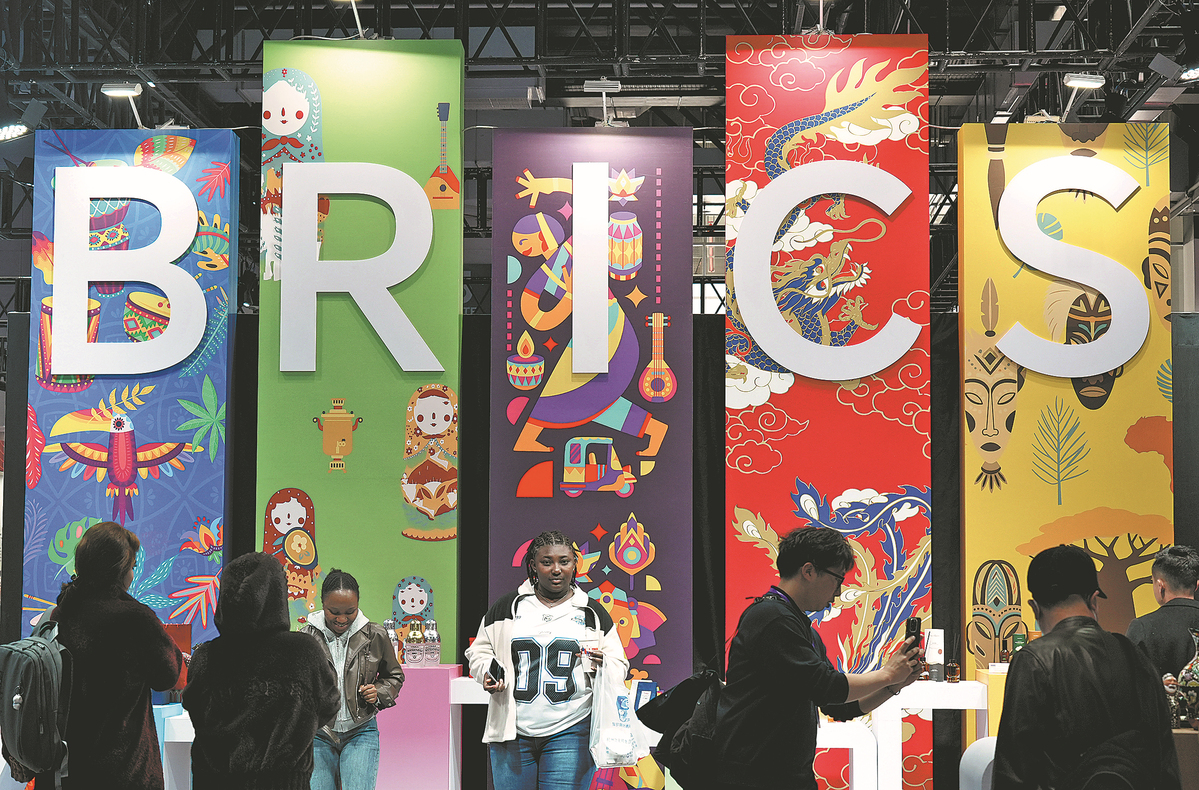
The grouping is facing an increasingly difficult global environment, with climate-related disruptions, geopolitical conflicts and renewed protectionist policies creating additional challenges for emerging economies.
One of BRICS’ major strengths is the economic weight of its membership. The group currently has 11 members and 10 partner countries, together representing more than 40 percent of global gross domestic product.
Greater trade and investment among BRICS countries could strengthen economic links across the regions connected to its members and create additional opportunities for developing economies.
However, the bloc still faces limitations. Its members are geographically spread out and operate under different political systems, institutions and production standards, making deeper economic integration more complicated.
Those differences have also contributed to what experts describe as the unique character of BRICS.
One area where the grouping could make further progress is trade using local currencies. Increasing the use of national currencies in transactions could help members reduce exchange-rate risks and ease pressure caused by shortages of foreign-currency liquidity during periods of global market instability.
BRICS mechanisms already allow full members and partner countries to settle some bilateral trade in local currencies.
A recent development involved China and Egypt, whose leaders welcomed the renewal and expansion of a bilateral local-currency swap arrangement during Chinese President Xi Jinping’s state visit to Egypt earlier this month.
The expansion of BRICS has also strengthened its reach across the Global South.
Egypt, Ethiopia, Iran, Saudi Arabia and the United Arab Emirates joined the grouping in early 2024, marking its largest expansion since its establishment. Indonesia subsequently became the newest full member in January 2025.
India is serving as the rotating chair of BRICS this year and is hosting the 18th BRICS Summit in New Delhi under the theme “Building for Resilience, Innovation, Cooperation and Sustainability.”
The summit is taking place as developing economies confront several pressures, including extreme weather risks, higher US tariffs and the escalating crisis in the Middle East, which has contributed to higher global oil prices.
At the same time, growing demand for artificial intelligence has strengthened exports from countries that occupy higher positions in the technology value chain, helping some economies reduce the effects of increased US trade barriers.
BRICS could have a greater impact by strengthening economic cooperation and helping its members diversify their trade relationships.
Although trade between BRICS countries has increased over the past two decades, it still represents only about 5 percent of global trade, suggesting considerable room for further growth.
Strengthening trade engagement among members and developing mechanisms to support commerce could help BRICS countries expand their markets and reduce their dependence on the US market.
As economic and geopolitical uncertainty continues to affect the Global South, BRICS is increasingly positioned as a platform through which emerging economies can deepen cooperation, strengthen resilience and pursue greater economic diversification.