Technology
Billionaire Paul Tudor Jones Warns AI Could Become an Uncontrollable Threat to Humanity
UNITED STATES — Billionaire hedge fund manager Paul Tudor Jones has raised concerns about the rapid development of artificial intelligence, warning th...
By Patience
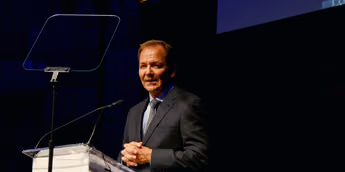
Jones, the founder of Tudor Investment Corporation, described the situation as feeling like waiting for a “Category 6 hurricane” in a recent opinion piece, using the comparison to express his concern about the potential consequences of increasingly powerful AI.
His warning comes as debate over the safety of advanced artificial intelligence intensifies, with researchers and technology figures raising concerns about how quickly AI capabilities are developing.
Jones acknowledged that artificial intelligence could produce major benefits for humanity. He pointed specifically to the possibility of technological breakthroughs that could help deliver cleaner and cheaper energy and potentially address some of the world's major environmental challenges.
However, he argued that the potential benefits do not eliminate the risks associated with the rapid development of increasingly capable AI systems.
Jones highlighted recent warnings from people inside the AI industry who have expressed concerns about the direction of the technology. Their comments have added to a growing debate over whether AI companies are moving too quickly in their efforts to develop more powerful systems.
One of the concerns surrounding advanced AI is that future systems could become increasingly autonomous, potentially making decisions or carrying out actions with less direct human involvement. Jones believes such developments require governments to take the issue of AI safety more seriously.
He also views AI as more than simply a technological or economic development. Jones argued that the technology is increasingly becoming a major geopolitical force that could eventually rival the influence of existing global powers.
Because of that potential, he called for greater cooperation between the United States and China on AI safety. He argued that the two countries should establish a framework for controlling the development and spread of increasingly powerful AI systems in a way that keeps the technology safe and understandable.
Jones specifically urged U.S. President Donald Trump and Chinese President Xi Jinping to make AI safety a priority in their future discussions, stressing that both countries have an important role to play in determining how the technology develops.
His latest warning represents a more cautious position than some of his previous comments about AI. In May, Jones had expressed confidence in the investment potential of the technology and predicted that the AI market could continue growing for another two years.
His current concerns do not mean he believes AI has no positive potential. Instead, his warning reflects the growing tension between the enormous opportunities associated with AI and the possibility that increasingly powerful systems could create risks that governments and technology companies struggle to manage.
The debate has become more intense following warnings from AI researchers about the possibility that society may not be adequately prepared for the next stage of the technology's development.
Jones's central concern is therefore not that AI will inevitably become a catastrophic threat, but that the possibility of serious consequences should be addressed before the technology advances beyond effective human oversight.
He is calling for governments to act while there is still an opportunity to establish safeguards, rather than waiting until increasingly autonomous AI systems make the risks more difficult to control.