Culture
BEIJING STEPS UP PRESERVATION OF TEMPLE OF HEAVEN AND CENTRAL AXIS HERITAGE
CHINA — Beijing is strengthening efforts to preserve the historic Temple of Heaven and other heritage sites along the city's Central Axis, combining t...
By Wavers Multimedia
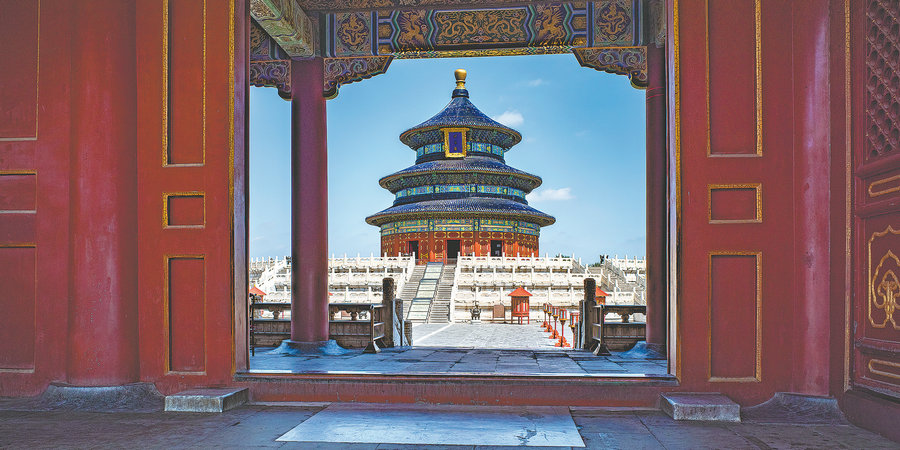
The Temple of Heaven is one of the major historic sites located along the Beijing Central Axis, a collection of landmarks that reflects the historical layout and development of China's capital.
The Central Axis was added to the UNESCO World Heritage List in 2024, recognising its cultural significance and the preservation of important elements of Beijing's historic urban landscape.
PRESERVING A CENTURIES-OLD LANDMARK
The Temple of Heaven was established in the early 15th century and served as an imperial ceremonial complex during the Ming and Qing dynasties.
Emperors used the site for ceremonies connected with prayers for good harvests. Its most recognisable structure, the Hall of Prayer for Good Harvests, remains one of the defining landmarks of the complex.
UNESCO describes the Temple of Heaven as an exceptionally well-preserved imperial sacrificial complex whose architecture and landscape reflect traditional Chinese ideas about the relationship between heaven and humanity.
Recent conservation work has expanded beyond maintaining historic buildings to include protection of intangible cultural heritage and efforts to improve how visitors understand the site's history.
NEW MUSEUM EXPANDS HERITAGE EDUCATION
A Temple of Heaven Museum opened in June, providing exhibitions focused on the site's history, religious traditions and ritual culture.
Part of the museum's exhibition programme is housed in the Divine Music Administration, a historic facility associated with the training and performance of ritual music during the imperial period.
The exhibitions include displays on Zhonghe Shaoyue, a form of ceremonial music associated with imperial rituals that was added to China's national intangible cultural heritage list in 2021.
The museum is intended to strengthen public education and research while giving visitors more context about the cultural significance of the Temple of Heaven.
TECHNOLOGY USED TO DOCUMENT HERITAGE
Conservation officials are also using digital technology to record and monitor the historic complex.
Three-dimensional scanning and aerial photography are being used to produce detailed digital models of heritage structures. The work is creating digital records that can support future conservation and restoration efforts.
Digital documentation has already been completed for core areas including the Altar of Prayer for Good Harvests and the Circular Mound Altar, while wider coverage is being carried out in stages.
Monitoring equipment has also been installed at the Circular Mound Altar to collect information on visitor numbers, weather conditions and changes affecting the structures.
CULTURAL PRODUCTS BRING HERITAGE CLOSER TO VISITORS
The preservation programme also includes efforts to make the site's cultural heritage more accessible through creative products.
The Temple of Heaven offers more than 1,000 cultural and creative products spanning categories such as handicrafts, food and toys. New products are introduced regularly and draw design inspiration from the site's architecture and history.
Some products are based directly on architectural features of the complex, allowing visitors to take home items connected to the history and design of the landmark.
The approach combines conservation with education and public engagement, giving visitors additional ways to learn about the cultural heritage represented by the Temple of Heaven.
PROTECTING THE BEIJING CENTRAL AXIS
The Temple of Heaven forms part of the broader Beijing Central Axis, whose historic buildings and urban layout illustrate the planning principles used in the development of China's capital.
UNESCO's designation covers a collection of important sites, including the Temple of Heaven, the Forbidden City, Jingshan Hill and the Drum and Bell Towers. The heritage property is managed under conservation plans designed to protect its historic character while responding to pressures including tourism and urban development.
Beijing's ongoing work at the Temple of Heaven reflects a broader effort to preserve both physical structures and the traditions, knowledge and cultural practices associated with them.