World News
Bedouin Women Drive Surge in Arab Voter Turnout, Strengthening Palestinian-Led Parties in Israel
A grassroots mobilisation campaign led by Bedouin women in southern Israel has helped produce a significant increase in Arab voter participation, cont...
By Wavers News
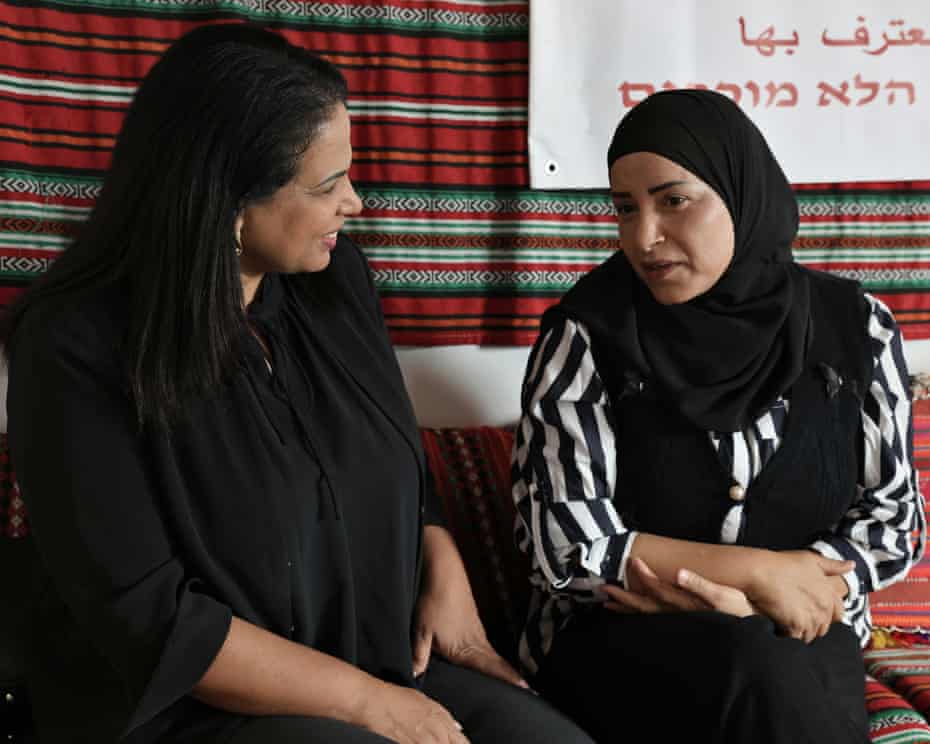
Hanan Alsanah and Amira Habdoubi of Abu Talul attend a gathering organised by the women's group Alashniat.
The campaign, which focused on encouraging women to exercise their voting rights, recorded a particularly strong response in several Bedouin communities in the Negev region. In some villages, voter turnout reportedly more than tripled compared with previous elections.
The increased participation formed part of a wider rise in turnout among Arab citizens of Israel during Tuesday’s election. Palestinian-led parties secured a record 19 seats in the 120-member Knesset, strengthening their influence in a closely contested political landscape and helping prevent Prime Minister Benjamin Netanyahu’s coalition from securing a governing majority.
GRASSROOTS CAMPAIGN ENCOURAGES WOMEN TO VOTE
The mobilisation effort was coordinated by local activists, including lawyer Hanan Alsanah, who founded the Alnashmiat network.
The initiative sought to address barriers that have historically limited political participation among Bedouin women, particularly those living in communities with limited infrastructure and access to public services.
Organisers visited communities, raised awareness about voting rights and encouraged women to recognise the influence their participation could have on the election outcome.
Alsanah argued that a community could not fully exercise its political influence if only its male members participated in elections. She urged women to recognise that their votes were equally important in determining the country's political direction.
According to campaign organisers, participation among women in unrecognised Bedouin villages increased from approximately 20 per cent in the 2022 election to more than 60 per cent in the latest poll.
Some communities recorded even more dramatic increases, with overall turnout rising to levels that organisers had not previously experienced.
HOME DEMOLITIONS AND SECURITY CONCERNS INFLUENCE VOTERS
For many Bedouin residents, the election provided an opportunity to express dissatisfaction with government policies affecting their communities.
Home demolitions, discrimination, crime and inadequate public services were among the concerns that influenced voters.
Umm Khaled Fatoun, a resident of the Bedouin village of Azzarnug, participated in the campaign after experiencing the demolition of her son's home the previous year.
She said the incident, during which the family was reportedly prevented from removing furniture and solar panels before the property was destroyed, strengthened her determination to oppose the policies associated with National Security Minister Itamar Ben-Gvir.
Fatoun said her intention was to use her vote to challenge the minister's approach towards the Bedouin community.
Activist Amira Habdoubi, from Abu Talul, described voting as one of the few available opportunities for members of the community to express political opposition without taking part in street demonstrations that could expose them to arrest.
The concerns extended beyond housing and discrimination. The security situation arising from regional conflicts also influenced participation, particularly in unrecognised villages where residents lack adequate access to bomb shelters and warning systems during missile and rocket attacks.
The absence of protective infrastructure has left some communities particularly vulnerable during periods of military escalation.
JEWISH VOLUNTEERS SUPPORT ACCESS TO POLLING STATIONS
The campaign also received support from Jewish volunteers who helped Bedouin women overcome practical difficulties in reaching polling stations.
Hundreds of women volunteers reportedly assisted with access to polling locations, while approximately 150 men participated in protective activities around polling stations.
The involvement was partly intended to prevent intimidation and reduce the risk of confrontations involving right-wing provocateurs.
Raluca Ganea, founding executive director of the Jewish-Arab community action group Zazim, said the volunteers wanted to create a safer environment for voters and reduce the likelihood that Bedouin residents would be exposed to confrontations.
The assistance was organised with consideration for restrictions surrounding organised voter transportation. Israel's election committee had ruled in 2019 that organising volunteer transport for voters was illegal, meaning individuals and drivers connected with one another separately.
The cooperation highlighted the role of Jewish-Arab civil society groups in supporting political participation across communities.
NETANYAHU'S ALLIES QUESTION SURGE IN ARAB TURNOUT
The increase in Arab voter participation became a subject of political controversy as the election results emerged.
Netanyahu and figures associated with his political camp raised allegations of electoral fraud and foreign involvement, questioning the circumstances surrounding the increased turnout.
The prime minister's campaign also used social media material, including an AI-generated image purporting to show crowded polling stations in Palestinian areas.
Opposition figures, election organisers and community activists rejected allegations that the increased participation resulted from wrongdoing.
Amit Segal, a political commentator described as close to Netanyahu, acknowledged that the rise in turnout among Bedouin and Arab voters was unprecedented in Israel's history.
For activists, the results reflected greater political awareness and mobilisation rather than electoral manipulation.
BEDOUIN COMMUNITIES CONTINUE TO FACE STRUCTURAL CHALLENGES
The political mobilisation has drawn renewed attention to the circumstances of Muslim Bedouin communities in Israel's Negev region.
Many residents live in villages that the Israeli government does not officially recognise. These communities frequently face difficulties accessing basic services, including electricity, water, infrastructure and adequate housing.
More than 100,000 people live in approximately 30 unrecognised communities in the Negev, while another 200,000 reside in officially recognised towns or settlements with varying levels of recognition.
The lack of formal recognition has contributed to longstanding disputes over land ownership, housing and development. Residents have also faced repeated home demolitions as authorities pursue enforcement of planning and land regulations.
These challenges have become central issues in discussions about equality, citizenship and the political representation of Arab communities in Israel.
ARAB PARTIES GAIN GREATER POLITICAL INFLUENCE
The increased participation among Bedouin and other Arab voters contributed to a historic result for Palestinian-led parties, which collectively secured 19 seats in the latest election.
The outcome has strengthened their position in the Knesset at a time when neither Netanyahu's political bloc nor the opposition led by former military chief Gadi Eisenkot secured enough seats to form a government independently.
The result has created a complicated political situation in which Arab-led parties could become important participants in negotiations over the formation of the next government.
Despite their increased parliamentary representation, questions remain about whether Jewish-led political blocs will be willing to cooperate with the Arab parties, particularly given previous public commitments by political leaders against forming alliances with them.
For the organisers who mobilised Bedouin women, the election demonstrated the influence that broader participation can have on national politics.
Their campaign also raised expectations that increased representation could translate into greater attention to longstanding concerns over discrimination, housing, public safety and access to essential services.