Culture
Astrophotographers Gather in Xinjiang to Capture Perseid Meteor Shower
Astrophotographers from across China travelled to Hami in Northwest China’s Xinjiang Uygur autonomous region to capture the Perseid meteor shower as i...
By Wavers News
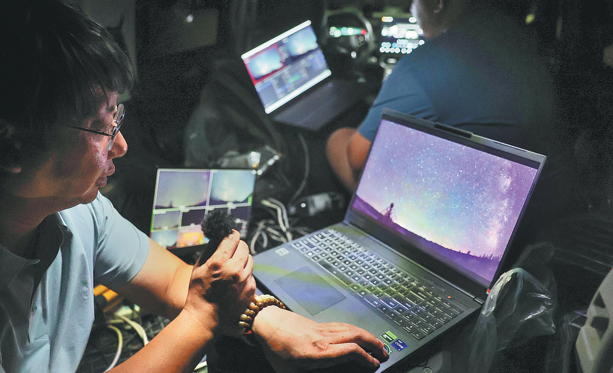
The meteor shower peaked on August 12 and 13, drawing stargazers and photographers to the Pterosaur-Yardang Dahaidao Scenic Area, where the remote Gobi Desert offers wide open skies and little light pollution.
The area’s dry air and low levels of dust also provide favourable conditions for astrophotography. Veteran photographer Liu Bing said the limited light pollution and atmospheric conditions allow stars to appear sharper in photographs.
The surrounding Yardang landforms, shaped by wind over time, also provide distinctive landscapes that photographers can combine with images of the night sky.
Liu and other photographers attended Hami’s annual Sweet Whispers to the Galaxy Festival, where they photographed the Perseid meteor shower. Many participants came from the China StarVision Alliance, a platform with nearly 1,000 Chinese astrophotographers.
The popularity of the area was reflected in visitor numbers. Official data showed that Dahaidao recorded about 25,000 visitor arrivals and more than 10,000 vehicles in early August.
To support nighttime observation, the site has introduced strict lighting restrictions. Stargazing locations also have 24-hour security patrols, emergency contacts and safety signs.
For the photographers, capturing the meteor shower required careful preparation. They checked locations during daylight, monitored weather and cloud conditions and used applications to track the movement of stars and the possible effect of moonlight.
Beijing-based astrophotographer Wang Junfeng said photographers also need to identify the constellation Perseus and understand its radiant point, the area of the sky from which the meteors appear to originate.
Cloudy conditions disrupted some of the observations, forcing photographers to wait for brief breaks in the clouds before taking pictures.
Another photographer, Liu Dapeng, positioned three cameras at different locations before nightfall and programmed them to take photographs at intervals until dawn.
He also noted that beginners can use smartphones mounted on tripods to photograph the night sky before investing in more specialised equipment.
Meanwhile, photographer Zhou Bo led a team that livestreamed the meteor shower from Dahaidao, Barkol Lake and Yiwu county in Hami, while also showcasing the region’s geological features, history and cultural heritage.
The combination of clear night skies, distinctive desert landscapes and organised stargazing activities is helping Hami attract growing interest from astrophotographers and astronomy enthusiasts.