Culture
Ancient Treasures Take the Stage in New Dance Drama
Ancient Chinese cultural treasures are being given a new form of expression through dance, theater, poetry and multimedia in a production that transfo...
By Wavers News
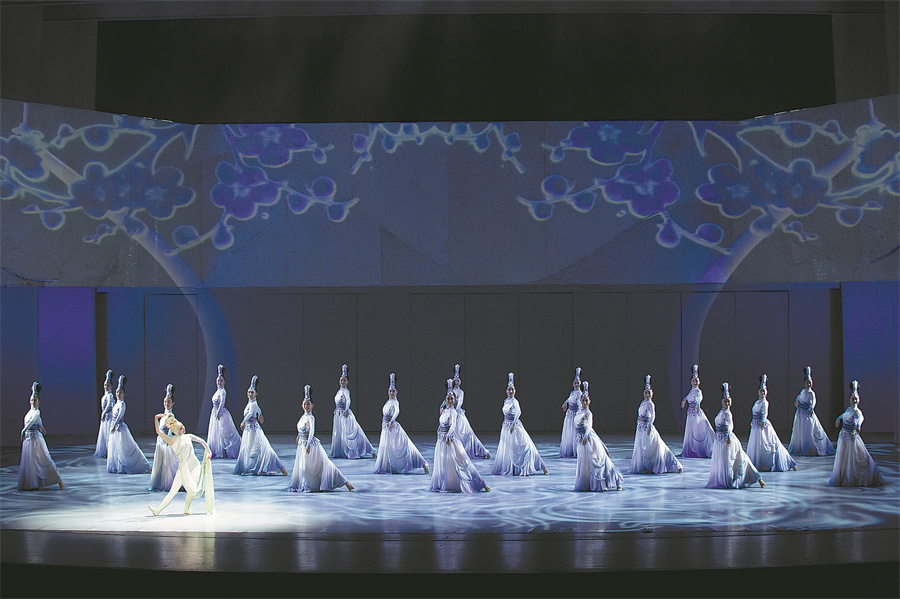
Titled “Ancient Hues: National Treasures of Liaoning,” the dance drama draws inspiration from 17 important artifacts held by the Liaoning Provincial Museum. The production was created by the Liaoning Song and Dance Troupe in collaboration with the museum.
First presented in May 2025, the production has since toured several cities across China. It is scheduled to be staged in Beijing on September 15 and 16 as part of the 7th National Ethnic Minority Art Festival.
The performance uses a fictional museum-night journey to connect objects from different periods of Chinese history. A young visitor named Moxuan enters the museum and encounters a mysterious guide represented by a Hongshan-culture jade pig-dragon.
The jade pig-dragon, a distinctive artifact associated with the Neolithic Hongshan culture, becomes an animated character rather than simply a museum object. Its playful appearance is used to introduce humor and energy to the performance.
The Hongshan culture flourished in northern China roughly 6,500 to 5,000 years ago, with its influence extending across areas of present-day Inner Mongolia, Liaoning and Hebei.
Other treasures featured in the production include the Tang Dynasty painting Court Ladies Adorning Their Hair with Flowers, the famous Auspicious Cranes painting by Zhao Ji, who was also known as Emperor Huizong of the Northern Song Dynasty, and the Tang-era Jiuxiao Huanpei guqin.
The production is divided into four sections calligraphy, painting, music and artifacts and features 10 independent dance pieces.
Rather than presenting the historical objects as isolated exhibits, the creative team uses movement and stage technology to create connections between them. The approach allows audiences to encounter familiar cultural treasures through a contemporary theatrical experience.
At the center of the story is also the relationship between Moxuan and the ancient treasures, creating a dialogue between younger audiences and China's distant cultural past.
The production demonstrates how museums and performing arts can work together to present historical heritage in new ways, turning objects preserved behind glass into stories that can be experienced through movement, sound and visual performance.