United States
Americans Vote in High-Stakes Midterm Elections as Trump Faces First Major Electoral Test of Second Presidency
Millions of Americans are heading to polling stations on Tuesday, November 3, 2026, in midterm elections that could significantly reshape the country'...
By Wavers News
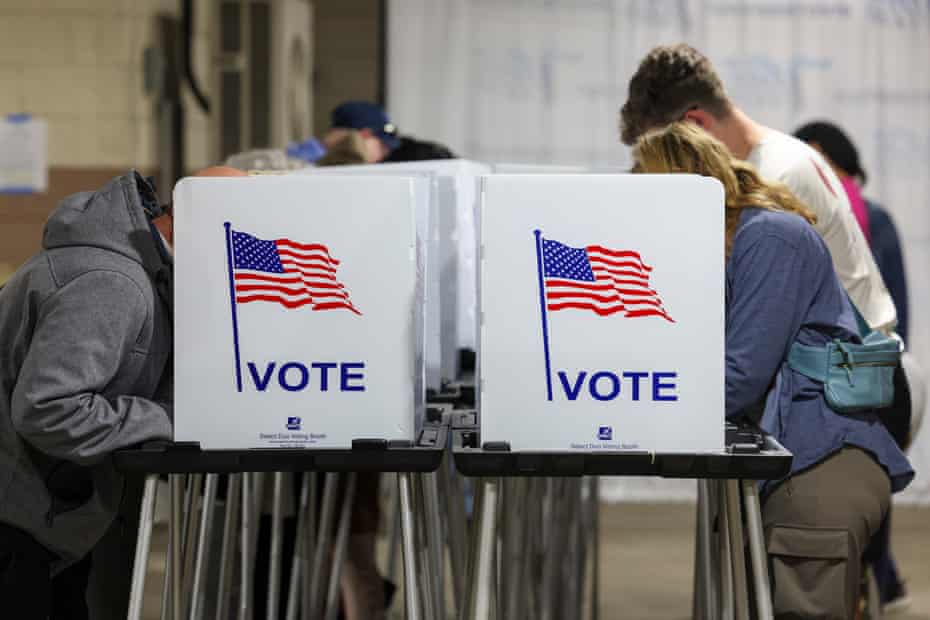
The elections are being closely watched as an assessment of Trump's leadership, with voters deciding whether Republicans should maintain their control of Congress or whether Democrats should take over one or both legislative chambers.
Republicans currently control both the Senate and the House of Representatives. Democrats are seeking to reverse that position, arguing that concerns over the economy, immigration enforcement, the war involving Iran and the conduct of the administration have created an opportunity to challenge the president's political influence.
The outcome will determine the balance of power in Washington and could affect the administration's ability to advance legislation, approve appointments and implement its policy priorities.
CONTROL OF CONGRESS AT THE CENTRE OF ELECTION
All 435 voting seats in the House of Representatives are being contested, alongside 35 Senate seats, including two special elections.
The Senate has 100 members serving staggered six-year terms, meaning only part of the chamber faces voters during each midterm election.
Republicans currently hold a 53-47 advantage in the Senate, including two independent senators who caucus with Democrats. Democrats need to gain four seats to secure a majority.
The House presents another major battleground. Republicans are defending a narrow majority, leaving relatively few seats capable of determining which party controls the chamber.
Opinion polls have generally placed Democrats in a stronger position to regain the House, while the Senate contest remains more difficult because several competitive races are taking place in traditionally Republican-leaning states.
If Democrats secure control of either chamber, they would gain greater authority to scrutinise the administration, challenge legislative proposals and influence the direction of federal policy.
TRUMP MAKES ELECTION A TEST OF HIS PRESIDENCY
Trump has played a central role throughout the campaign, travelling across the country to attend rallies and encourage supporters of his Make America Great Again movement to vote for Republican candidates.
At several campaign appearances, he urged supporters to approach the election as though his own name appeared on the ballot.
The president's involvement reflects the importance of the results to his administration. Historically, the party occupying the White House has frequently lost congressional seats during midterm elections, creating opportunities for the opposition to gain legislative influence.
Democrats have sought to turn that historical pattern into an electoral advantage by presenting the vote as an opportunity to place limits on Trump's second-term agenda.
The president's approval ratings have also become a concern for Republicans. Recent opinion surveys have placed his approval between 33 and 37 per cent, reflecting growing dissatisfaction among sections of the electorate.
Trump's administration has faced criticism over its immigration crackdown, trade tariffs, the war with Iran and spending priorities.
COST OF LIVING AND IRAN WAR DOMINATE CAMPAIGN DEBATE
Economic pressures have emerged as a major issue influencing the election campaign.
Although Trump returned to office promising to reduce the cost of living, many Americans continue to face expensive groceries, fuel, housing and other household necessities.
The war involving Iran has added to those concerns by contributing to higher global oil prices. Increased fuel costs have affected motorists and businesses, while higher diesel prices have placed additional pressure on transportation, agriculture and supply chains.
Democratic candidates have used these developments to question the administration's economic priorities and argue that ordinary households are not experiencing the improvements promised during the 2024 presidential campaign.
The issue of government corruption has also featured prominently.
A recent Harris poll conducted for The Guardian found that 76 per cent of respondents believed elected officials were more concerned about enriching themselves than improving the economy for ordinary Americans.
Democrats have also highlighted financial disclosures indicating that Trump earned approximately $2.2 billion after returning to the White House, including income connected to cryptocurrency ventures bearing his name.
The administration's supporters have continued defending its economic and policy direction, while Republican candidates have campaigned on maintaining the party's legislative position.
KEY SENATE BATTLES DRAW NATIONAL ATTENTION
Several Senate contests have attracted particular attention because their outcomes could determine control of the upper chamber.
Texas, Kansas, Ohio and Maine are among the Republican-held states where Democrats are attempting to secure victories.
Democrats are also defending important seats in states including Michigan and Georgia.
In Texas, Democratic candidate James Talarico is seeking to overcome the state's longstanding Republican voting pattern in a contest that has attracted national attention.
In Kansas, Democrats are similarly attempting to win a Senate seat in a state that has not elected a Democrat to the chamber since 1932.
Michigan has become another major focus following an unusual development within the Democratic Party.
Congresswoman Haley Stevens, who lost the Democratic Senate primary to Abdul El-Sayed, endorsed Republican candidate Mike Rogers on Sunday, November 1.
The decision generated strong criticism from Democratic leaders and supporters.
Senate Minority Leader Chuck Schumer described the endorsement as a betrayal, while El-Sayed continued his campaign by focusing on household affordability and the influence of political interests over ordinary voters.
The disagreement has exposed divisions within the Democratic Party at a critical stage of the election.
ALASKA CAMPAIGN CONTROVERSY ADDS TO POLITICAL TENSIONS
The campaign in Alaska has also faced controversy following allegations involving an effort to recruit a candidate whose name closely resembles that of Republican Senator Dan Sullivan.
Reports alleged that the Democratic candidate, Mary Peltola, was connected to an attempt to introduce another candidate named Dan Sullivan into the Senate contest.
Peltola has denied having knowledge of any such arrangement involving her campaign.
The controversy became more complicated after the US Department of Justice filed a lawsuit seeking to prevent certification of Alaska's Senate results if Republicans lost, citing concerns about possible voter confusion caused by the presence of two candidates with the same name.
A judge subsequently dismissed the lawsuit.
The episode has contributed to wider concerns about political interference and the handling of election results, particularly as both parties prepare for possible legal challenges after voting concludes.
ELECTION SECURITY AND VOTER CONFIDENCE UNDER SCRUTINY
Questions surrounding election integrity have become another major issue during the campaign.
Trump has repeatedly questioned the reliability of US elections and raised allegations of widespread voting by non-American citizens. Such claims have faced criticism from election officials and voting rights organisations.
The Justice Department plans to deploy approximately 1,000 election monitors across polling stations in the country.
Critics have raised concerns that the scale of the deployment could intimidate voters, while supporters of federal monitoring argue that election oversight is necessary to protect the voting process.
The dispute comes amid broader disagreements over the federal government's role in elections, which are administered primarily by individual states.
There are also concerns about whether Trump would accept an unfavourable outcome.
The president has previously declined to give an unconditional commitment to accepting the results, saying he would do so if they were honest.
The issue has heightened attention on election administration, ballot counting and the certification process.
RECORD EARLY VOTING POINTS TO STRONG PARTICIPATION
Participation before Election Day has been unusually high, with more than 57 million Americans having already cast their ballots by Monday, November 2.
The figure exceeds the approximately 46 million early votes recorded during the 2022 midterm elections.
States including Texas, North Carolina, Georgia, South Carolina and Michigan recorded substantial early participation, drawing attention to the level of voter engagement in several closely contested races.
In states that track party registration, Democrats accounted for a larger share of early voters than Republicans. Such figures indicate party registration rather than the actual candidates selected by voters, and they do not independently establish which party will win.
The high early-voting numbers have nevertheless added another dimension to an election already attracting considerable national attention.
RESULTS COULD SHAPE AMERICA'S POLITICAL DIRECTION
Beyond determining control of Congress, the election could influence the political strategies of both major parties ahead of the 2028 presidential contest.
A Democratic victory in either legislative chamber would provide the party with greater oversight powers and an opportunity to challenge aspects of Trump's agenda.
Republican victories would preserve the administration's current congressional support and strengthen its ability to pursue legislative priorities.
The results could also influence internal debates within both parties over campaign messaging, economic policy, immigration and America's involvement in international conflicts.
With voting now underway across the United States, attention is focused on turnout, closely contested Senate races and the final balance of power in Congress.
The outcome will provide the first nationwide electoral assessment of Trump's second presidency since his return to the White House in January 2025.