International
Albanese Heads to Commonwealth Summit as Inflation Pressures and Interest Rate Decision Test Australian Government
Australian Prime Minister Anthony Albanese has begun a series of international diplomatic engagements at a challenging moment for his government, with...
By Wavers News
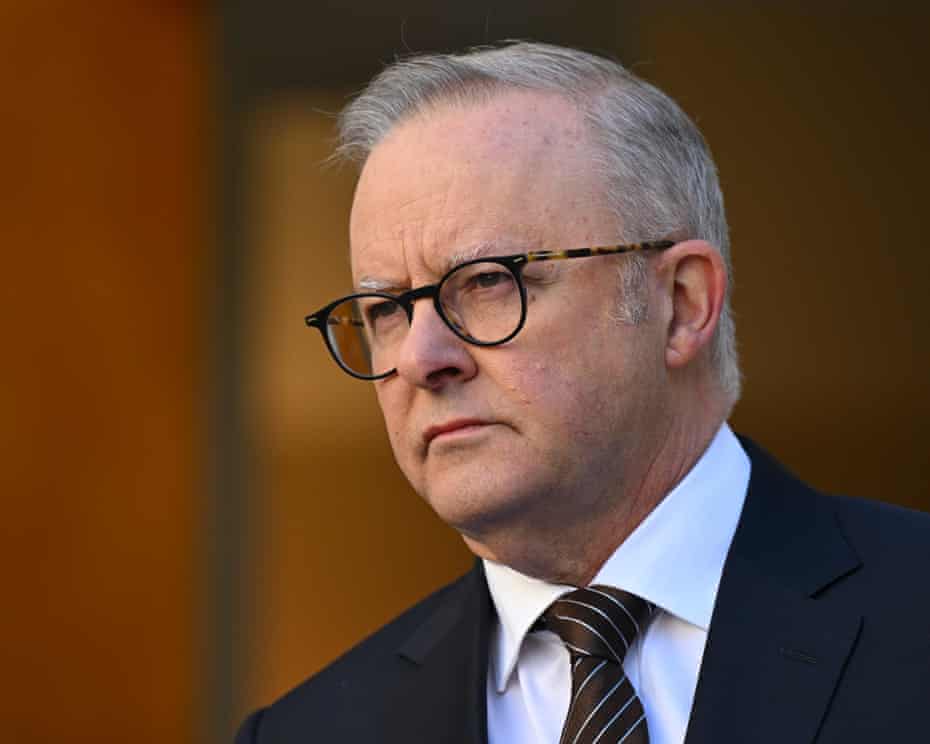
Australian Prime Minister Anthony Albanese addresses journalists ahead of his departure for the Commonwealth Heads of Government Meeting in Antigua and Barbuda, where he is expected to meet with fellow world leaders.
Albanese arrived in Antigua and Barbuda on Saturday, October 31, 2026, to participate in the Commonwealth Heads of Government Meeting (CHOGM), where he is expected to hold discussions with King Charles III and other national leaders, including British Prime Minister Andy Burnham and Canadian Prime Minister Mark Carney.
The gathering offers the Australian leader an opportunity to strengthen diplomatic relationships, discuss shared international concerns and demonstrate his government's engagement with global affairs as economic difficulties continue to affect households at home.
Political analyst Zareh Ghazarian, an associate professor at Monash University, described the timing of the visit as particularly important, pointing to the domestic challenges confronting the government.
He said the international engagement could give Albanese an opportunity to change the political conversation and present himself more prominently on the global stage while addressing mounting pressure within Australia.
INFLATION AND INTEREST RATE DECISION CREATE DOMESTIC PRESSURE
The prime minister's overseas visit coincides with growing concerns about Australia's economic outlook, particularly after inflation increased more than expected.
The country's annual inflation rate reached 4.3% in the latest reported figures, raising expectations that the Reserve Bank of Australia (RBA) could increase its benchmark interest rate at its next policy meeting.
The central bank is scheduled to announce its decision on Tuesday, November 3, while Albanese remains overseas.
Financial markets are anticipating an increase that could take the interest rate to 4.85%. Such a move would represent the fifth rate increase of 2026, adding to the financial pressure on households already dealing with higher living costs.
An increase would also create another challenge for Treasurer Jim Chalmers, who is expected to manage the government's response while the prime minister is away.
Ghazarian said the absence of Albanese would place greater attention on other senior government figures, particularly Chalmers, whose ability to explain the economic situation and communicate the administration's response would face increased scrutiny.
The anticipated decision has become a significant concern for the government because higher borrowing costs can affect mortgage repayments, household spending and business investment.
The RBA's announcement remains pending, meaning the expected increase should not be treated as a confirmed decision.
COMMONWEALTH SUMMIT OFFERS OPPORTUNITY TO STRENGTHEN INTERNATIONAL RELATIONS
The Commonwealth meeting brings together leaders from member countries to discuss political, economic and social challenges affecting their nations.
Albanese identified climate change, ocean protection, trade, investment and the development of artificial intelligence among the issues Australia intends to address through the gathering.
His expected discussions with King Charles III, Burnham and Carney also provide an opportunity to reinforce relationships with countries that remain important partners in Australia's diplomatic and economic affairs.
The summit comes as international trade tensions and the economic consequences of the war in Iran add further uncertainty to the global outlook.
Ghazarian argued that maintaining strong international relationships would be important for Australia as it navigates these pressures. He said the prime minister needed to demonstrate how cooperation with other countries could help address the economic challenges facing his government.
The Commonwealth gathering is also expected to bring difficult discussions about the historical legacy of slavery and the responsibilities of countries connected to the transatlantic slave trade.
SLAVERY AND REPARATIONS EXPECTED TO FEATURE IN DISCUSSIONS
Caribbean countries have renewed calls for Britain to formally apologise for its historical involvement in the slave trade and consider reparations for the lasting consequences of slavery.
The debate has gained renewed attention following King Charles III's recent engagements in the Caribbean.
Burnham has indicated that Britain should be willing to listen to calls for a formal apology and acknowledge the suffering caused by slavery. He has expressed support for addressing the historical record but does not consider financial reparations the appropriate response.
The discussions are expected to test relationships among Commonwealth members, particularly as countries with different historical experiences seek recognition and accountability.
Australia also has a connection to the broader history of forced labour in the Pacific.
During the 19th and early 20th centuries, the practice known as blackbirding involved the coercive recruitment, deception and, in some cases, kidnapping of Pacific Islanders to work as indentured labourers in Australia.
More than 60,000 Pacific Islanders were brought to Australia through the practice, with many working on sugar and cotton plantations, particularly in Queensland.
The historical issue means Australia is likely to have its own perspective to consider during discussions about slavery, exploitation and the lasting consequences of colonial-era labour practices.
BUSY INTERNATIONAL SCHEDULE AHEAD FOR ALBANESE
The Commonwealth meeting is the beginning of an extensive period of international engagement for Albanese.
The prime minister is expected to attend further international gatherings in Türkiye, the Philippines, China and the United States in the coming weeks.
The meetings will provide opportunities to discuss trade, diplomatic cooperation and other international developments at a time when global economic uncertainty is affecting governments and businesses.
Meanwhile, Australia's Foreign Minister, Penny Wong, is attending a G20 foreign ministers' meeting in Atlanta, Georgia.
The gathering has been overshadowed by disagreements surrounding Russia's participation, with approximately one-third of the countries attending indicating that they would boycott the traditional group photograph if Russian Foreign Minister Sergei Lavrov took part.
The disagreement reflects continuing diplomatic divisions over Russia's involvement in international forums.
GOVERNMENT FACES CHALLENGE ON TWO FRONTS
Albanese's international engagements come as his government faces pressure to address domestic concerns while maintaining Australia's position in global affairs.
The prime minister's discussions with Commonwealth leaders could help strengthen diplomatic relationships and provide opportunities for cooperation on trade, climate change and other shared priorities.
At home, the inflation outlook and the Reserve Bank's forthcoming decision are likely to remain central issues for the administration.
For Chalmers and other senior government officials, the immediate challenge will be explaining the economic situation and responding to concerns about the cost of living while the prime minister continues his overseas engagements.
The coming weeks will therefore test the government's ability to manage its domestic economic responsibilities alongside an increasingly demanding international schedule.