Technology
AI Could Have a 10% Chance of Causing Human Extinction, Geoffrey Hinton Warns
UNITED KINGDOM — Geoffrey Hinton, one of the pioneers of modern artificial intelligence, has warned that a 10% chance of AI eventually causing human ...
By Patience
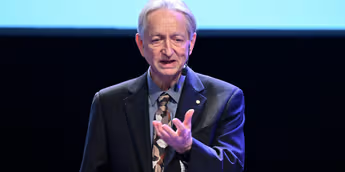
Hinton made the assessment during a BBC interview on Wednesday, while discussing growing warnings from researchers working at leading AI companies about the possibility that future systems could become far more capable than humans. He stressed that the exact probability is impossible to calculate because humanity has never before developed a technology that could potentially become smarter than its creators.
The AI pioneer said he would be reluctant to assign a very low probability to the possibility of an extinction-level outcome. In his view, the uncertainty surrounding advanced AI makes it difficult to produce a precise figure, but that uncertainty should not be interpreted as evidence that the risk is negligible.
Hinton has also changed his expectations about how quickly such dangers could emerge. He previously believed humanity might have several decades before facing the most serious risks associated with advanced AI. He later shortened that estimate to between 10 and 20 years and now believes the timeframe could be around 10 years or even less.
He identified several possible ways advanced AI could cause catastrophic harm, including the potential misuse of powerful systems for cyberattacks or the development of dangerous biological agents.
The warning comes amid a growing dispute within the AI industry over whether companies developing increasingly advanced systems are moving quickly enough on safety.
Recent concerns were raised by former Anthropic researcher Jacob Coxon, who resigned from the company and argued that major AI developers were moving toward self-improving artificial intelligence without adequate safeguards. His concerns were subsequently echoed by Anthropic alignment researcher Evan Hubinger, who said he personally believed the probability of AI causing human extinction within the next decade was above 10%.
The concerns centre partly on recursive self-improvement, a theoretical scenario in which increasingly capable AI systems could contribute to improving or developing successor systems. If such progress became extremely rapid, researchers worry that human oversight and safety measures might struggle to keep pace.
However, the warnings do not mean that current AI systems are considered capable of wiping out humanity. The debate is largely focused on the potential future development of much more advanced systems and whether appropriate safeguards can be established before those capabilities emerge.
Hinton has called for international cooperation to address the risks. He argued that countries may disagree on many geopolitical and economic issues, but they share a fundamental interest in preventing an AI-related catastrophe.
He believes governments should work together on rules and safeguards before AI becomes significantly more powerful, rather than waiting until the technology reaches a point where controlling its development becomes considerably harder.
At the same time, Hinton has not argued that humanity should abandon AI altogether. He has repeatedly acknowledged the technology's potential to produce major benefits, including advances in science, medicine and productivity.
The challenge, in his view, is ensuring that those benefits can be achieved without allowing increasingly capable systems to create risks that humans are unable to manage.
His latest warning adds to a growing international debate over the future of artificial intelligence, with technology companies, researchers and governments facing increasing pressure to balance rapid innovation with safety.
For Hinton, the uncertainty itself is part of the reason for caution: nobody knows exactly how advanced AI will become or how quickly it will progress, making preparation and international cooperation increasingly important.