Politics
Abuja Opposition Summit: Can Presidential Contenders Put Ambition Aside for 2027?
Opposition leaders and presidential candidates are meeting in Abuja today as political groups seeking to challenge President Bola Tinubu in the 2027 e...
By Wavers Multimedia
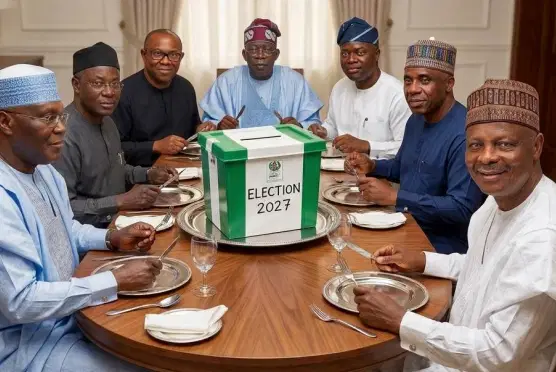
The gathering comes months after opposition figures signed the Ibadan Declaration in an earlier attempt to create a stronger platform ahead of the election. But despite the agreement, major contenders have continued to operate on separate political platforms and pursue their individual presidential ambitions.
The latest meeting, convened under the G-100 initiative, is not expected to immediately produce a consensus presidential candidate. Instead, the organisers want to establish a formal structure through which questions surrounding cooperation, accommodation and a possible joint candidate can be negotiated.
The difficult question of who steps aside
The central challenge facing the opposition is straightforward but politically sensitive: who will give way if the various groups eventually decide to support one presidential candidate?
Former Vice President Atiku Abubakar is seeking the presidency under the African Democratic Congress, with former Rivers State governor Rotimi Amaechi as his running mate.
Peter Obi is also pursuing the presidency under the New Democratic Congress, with former Kano State governor Rabiu Musa Kwankwaso as his running mate.
Oyo State Governor Seyi Makinde has also entered the political contest, adding another major figure to an already crowded opposition field.
Each contender has supporters, political structures and a personal claim to leadership. Bringing them together around one candidate will therefore require more than an agreement to oppose the ruling party.
Lessons from previous elections
Nigeria's political history shows that opposition coalitions can defeat established ruling parties, but unity alone does not guarantee victory.
The defeat of the Peoples Democratic Party by the All Progressives Congress in 2015 followed a combination of opposition mobilisation, internal divisions within the then ruling party and dissatisfaction among voters.
The broader lesson is that an opposition alliance needs both internal cohesion and favourable political circumstances.
That is particularly important in 2027, when the opposition will be attempting to unseat an incumbent with the advantages of federal power and an established political structure.
The power of incumbency
President Tinubu enters the contest with the advantages attached to the presidency and the APC's nationwide political organisation.
The opposition, meanwhile, must convince voters that it can provide a credible alternative while also persuading its own leading figures to make difficult political compromises.
The challenge is therefore two-sided: defeating the incumbent while preventing divisions within the opposition from weakening its chances.
North-South calculations
Regional considerations are another factor that could shape negotiations.
Nigeria's presidential politics has long involved calculations around the distribution of power between the North and South. The opposition will have to consider these sentiments alongside the electoral reality that a presidential candidate needs substantial support across the country's geopolitical regions.
Any consensus arrangement will therefore have to balance political popularity, regional appeal and the ability to build a broad national coalition.
More than another declaration
The Abuja gathering could become significant if it produces a workable mechanism for resolving disagreements among the opposition parties.
Simply issuing another declaration may not be enough. The real test will be whether the various political camps are prepared to make concessions, coordinate their strategies and eventually agree on a candidate capable of carrying a united ticket.
For the opposition, the choice is becoming increasingly clear.
They can continue pursuing separate ambitions and risk dividing their support, or they can make the political sacrifices necessary to build a common platform.
Today's meeting may not settle the presidential question, but it could reveal whether Nigeria's opposition is prepared to move beyond declarations and begin the harder work of building a genuinely united challenge for 2027.
Ultimately, the biggest obstacle may not be how to defeat Tinubu, but how to prevent the opposition from defeating itself.