Politics
2027 Presidency: Tinubu, Atiku, Obi and Others Face Questions Over Big Campaign Promises
Nigeria’s leading presidential contenders are increasingly setting out their plans for the 2027 election, offering voters ambitious proposals on fuel ...
By Wavers Multimedia
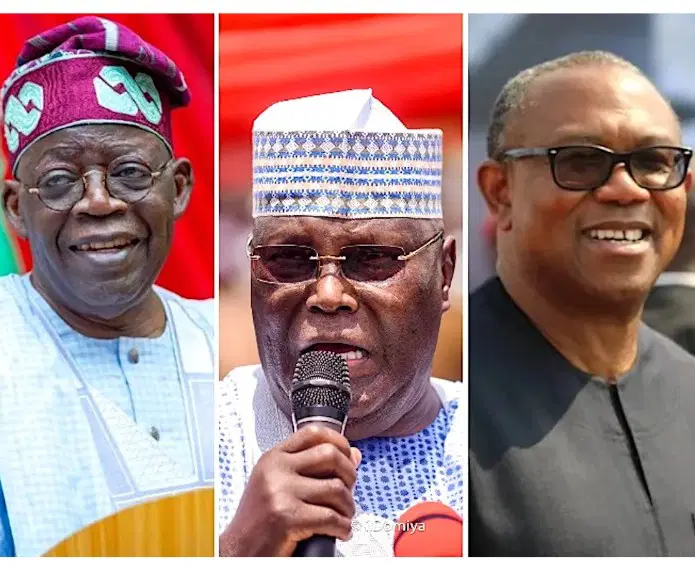
But as the political contest takes shape, a major question remains unanswered across the various campaigns: how much will these promises cost, and where will the money come from?
President Bola Tinubu, former Vice President Atiku Abubakar, Peter Obi and other contenders have presented different approaches to Nigeria’s economic and security challenges. Yet their proposals have a common focus on issues affecting millions of Nigerians.
Tinubu wants continuity
President Tinubu is campaigning on the argument that Nigeria should continue with the reforms introduced since 2023.
After accepting the All Progressives Congress presidential ticket in May, Tinubu called for continuity, arguing that the country needs to consolidate the changes already underway.
He has defended the removal of fuel subsidies and exchange-rate reforms, pointing to what he described as improvements in the naira, foreign reserves and the broader economic outlook.
His campaign has also highlighted infrastructure projects, electricity-sector reforms and the National Education Loan Fund, while he has backed constitutional changes that would permit the creation of state police.
But the administration faces a difficult political test: convincing Nigerians experiencing high living costs that the economic pain associated with the reforms will eventually produce meaningful improvements in their daily lives.
Atiku promises a different approach
Atiku Abubakar, running under the African Democratic Congress, has taken a markedly different position on some of the government's economic policies.
Among his major priorities are security, education, the economy, healthcare and the distribution of political power among Nigeria's constituent units.
His most prominent economic proposal has been a pledge to restore fuel subsidy if elected.
Atiku has argued that Nigerians have not benefited sufficiently from the removal of the subsidy and has also promised stronger action on security, including recruitment, equipment, training and improved welfare for security personnel.
But restoring the subsidy would come with a major financial challenge. His campaign has yet to provide enough detail on how such a policy would be funded while simultaneously meeting his other spending commitments.
Obi puts production at the centre
Peter Obi has placed production and investment at the heart of his campaign.
At the launch of his 2027 campaign in Onitsha, Obi questioned whether Nigerians are better off than they were four years ago and whether households and businesses can afford food, education and healthcare.
His proposed economic approach focuses on increasing agricultural production, improving farm security and irrigation, expanding rural roads and storage, providing financing and strengthening markets.
He also wants greater investment in manufacturing and agro-processing, with the broader aim of reducing Nigeria's dependence on imports and increasing exports of finished products.
Obi has argued that every region should contribute to national production and benefit from economic activity, making his economic proposal closely connected to his broader vision for Nigeria's federation.
Adebayo targets jobs
Social Democratic Party candidate Adewole Adebayo has made full employment a central part of his economic programme.
His platform includes a target of creating 30 million jobs through agriculture, manufacturing, digital innovation and enterprise development.
He has also proposed enrolling 20 million out-of-school children and training five million young Nigerians in environmental sustainability and green technology.
On electricity, Adebayo has set a long-term target of between 50,000 and 75,000 megawatts by 2050, combining gas-fired generation, solar energy and improved hydroelectric infrastructure.
The scale of these proposals, however, raises questions about financing, intermediate targets and how they could be translated into measurable results during a four-year presidential term.
Sowore focuses on education
Omoyele Sowore has made education the centrepiece of his campaign.
His proposed education policy includes free education from early childhood through university, the removal of public examination fees and financial support for students in public tertiary institutions.
The plan also proposes wider use of technology in schools, including high-speed internet, digital classrooms, virtual laboratories, online libraries, artificial intelligence-assisted learning, coding and robotics.
Sowore has also proposed improved salaries and housing opportunities for teachers, as well as greater university autonomy and research funding.
But, as with the other candidates' proposals, questions remain over the overall financial requirements of such an ambitious programme.
Same problems, different solutions
Despite their political differences, the candidates are addressing many of the same problems.
Security, electricity, employment, education, healthcare and economic productivity remain central themes in their competing platforms.
The bigger difference is in how each candidate proposes to address them.
Tinubu is asking voters to continue with his reforms. Atiku is offering a reversal of some policies, particularly on fuel subsidy. Obi is emphasising production and investment, while Adebayo is placing employment at the centre of his programme. Sowore is making education the foundation of his proposed transformation.
Nigerians will want more than promises
As the 2027 campaign progresses, voters are likely to demand greater detail from all the contenders.
Questions over cost, funding, timelines, implementation and accountability could become just as important as the promises themselves.
How much will each proposal cost? What revenue will finance it? How much borrowing will be required? Which government institutions will be responsible for implementation? What should Nigerians expect within the first 100 days, the first year and the first four years?
Those questions apply to every candidate.
Nigeria needs ambitious ideas to address its longstanding problems, but ambition alone cannot guarantee results.
For voters struggling with the cost of living, unemployment, insecurity and unreliable public services, the most important issue may ultimately be whether a candidate can explain not only what they intend to do, but how, when and with what resources they intend to do it.
As the 2027 election draws closer, the strongest political pitch may therefore not be the one containing the biggest promises, but the one offering Nigerians the clearest and most credible path from campaign pledges to measurable results.