United States
Zelensky Warns Trump’s Russia Sanctions Waiver Could Encourage Further Attacks on Ukraine
Ukrainian President Volodymyr Zelensky has criticised Washington's decision to suspend new economic penalties against Russia, warning that easing pres...
By Wavers News
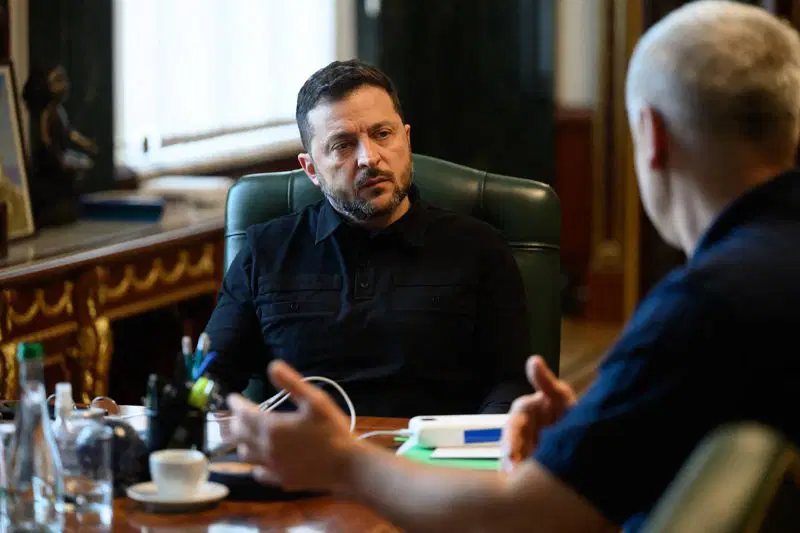
Ukrainian President Volodymyr Zelensky (left) meets with Oleksandr Poklad, head of Ukraine’s Security Service (SBU), in Kyiv during Russia’s invasion of Ukraine.
The criticism followed an executive order signed by US President Donald Trump on Friday, October 16, temporarily waiving sweeping sanctions and tariffs targeting Russian energy revenues. The measures were due to take effect the following week under legislation known as the Lindsey Graham Act.
Zelensky argued that the decision could strengthen Russian President Vladimir Putin's determination to continue the war rather than encourage his government to seek an end to the conflict.
His concerns come amid intensifying Russian attacks on Ukrainian energy infrastructure, with officials warning that millions of people could face disruptions to electricity and heating as temperatures fall.
ZELENSKY SAYS SANCTIONS RELIEF COULD EMBOLDEN MOSCOW
In a statement shared on social media on Saturday, October 17, Zelensky said the suspension undermined the purpose of the legislation, which was designed to increase economic pressure on Russia and encourage an end to the war.
He maintained that reducing restrictions on Moscow while Russian forces continued attacking Ukraine could send the wrong message to the Kremlin.
The Ukrainian president also warned that the decision could encourage Putin to maintain military operations rather than reconsider Russia's approach to the conflict.
Zelensky urged the United States and other international partners to maintain pressure on Moscow, arguing that economic restrictions remained an important instrument for influencing Russian policy.
His remarks reflect growing disagreements between Kyiv and Washington over how to end the war and what measures should be used to bring Russia to the negotiating table.
RUSSIAN ATTACKS RAISE FEARS OVER WINTER POWER SUPPLIES
Zelensky's criticism came as Ukraine reported extensive Russian attacks on its electricity infrastructure.
According to the Ukrainian leader, Russian forces struck 15 critical power generation and transmission facilities on Friday in what he described as one of the largest attacks on the country's energy network.
He warned that Moscow was attempting to leave millions of Ukrainians without electricity and heating before winter.
Damage to energy infrastructure has become a major concern for Ukrainian authorities, particularly as the country faces colder temperatures and the possibility of further attacks on essential services.
Last winter, hundreds of thousands of Ukrainians experienced repeated interruptions to electricity and heating amid damage to energy facilities.
The latest attacks have heightened concerns about the ability of the country's power system to withstand further bombardment in the coming months.
TRUMP'S DECISION FOLLOWS NEW RUSSIA SANCTIONS LAW
The sanctions waiver concerns the Lindsey Graham Act, legislation intended to increase economic pressure on Russia over its invasion of Ukraine.
The law provides for measures targeting Russia's energy and defence sectors, senior officials and the network of oil tankers used to circumvent Western restrictions.
It also gives the US president authority to impose tariffs of up to 100 per cent on major buyers of Russian oil and gas, subject to the law's provisions.
Trump signed the legislation into law last month but subsequently issued an executive order waiving key penalties before they could take effect.
The US president said the decision was in the national interest.
However, the move has triggered criticism from supporters of tougher measures against Moscow, who argue that suspending the restrictions could weaken efforts to limit Russia's ability to finance its military campaign.
RUSSIAN ENVOY WELCOMES WASHINGTON'S MOVE
The decision has received a favourable response from Kirill Dmitriev, a Russian presidential envoy involved in economic and diplomatic engagement with the United States.
Dmitriev described the suspension as a significant development, arguing that the sanctions could have caused serious damage to the US economy and international markets.
His response highlights the contrasting positions of Moscow and Kyiv regarding Washington's latest decision.
While Russian officials have welcomed the easing of economic pressure, Ukrainian leaders have argued that continued restrictions are necessary to discourage further military action.
The waiver also follows discussions between Trump and Putin concerning Russian fuel supplies and efforts to increase the amount of diesel available on international markets.
The developments have added another layer of complexity to negotiations surrounding the war, particularly as Washington attempts to balance energy costs, economic interests and diplomatic objectives.
UKRAINE SEEKS CONTINUED SUPPORT FROM EUROPE
As disagreements with Washington deepen, Zelensky has continued seeking assistance from European leaders to sustain Ukraine's defence.
During a visit to Brussels for a European Union summit, he urged European governments to maintain financial support for Kyiv and strengthen pressure on Moscow.
European Council President António Costa also warned against reducing support for Ukraine or easing sanctions against Russia.
Costa argued that international partners should increase their assistance to Kyiv while maintaining economic pressure on the Kremlin.
European backing has become particularly important as Ukraine faces continued attacks on its cities and energy infrastructure.
The discussions in Brussels underscored concerns among European leaders that weakening pressure on Moscow could complicate efforts to end the conflict on terms acceptable to Ukraine.
PUTIN MAINTAINS RUSSIA'S MILITARY OBJECTIVES
Meanwhile, Putin has continued to signal that Russia intends to pursue its territorial objectives in eastern Ukraine.
Speaking to military leaders on Friday, the Russian president described developments on the battlefield as positive and reiterated that capturing the remaining parts of the Donetsk region remained a key objective.
Russia already controls substantial areas of eastern and southern Ukraine, and its continued military operations have raised concerns that the conflict could extend further despite diplomatic efforts.
US-led attempts to secure a breakthrough in negotiations have yet to produce an agreement capable of ending the fighting.
The contrasting positions of Moscow and Kyiv continue to complicate prospects for a settlement, with both sides maintaining demands that remain difficult to reconcile.
SANCTIONS DISPUTE ADDS TO UNCERTAINTY OVER PEACE EFFORTS
The dispute over sanctions has intensified questions about the future direction of US policy towards Russia and the level of support Ukraine can expect from Washington.
For Kyiv, the immediate concern is that easing economic restrictions could embolden Moscow at a time when Ukrainian infrastructure remains vulnerable to further attacks.
For the Trump administration, the decision reflects its stated intention to pursue policies it considers to be in the United States' national interest, including measures affecting energy supplies and international markets.
Whether the waiver will contribute to diplomatic progress or deepen existing disagreements remains uncertain.
As winter approaches, Ukraine faces the combined challenges of defending its territory, protecting essential infrastructure and securing continued international assistance.
The coming weeks are likely to be crucial in determining whether Washington maintains its current approach or introduces further measures as efforts to end the war continue.