Business
WTO CHIEF WARNS MIDDLE EAST CONFLICT COULD PERMANENTLY CHANGE GLOBAL TRADE
The global trading system could face lasting changes as conflicts in the Middle East and Ukraine, rising geopolitical tensions and trade disruptions ...
By Wavers News
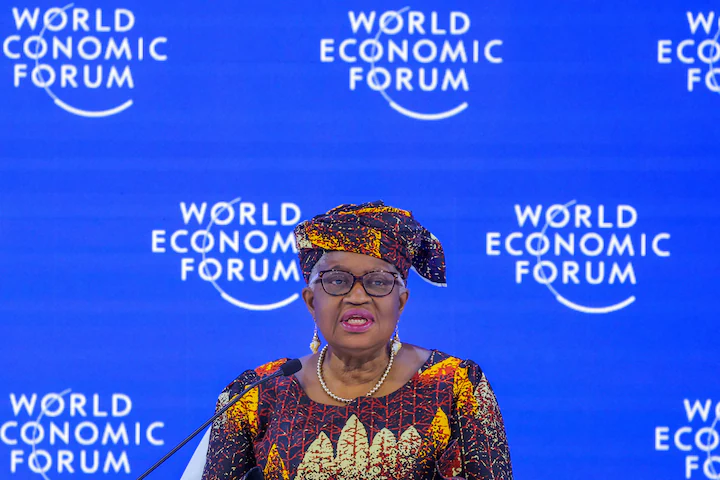
Ngozi Okonjo-Iweala, Director-General of the World Trade Organization, whose latest assessment highlights how geopolitical conflicts are reshaping global trade routes and supply chains.
Ngozi Okonjo-Iweala, Director-General of the World Trade Organization (WTO), warned on Thursday that companies and governments were increasingly diversifying their supply chains to reduce their exposure to future crises. Some of the alternative trade routes adopted during recent disruptions could remain in use even after conditions improve.
Her assessment highlights how conflict, trade restrictions and uncertainty are influencing international commerce beyond the regions directly affected by fighting.
MIDDLE EAST TRADE FACES SHARP CONTRACTION
The conflict involving Iran has severely disrupted trade across the Middle East, affecting established shipping routes and forcing businesses to explore alternative ways of moving goods.
The WTO's projections indicate that the region's exports could fall by approximately 17% in 2026, while imports are forecast to decline by around 15%.
The outlook reflects the effects of disrupted transport routes and the wider economic consequences of the conflict. Even if hostilities ease and the Strait of Hormuz becomes available for regular commercial shipping again, trade may take time to recover fully.
The Strait of Hormuz is an important maritime passage for international commerce, particularly energy shipments. Disruptions in the area can affect the movement of oil and other goods, increasing costs and creating uncertainty for companies that depend on reliable deliveries.
Okonjo-Iweala said businesses had found ways to redirect shipments despite these difficulties. However, alternative routes can be more expensive, and companies must weigh those costs against the risk of relying too heavily on vulnerable transport corridors.
The WTO chief indicated that some of these changes could become permanent as businesses seek greater resilience against future geopolitical shocks.
BUSINESSES RECONSIDER GLOBAL SUPPLY CHAINS
The impact of the Middle East conflict extends beyond immediate shipping delays. Businesses are also reassessing where they source products, which markets they serve and how much dependence they should place on individual countries or transport routes.
Okonjo-Iweala said repeated disruptions had strengthened the case for diversification and contingency planning.
The changes are also taking place against the background of trade tensions and tariffs introduced by US President Donald Trump. Together, these pressures have encouraged companies to reconsider existing commercial relationships and seek alternatives that could protect them against future disruptions.
Although alternative arrangements may involve higher transport costs, businesses can consider those expenses worthwhile if they reduce the risk of serious interruptions.
This shift does not necessarily mean international trade is coming to an end. Rather, it suggests that the routes, suppliers and partnerships supporting global commerce may change as governments and companies respond to a less predictable geopolitical environment.
The long-term consequences will depend on how conflicts develop, whether trade restrictions persist and how businesses assess the cost of maintaining alternative supply arrangements.
WTO IDENTIFIES OPPORTUNITY FOR AFRICAN TRADE
The changing global environment could also create opportunities for African economies to strengthen trade relationships within the continent.
Okonjo-Iweala highlighted the potential benefits of increasing trade between African countries, noting that intra-African trade currently accounts for approximately 20% of the continent's trade. By comparison, trade between members of the European Union accounts for around 60% of the bloc's trade.
The difference points to room for African economies to expand commercial relationships with neighbouring markets rather than relying as heavily on overseas destinations and suppliers.
Stronger regional trade could help businesses reach more customers, create employment opportunities and develop supply chains that connect producers and consumers across African borders.
However, expanding intra-African commerce will require businesses and governments to address practical barriers, including transport costs, infrastructure gaps, border procedures and differences in market regulations.
Regional trade agreements are expected to remain important in efforts to deepen economic cooperation. The WTO chief nevertheless stressed that the multilateral trading system continues to govern nearly three-quarters of global trade, underlining the continuing importance of international trade rules alongside regional arrangements.
ARTIFICIAL INTELLIGENCE SUPPORTS GLOBAL TRADE GROWTH
Despite geopolitical pressures, the WTO has raised its forecast for global merchandise trade growth in 2026.
The organisation now expects merchandise trade volumes to increase by 3.9%, compared with its earlier baseline forecast of 1.9% issued in March.
Stronger demand for products associated with artificial intelligence has helped support the improved outlook, partly offsetting the negative effects of disruptions in the Middle East.
AI-related investment has increased demand for goods used to build and operate digital infrastructure, including semiconductors and servers. This demand has provided an additional source of growth for international merchandise trade.
However, the improved forecast does not mean that all sectors or regions are benefiting equally. Some economies remain more exposed to higher energy costs, transport disruptions and declining trade flows.
Okonjo-Iweala cautioned that the strength of AI-related demand could obscure weaker underlying trends in other areas of international commerce.
The outlook therefore remains uncertain, particularly if geopolitical conflicts intensify, tariffs increase or demand for AI-related products weakens.
GLOBAL TRADE FACES A PERIOD OF ADJUSTMENT
The developments outlined by the WTO point to a global economy in which businesses must increasingly balance efficiency against the risks associated with political instability and disrupted transport routes.
For companies, relying on established suppliers and the cheapest shipping options may become less attractive if those arrangements leave them vulnerable to sudden interruptions.
Governments also face pressure to strengthen trade relationships, improve infrastructure and maintain arrangements that allow essential goods to move when individual routes become unavailable.
For African countries, the situation presents both challenges and opportunities. Disruptions in international markets can increase costs and complicate imports, but stronger regional commercial relationships could help businesses diversify their customers and suppliers.
The scale of any lasting change will depend on how conflicts evolve and whether the alternative arrangements introduced during the disruptions remain commercially viable.
For now, the WTO's warning is that the consequences of geopolitical instability may continue to shape global trade long after immediate disruptions have eased.