World News
UKRAINE RESUMES STRIKES ON RUSSIAN OIL REFINERY AS ZELENSKYY WARNS OF GROWING RIFT WITH TRUMP
Ukraine has resumed attacks on Russian oil infrastructure, striking a refinery in the Ryazan region after President Volodymyr Zelenskyy declared that ...
By Wavers News
The drone attack occurred early Thursday, October 15, 2026, in the Ryazan region, approximately 300 kilometres southeast of Moscow. Russian authorities confirmed that a fire broke out at the refinery following the overnight assault, while a Ukrainian official confirmed that the facility had been targeted.
The strike came amid growing tensions between Zelenskyy and United States President Donald Trump over the handling of the war, Washington's military and technological support for Kyiv, and a proposed arrangement involving Russian diesel supplies.
The developments have raised further questions about the future of American support for Ukraine as the country continues to defend itself against Russian military operations.
DRONE ATTACK SPARKS FIRE AT RUSSIAN REFINERY
The targeted facility in Ryazan is operated by Russian state oil company Rosneft and plays a role in supplying fuel to Moscow.
The refinery accounts for nearly five per cent of Russia's total oil-refining capacity, making it an important part of the country's energy infrastructure.
Ryazan Governor Pavel Malkov confirmed that a major Ukrainian drone attack had caused a fire at the facility. He said authorities were assessing the material damage and that emergency services were working at the scene.
Russian officials also reported damage to a warehouse elsewhere during the attacks, although further details about that incident were not immediately provided.
Russia's Defence Ministry said its air defences intercepted four Ukrainian Flamingo missiles and 69 drones involved in the assault. It added that debris from drones sparked the refinery fire.
A senior Ukrainian official separately confirmed that Ukraine had struck the facility.
The full extent of the damage to the refinery and its effect on fuel production had not been independently established in the information available at the time of reporting.
WHY UKRAINE ABANDONED THE ENERGY TRUCE
The strike followed an announcement by Trump on Sunday, October 11, that Russia and Ukraine had agreed to halt attacks on energy infrastructure temporarily.
However, neither Moscow nor Kyiv publicly confirmed the arrangement in the same terms, and disagreements quickly emerged over its scope and implementation.
Ukraine said it had suspended attacks on Russian energy facilities for three days in response to the American president's request.
Zelenskyy argued that Russia continued launching missiles and drones against Ukrainian energy infrastructure during that period, undermining the purpose of the proposed pause.
Following the continued attacks, the Ukrainian president said Kyiv would resume strikes against Russian refineries.
In an interview published on Thursday, he indicated that Ukraine's restrictions on targeting Russian oil facilities had ended.
The dispute illustrates the difficulty of maintaining even a limited ceasefire when the two sides disagree about the actions covered by the arrangement and accuse each other of violating its terms.
The Kremlin, meanwhile, maintained that Ukraine had not properly observed the proposed truce. The competing claims could not be independently verified in full.
ZELENSKYY CRITICISES TRUMP OVER US SUPPORT
The renewed refinery strikes came as relations between Kyiv and Washington faced another period of strain.
Zelenskyy expressed frustration with what he viewed as changes in American policy towards Ukraine, including concerns over intelligence sharing, restrictions affecting military communications technology and an arrangement involving Russian diesel.
Ukraine relies heavily on Western assistance, particularly American intelligence and technology, to detect incoming Russian attacks and coordinate its military operations.
Zelenskyy said Ukraine had not received the usual warnings from Western partners about incoming Russian ballistic missile strikes in recent days. Trump, however, denied that the United States had stopped sharing intelligence with Ukraine.
The Ukrainian president also raised concerns about restrictions affecting military-grade satellite communication equipment used by Ukrainian forces.
The military version of SpaceX's satellite communications system, known as Starshield, is used in Ukrainian military operations. Zelenskyy argued that limitations affecting its operation could interfere with the country's ability to use drones effectively.
SpaceX owner Elon Musk said that Starshield systems were controlled by the United States government and that decisions concerning their use ultimately rested with the American president and military authorities.
The dispute has heightened concerns in Kyiv about how changes in Washington's policy could affect Ukraine's ability to defend itself.
DISPUTE OVER RUSSIAN DIESEL DEAL
Another source of tension is an arrangement involving the purchase of Russian diesel by the United States.
Trump has linked the suspension of Ukrainian attacks on Russian refineries to efforts to ease pressure on fuel prices. His administration has faced concerns over rising diesel costs, which have been affected by wider geopolitical developments, including the war involving Iran.
Zelenskyy criticised the prospect of purchasing Russian fuel while Moscow continues its military campaign against Ukraine.
He argued that such an arrangement could provide Russia with additional revenue to sustain its war effort, undermining international attempts to pressure Moscow economically.
The disagreement highlights the competing priorities involved in efforts to end the conflict. Washington has sought arrangements intended to reduce fighting and address energy-market pressures, while Kyiv insists that any pause must account for Russia's continued attacks.
The two governments have not resolved their differences over the proposed energy truce or the broader approach to negotiations.
RUSSIA CONTINUES ATTACKS ACROSS UKRAINE
The refinery strike occurred amid renewed Russian aerial attacks on Ukrainian territory.
Zelenskyy said Russia launched more than 850 drones at Ukraine during an overnight assault. According to the Ukrainian president, the attacks affected multiple regions, while the Ukrainian Air Force reported intercepting 536 Russian drones.
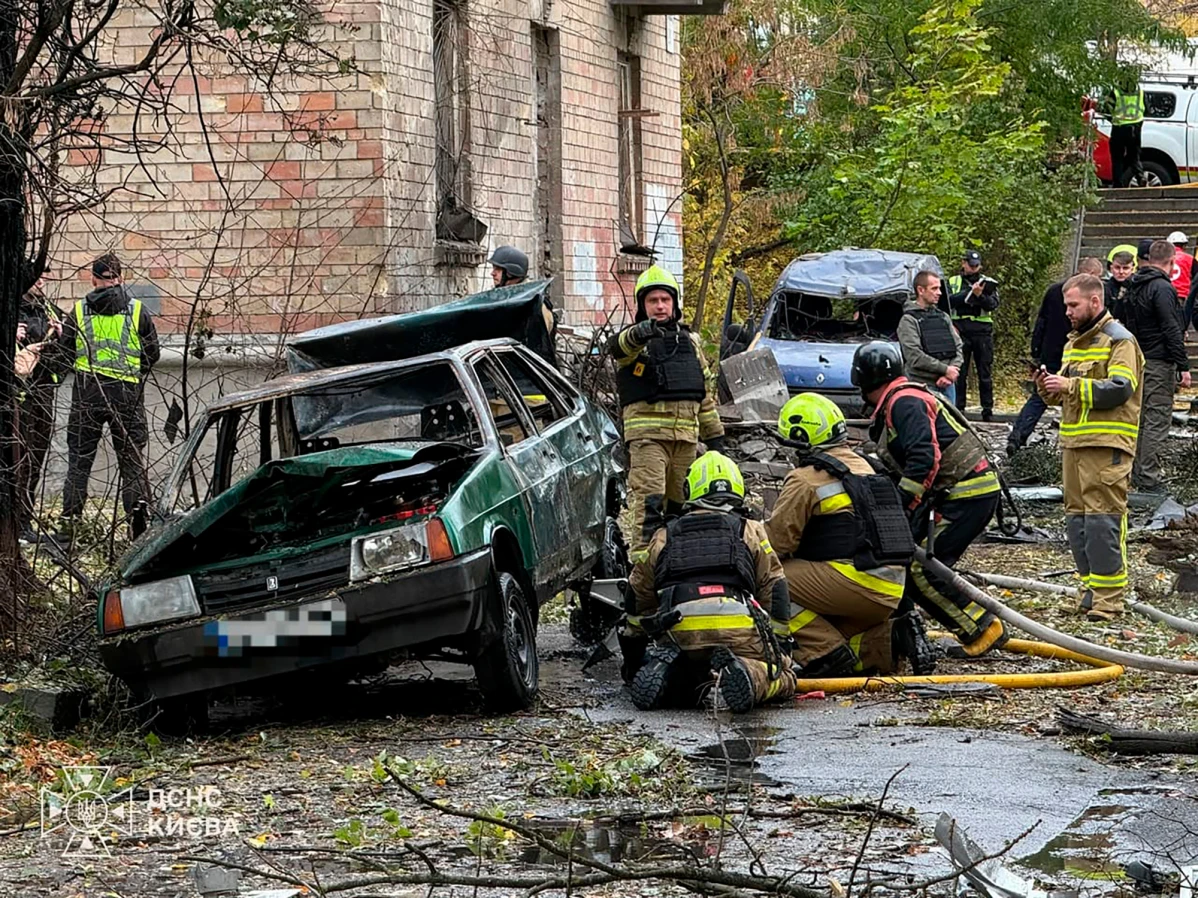
Ukrainian authorities also reported casualties following a Russian drone attack in the central Kirovohrad region, where three people were killed and six others injured, according to emergency services.
These figures were reported by Ukrainian officials and had not all been independently verified.
The continuing attacks have reinforced Kyiv's argument that halting strikes on Russian energy facilities without a corresponding reduction in Russian operations would leave Ukraine at a disadvantage.
Russia's Defence Ministry also reported intercepting Ukrainian drones overnight and said Russian forces had struck two vessels carrying military cargo.
Both countries have continued to carry out attacks while presenting conflicting accounts of the military situation.
UKRAINE SEEKS STRONGER EUROPEAN SUPPORT
As disagreements with Washington intensify, Zelenskyy has also been seeking continued support from European governments.
The Ukrainian president travelled to Brussels for meetings with European Union leaders, with discussions expected to cover military assistance, sanctions against Russia and additional support for Kyiv.
European officials have expressed concern about Ukraine's reliance on American intelligence and technology, particularly because Europe does not currently have direct substitutes for every capability provided by the United States.
The latest developments have therefore renewed questions about whether European countries can increase their assistance sufficiently if American support becomes more limited.
Ukraine continues to seek weapons, financial assistance and other forms of support as it attempts to withstand Russian attacks and strengthen its negotiating position.
For Kyiv, maintaining international backing remains an important part of its strategy, particularly as the military conflict continues without a settled agreement to end the fighting.
WHAT HAPPENS NEXT?
The attack on the Ryazan refinery marks a further escalation in the dispute over the proposed energy truce and adds pressure to already strained relations between Ukraine and the United States.
The immediate questions concern the extent of the refinery damage, whether additional attacks on Russian energy facilities will follow, and whether Washington can persuade both sides to accept a more clearly defined arrangement.
The future of American intelligence and technological support also remains significant because Ukrainian forces depend on those capabilities to respond to Russian attacks.
For now, the two countries remain divided over the conditions needed to halt attacks on energy infrastructure. With Russia continuing its military operations and Ukraine signalling that it will resume strikes against Russian refineries, the prospects for a lasting pause remain uncertain.