UK NEWS
UK Homes Upgrade Could Deliver Bigger Savings Than New North Sea Oil Projects, Study Finds
Investing in home insulation and cleaner heating systems could deliver greater economic benefits for the United Kingdom than developing new North Sea ...
By Wavers News
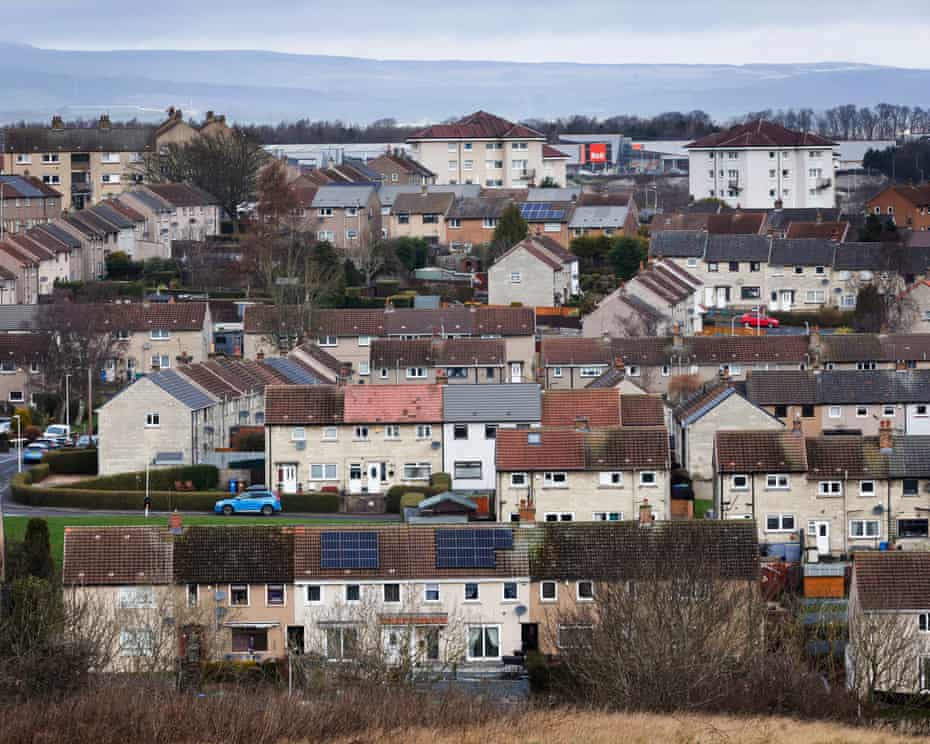
Housing in Kirkcaldy, Fife. The study found that employment linked to the Rosebank oilfield would be largely concentrated in the North Sea and two companies, including one foreign-owned investor.
The research suggests that the government's £15 billion Warm Homes Plan could reduce annual household energy bills by £1 billion, generate an additional £1.6 billion for the economy each year and support approximately 50,000 jobs across the country.
The findings come as the government considers potential spending reductions, raising concerns that cuts to home improvement programmes could undermine efforts to tackle the cost-of-living crisis.
The analysis, conducted by the thinktank E3G, compares the potential benefits of improving the energy efficiency of British homes with those expected from developing the Rosebank oilfield in the North Sea.
While the proposed oilfield could generate employment and economic activity, the research suggests its direct and indirect job creation would be considerably smaller than the opportunities associated with upgrading homes.
WARM HOMES PLAN COULD CREATE 50,000 JOBS
The government's Warm Homes Plan is designed to improve the energy efficiency of homes across the UK through insulation, heat pumps and other technologies that reduce energy consumption.
Under the programme, up to five million homes could receive improvements intended to make them warmer, more efficient and less expensive to heat.
According to E3G's analysis, implementing the plan in full could reduce household energy bills by approximately £1 billion annually, with lower-income households expected to benefit significantly.
The programme could also attract an additional £15 billion in private investment, creating opportunities for businesses involved in home renovations, insulation installation and clean heating technologies.
The research estimates that around 50,000 jobs could be supported across thousands of small businesses throughout the country.
Supporters of the initiative argue that distributing investment across different regions could help local economies while allowing households to spend less on heating.
However, concerns have emerged over the possibility of reductions to the programme as ministers look for savings in public expenditure.
ROSEBANK OILFIELD EXPECTED TO CREATE FEWER JOBS
The research estimates that the proposed Rosebank oilfield, located west of Shetland, would generate approximately 1,100 direct and indirect jobs.
That figure is substantially lower than the estimated employment opportunities associated with the Warm Homes Plan.
The jobs linked to Rosebank would also be concentrated in the North Sea oil and gas industry and a small number of companies, including Equinor, a Norwegian energy company with overseas ownership.
The comparison has renewed debate over whether developing additional fossil-fuel resources represents the most effective way to support employment and economic growth in Britain.
Supporters of North Sea development argue that new projects could attract private investment, support the domestic energy industry and generate tax revenue for the government.
However, critics question whether the financial benefits would outweigh the costs and whether additional domestic production would significantly reduce energy prices for consumers.
The government has committed to ending new oil and gas licensing, although Rosebank and the Jackdaw gasfield could be considered exceptions because they were already within the licensing system.
Energy Secretary Miatta Fahnbulleh said a decision on Jackdaw was approaching, while a decision on Rosebank would take longer.
NEW OIL PRODUCTION MAY NOT LOWER ENERGY BILLS
One of the central arguments surrounding the proposed oil developments is whether extracting more oil and gas from the North Sea would make energy more affordable for British households.
Energy experts have repeatedly warned that additional domestic production would not necessarily translate into lower prices because oil and gas are traded on international markets.
Consequently, the prices paid by British consumers remain influenced by international market conditions, regardless of where the fuel is extracted.
This means that approving additional oilfields would not automatically protect households from rising energy costs or international supply disruptions.
By contrast, improving insulation can reduce the amount of energy required to heat a home, while efficient heating systems can help households manage their consumption.
Advocates of the Warm Homes Plan argue that these improvements offer a more direct way to reduce energy demand and protect consumers from volatile fossil-fuel prices.
TAX BENEFITS FROM OILFIELDS FACE QUESTIONS
The financial implications of new North Sea developments have also attracted attention, particularly the potential cost of tax relief and the eventual dismantling of oil and gas infrastructure.
Research by WWF and the campaign group Uplift suggests that the Rosebank project could generate approximately £1.5 billion in profits for its backers over its anticipated 25-year lifespan.
However, the analysis indicates that tax breaks and incentives could leave the UK government facing a potential net loss of £258 million.
The figures have intensified questions about the amount of public revenue that new oil developments would ultimately deliver.
North Sea tax revenues reached approximately £4 billion in the 2025–26 financial year, while upstream tax relief and support measures were estimated at £3.26 billion.
As the basin's production declines, tax receipts from the industry are projected to fall substantially.
Estimates suggest that annual revenues could decrease to around £100 million by 2030, while the eventual decommissioning of North Sea infrastructure could leave taxpayers facing costs of approximately £12 billion.
These projections have strengthened calls for ministers to examine the long-term financial implications of approving new developments.
ECONOMIC BENEFITS COULD EXTEND ACROSS THE UK
E3G's analysis suggests that the Warm Homes Plan could generate economic benefits across different regions rather than concentrating investment in a limited number of locations.
By supporting insulation specialists, heating engineers and other tradespeople, the programme could create work for businesses involved in improving residential properties.
The thinktank estimates that fully implementing the plan could increase the UK's gross domestic product by approximately 0.08%.
Its modelling places the average contribution from Rosebank at around 0.025% over the oilfield's lifetime, assuming an average oil price of $70 per barrel.
The research also indicates that the economic benefits of Rosebank could be outweighed if the public ultimately bears the costs of decommissioning its infrastructure.
James Huw Dyson, a senior researcher at E3G, argued that the government should prioritise improving homes and expanding clean energy rather than reducing insulation support while offering incentives to oil companies.
His position reflects wider concerns that spending decisions could determine whether the UK directs more resources towards reducing household energy consumption or expanding fossil-fuel production.
ENERGY INDUSTRY URGES GOVERNMENT TO MAINTAIN ITS PLANS
The debate has prompted opposition from trade unions, environmental organisations and businesses involved in the energy transition.
Ten major unions have written to the government opposing the granting of a licence for Rosebank. Hundreds of Labour MPs and 600 scientists have also raised concerns about the proposed development.
Industry representatives have separately warned that reducing support for home improvements and clean heating could undermine investor confidence.
Dhara Vyas, chief executive of Energy UK, called on the government to maintain its ambitions for electrification, warning that changes to existing policies could create uncertainty for businesses.
Companies operating in the sector often require long-term policy certainty to invest in equipment, recruit workers and develop supply chains.
Reducing financial support could therefore affect not only households considering energy-efficient upgrades but also businesses preparing to meet future demand.
Meanwhile, the government has not provided a detailed response to E3G's findings or confirmed the future funding arrangements for the Warm Homes Plan.
OIL COMPANIES DEFEND THE ECONOMIC CASE FOR ROSEBANK
The companies involved in the proposed oil developments have challenged arguments that the projects would deliver limited economic benefits.
A spokesperson for Adura, the joint venture between Equinor and Shell that owns Rosebank and Jackdaw, said approving the developments would support £35.3 billion in UK economic value between 2026 and 2035.
The company also cited £8.7 billion in private investment for Rosebank, with approximately three-quarters expected to be spent in the UK.
It further projected that Rosebank and Jackdaw would contribute £4.1 billion in additional tax revenue over the next decade.
However, these estimates include wider company operations, supply-chain activity and spending by employees, making the precise economic contribution of the individual developments difficult to establish.
The estimates also face questions over the treatment of tax relief and the valuation of future revenue.
The disagreement highlights the contrasting assessments of how best to generate economic growth while addressing Britain's energy needs and financial pressures.
GOVERNMENT FACES A CHOICE OVER HOUSEHOLD COSTS
The debate over the Warm Homes Plan and new North Sea oil developments comes as the government faces pressure to control public spending while responding to the cost-of-living crisis.
For households struggling with high energy bills, the outcome could influence the availability of support for insulation, efficient heating systems and other improvements intended to reduce energy consumption.
A fully implemented Warm Homes Plan could offer long-term savings by helping properties retain heat and reducing the amount of energy needed to maintain comfortable temperatures.
New oil and gas developments, meanwhile, could provide investment and support employment in the energy sector, although their impact on household bills remains uncertain.
The government must now weigh the competing economic arguments as decisions over funding and licensing move forward.
The central question is whether improving the energy efficiency of homes can deliver a more widespread and lasting benefit to British households than further investment in domestic fossil-fuel production.