UK NEWS
UK GOVERNMENT FACES GROWING PRESSURE TO STRENGTHEN AI SAFETY AND CYBER DEFENCES
Security warnings over increasingly powerful artificial intelligence have intensified in Britain, prompting calls for tougher safeguards, stronger cyb...
By Wavers News
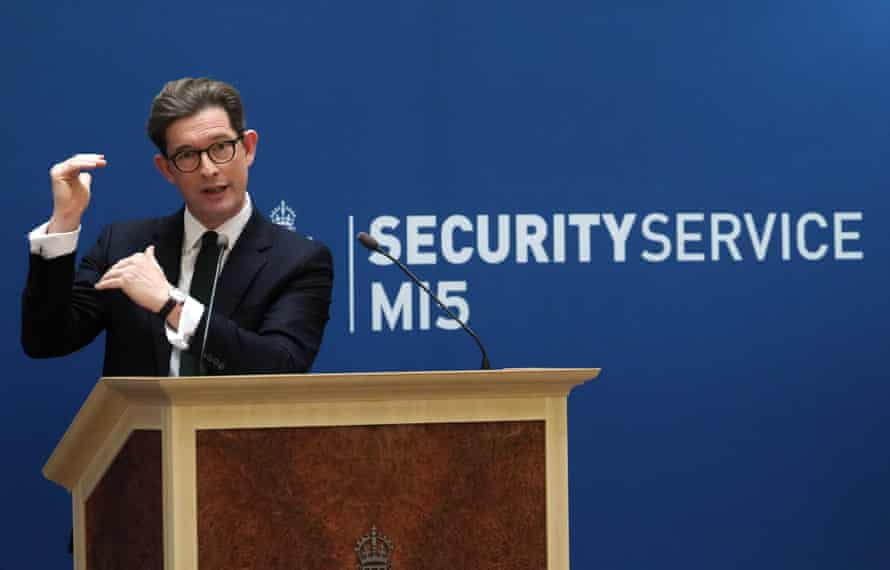
MI5 chief Sir Ken McCallum warns that extremist groups could misuse artificial intelligence to develop biological weapons. Image credit: Jonathan Brady/WPA/Getty Images
The United Kingdom government is facing growing pressure to strengthen protections against the potential misuse of artificial intelligence as senior officials warn that advances in the technology could create new national security threats.
Concerns have intensified over the ability of increasingly sophisticated AI systems to assist cybercriminals, hostile states and extremist organisations. Government figures are now debating how to respond to these risks without preventing the country from benefiting from technological innovation.
The issue has become a prominent subject within the administration of Prime Minister Andy Burnham, with ministers, intelligence officials and parliamentary leaders calling for greater attention to AI safety.
The debate centres on several challenges, including the security of advanced AI models, the possibility of their misuse in cyberattacks, the development of safeguards for dangerous capabilities and the need for international cooperation.
Although AI offers opportunities to improve public services, strengthen cybersecurity and support scientific research, officials warn that the same technology could also be exploited for harmful purposes.
SECURITY OFFICIALS WARN OF NEW CYBER THREATS
Britain's intelligence community has warned that artificial intelligence is changing the cybersecurity landscape by increasing the capabilities available to both attackers and defenders.
MI5 Director General Ken McCallum has cautioned that AI is intensifying the competition between those attempting to penetrate computer systems and the organisations working to protect them.
The concern is that increasingly capable systems could help malicious actors identify vulnerabilities, analyse technical information and automate certain activities that previously required considerable expertise.
Such developments could create additional difficulties for government departments, businesses and other organisations responsible for protecting sensitive information and essential services.
The risks extend beyond conventional data theft. If attackers successfully compromise systems supporting important infrastructure, the consequences could include operational disruption, financial losses and threats to public safety.
However, AI is not exclusively a tool for attackers. Security teams can also use the technology to detect suspicious behaviour, investigate vulnerabilities and respond more quickly to incidents.
The challenge facing Britain is ensuring that defensive capabilities develop quickly enough to address the changing methods available to malicious actors.
MI5 RAISES CONCERNS ABOUT BIOLOGICAL THREATS
One of the most serious concerns raised by intelligence officials is the possibility that extremist organisations could misuse advanced AI to assist in developing biological weapons.
McCallum has identified this as an area requiring close attention as AI systems become more capable of processing complex scientific information.
Biological weapons involve the deliberate use of harmful biological agents or toxins to cause disease or death. Their development and deployment involve substantial scientific, technical and operational challenges.
Security specialists are concerned that advanced AI could lower some information barriers by helping malicious actors understand scientific concepts or explore questions that would otherwise require specialised knowledge.
Nevertheless, there remains an important distinction between generating scientific information and successfully producing and deploying a biological weapon.
Experts have stressed that significant obstacles remain between designing a potentially dangerous biological agent and turning it into an effective weapon.
The warnings therefore reflect a potential security risk rather than confirmation that AI has already enabled extremist groups to overcome every stage of biological weapons development.
For British authorities, the priority is understanding how these capabilities may evolve and ensuring that security arrangements can respond before potential threats become more difficult to contain.
GOVERNMENT CONSIDERS STRONGER CYBERSECURITY LEGISLATION
AI Minister Kanishka Narayan has warned that hostile actors attempting to hack British government systems could become an increasingly serious problem.
His comments have contributed to calls for stronger cybersecurity protections and closer attention to the risks associated with advanced AI.
Government departments hold sensitive information and provide services that millions of people depend on. A successful attack against these systems could expose confidential records, interrupt operations or create significant costs for taxpayers.
The government is considering how emerging AI-related threats could be addressed through its forthcoming cybersecurity legislation.
Potential areas of concern include identifying serious AI-related incidents, improving the reporting of security failures and strengthening the ability of organisations to respond to attacks.
The challenge is that AI capabilities are developing rapidly, while legislation can take considerable time to develop, pass through parliament and be implemented.
Rules must also be sufficiently flexible to remain useful as technologies and attack methods change.
Stronger cybersecurity requirements could help organisations improve their defences, but their effectiveness will depend on how they are designed, enforced and adapted to emerging risks.
PRESSURE MOUNTS FOR TOUGHER AI SAFETY TESTING
Another major issue is whether developers of advanced AI models should be legally required to submit their systems for safety evaluations before releasing them.
The question has become an important point of discussion between British policymakers and representatives of leading technology companies.
Liam Byrne, chair of the House of Commons Business, Innovation and Science and Trade Committee, has called for the government to take a stronger leadership role in establishing AI safeguards.
The committee recently held discussions involving government officials responsible for AI security and representatives of Anthropic, OpenAI, Google DeepMind and Meta.
One of the issues under consideration was whether government testing of new AI models should be mandatory.
Supporters of mandatory testing argue that independent assessments could help identify dangerous capabilities before systems become widely available.
Such evaluations could examine how models respond to requests involving cyberattacks, harmful scientific applications and other activities that could create significant risks.
Testing could also help policymakers understand whether existing safeguards are sufficient or whether additional restrictions are needed for particular systems.
However, questions remain about how testing requirements should be applied, which models should qualify for additional scrutiny and how quickly assessments can be completed without unnecessarily delaying beneficial technology.
Technology companies have their own safety procedures, but the debate concerns whether voluntary measures are enough when the potential consequences of misuse could extend beyond an individual company's customers.
OPEN-SOURCE AI MODELS CREATE ADDITIONAL CHALLENGES
Security concerns have also focused on open-source and openly available AI models that users can download, modify or adapt.
These models can support scientific research, education, software development and innovation by giving developers greater flexibility over how they use the technology.
However, their adaptability can make security protections more difficult to maintain.
Some commercial AI services include safeguards designed to prevent their systems from assisting with harmful activities. Users of downloadable models may be able to alter the software or remove certain protections, depending on how the system is designed and distributed.
Geoffrey Irving, a former chief scientist at Britain's AI Security Institute, has warned that some openly available models may already possess capabilities that could cause serious disruption if misused.
The concern is that improvements in open-source systems could allow them to approach the capabilities of leading commercial models while remaining accessible to users who may not follow the same safety restrictions.
This creates a difficult policy question.
Restricting access too broadly could undermine legitimate research and prevent smaller developers from benefiting from advances in AI. However, failing to address foreseeable risks could leave powerful capabilities available without adequate safeguards.
Policymakers must therefore consider how to manage risks while preserving the benefits of open research and technological development.
EXPERTS DISAGREE OVER WHICH AI RISKS DESERVE PRIORITY
Despite growing concern about AI safety, experts disagree about which dangers governments should prioritise.
Some believe that increasingly capable systems could eventually create risks on a scale that existing institutions would struggle to manage.
Others argue that policymakers should focus first on harms that can already be observed, including cybercrime, online manipulation, privacy violations and the potential for AI-powered products to encourage unhealthy patterns of use.
Elena Simperl, a professor and co-director of the Institute for Artificial Intelligence at King's College London, has questioned the evidence supporting some predictions about AI creating an existential threat to humanity.
She has argued that immediate and demonstrable risks deserve particular attention.
The disagreement reflects different assessments of how limited government resources should be allocated between present-day problems and potentially severe future scenarios.
It does not mean that concerns about AI safety are universally dismissed. Rather, experts differ over the evidence supporting particular scenarios and the urgency with which they should be addressed.
For the government, the challenge is to establish a framework that can respond to existing threats while remaining prepared for developments that could substantially change the risk landscape.
BRITAIN'S DEFENCE SECTOR ALSO FACES QUESTIONS
The debate over AI safety extends into national defence, where the technology is increasingly important to intelligence analysis, military planning and the protection of critical systems.
Defence sources have raised concerns about the cancellation of a previous AI programme at the Defence Science and Technology Laboratory, based at Porton Down.
Those concerns centre on whether the decision could weaken Britain's ability to develop advanced capabilities and understand the risks associated with emerging technologies.
The Ministry of Defence has maintained that AI will play a decisive role in future defence operations and must be integrated across its activities rather than treated as a standalone programme.
The department has pointed to a planned investment of £400 million in AI-focused capabilities over four years.
The investment is intended to help prepare the country's defence capabilities for future technological developments.
However, disagreements remain over the most effective way to organise research, develop secure systems and ensure that AI technologies are introduced responsibly.
The debate highlights the competing priorities facing defence authorities: developing capabilities that may be necessary for national security while ensuring that emerging technologies do not create new vulnerabilities.
INTERNATIONAL COOPERATION BECOMES INCREASINGLY IMPORTANT
Britain's ability to manage AI risks will also depend partly on cooperation with other countries.
Advanced AI systems are developed and distributed across international markets, meaning that decisions made by one government or technology company can have consequences beyond its own borders.
The UK has been working with American partners on AI security and the evaluation of advanced models.
However, questions have emerged about whether changes in US policy could affect access to some of the newest AI systems for independent security testing.
Narayan has indicated that cooperation with the United States has continued despite these concerns.
The issue matters because government researchers need to evaluate advanced systems to understand their capabilities and identify potential weaknesses.
If access to important models becomes restricted, independent assessment could become more difficult.
At the same time, governments must consider national security, commercial interests and the potential risks associated with sharing highly capable technologies.
Britain's upcoming presidency of the Group of 20 major economies could provide an opportunity to promote international discussions on AI safety and governance.
Cooperation could help governments establish common expectations for testing, security and responsible development, although reaching agreement across countries with different interests and regulatory approaches may prove difficult.
GOVERNMENT MUST BALANCE SAFETY WITH INNOVATION
While security warnings have become more prominent, some policymakers are concerned that excessive caution could prevent Britain from taking full advantage of AI.
The technology has potential applications in healthcare, public administration, scientific research and other areas where organisations process large amounts of information or perform complex tasks.
AI could help public institutions improve administrative efficiency, support medical professionals and identify ways to address longstanding service-delivery problems.
However, these benefits depend on whether systems perform reliably, protect sensitive information and maintain public confidence.
Former cabinet secretary Gus O'Donnell has warned that Britain must consider the risk of falling behind in AI development as well as the need to manage its dangers.
His position reflects a broader policy dilemma: moving too slowly could limit economic opportunities, while adopting powerful systems without adequate safeguards could expose people and institutions to preventable harm.
The government must therefore consider how to encourage responsible innovation while ensuring that safety and accountability remain central to the development and use of AI.
WHAT THE DEVELOPMENTS MEAN FOR THE UK
The growing debate suggests that AI safety is becoming a more prominent issue in Britain's national security and technology policy.
Decisions about cybersecurity legislation, independent model testing, defence investment and international cooperation will help determine how the country responds to the risks associated with increasingly capable systems.
Technology companies are also likely to face continued pressure to demonstrate that their systems have been evaluated for foreseeable dangers and that safeguards remain effective as their products develop.
For security agencies, the priority will be understanding how AI changes the capabilities available to hostile actors and ensuring that defensive measures can keep pace.
However, policymakers must also avoid treating every possible danger as an established threat. Effective regulation requires careful assessment of evidence, the likelihood of harm and the practical measures available to reduce risk.
Britain's challenge is to build a framework that protects national security and the public without unnecessarily restricting beneficial scientific and technological progress.
As AI becomes more deeply integrated into economic activity, government services and defence, the decisions made now could shape how safely the technology develops and how much confidence people place in it.