United States
Trump Halts New Russia Sanctions as Tensions Rise Over Ukraine War
US President Donald Trump has put new sanctions against Russia on hold despite signing legislation designed to increase economic pressure on Moscow ov...
By Wavers News
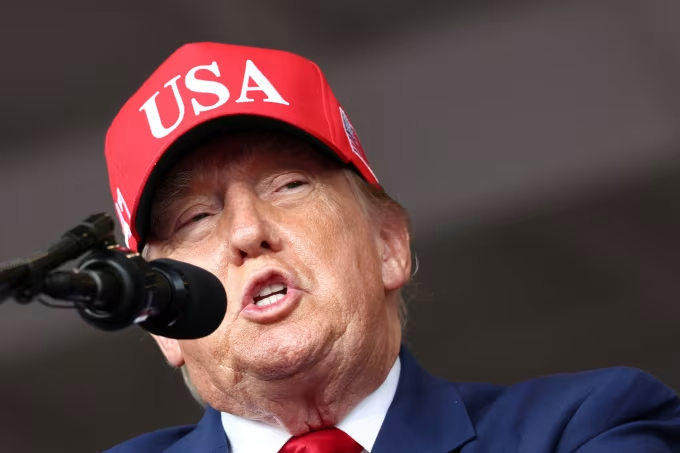
The decision, announced on Friday, October 16, comes amid growing disagreements between Washington and Kyiv over the direction of the conflict, energy supplies and the measures needed to pressure Russia into ending the war.
Trump said the suspension was in the national interest, allowing his administration to waive restrictions that were due to take effect on October 18.
The move has raised fresh questions about Washington's approach to Russia, particularly after Congress passed the sanctions legislation with bipartisan support.
CONGRESS-BACKED SANCTIONS PUT ON HOLD
The legislation, known as the Lindsey O. Graham Sanctioning Russia and Iran Act of 2026, was designed to strengthen economic pressure on Russia and restrict the financial resources supporting its military campaign in Ukraine.
The measure provides for sanctions against Russian officials and banks, as well as vessels associated with the transportation of Russian energy products.
It also gives the president authority to impose tariffs of up to 100 per cent on major importers of Russian oil and natural gas, subject to exceptions outlined in the law.
Trump signed the legislation last month after it passed both chambers of Congress.
However, his latest decision means the administration will not immediately implement the restrictions as originally anticipated.
The suspension is particularly significant because the legislation was intended to give Washington additional economic tools to pressure Moscow into reconsidering its military actions.
DISAGREEMENTS BETWEEN TRUMP AND UKRAINE
The decision comes as relations between Trump and Ukrainian President Volodymyr Zelenskyy face renewed strain.
Trump has criticised Zelenskyy publicly and questioned Ukraine's leadership, while also expressing concern about Ukrainian attacks on Russian oil refineries.
The US president has argued that attacks on Russian energy infrastructure could contribute to rising global energy prices, creating economic and political difficulties for his administration ahead of November's midterm elections.
Ukraine, meanwhile, has continued to seek stronger international support as it defends itself against Russia's invasion.
Zelenskyy has expressed concern about Washington's recent decisions, arguing that arrangements involving Russian energy supplies could provide Moscow with additional revenue.
The Ukrainian president has also raised concerns about the implications of US policy changes for his country's ability to sustain its defence.
RUSSIA WELCOMES WASHINGTON'S DECISION
The suspension has attracted a positive response from Moscow.
Kirill Dmitriev, a Russian presidential envoy, described the move as an important development, welcoming the Trump administration's decision to put the sanctions measures on hold.
The response highlights the contrasting interests involved in the dispute.
While Ukraine has called for sustained pressure on Russia, Moscow has sought relief from Western economic restrictions imposed over its war against its neighbour.
The sanctions legislation was intended to make it more difficult for Russia to finance its military operations and maintain revenue from energy exports.
Delaying its implementation could therefore affect the broader strategy of using economic pressure to influence the course of the conflict.
CONTROVERSY OVER RUSSIAN DIESEL PURCHASES
Trump's latest decision follows another controversial announcement concerning Russian energy supplies.
The president said last week that the United States had agreed to purchase diesel from Russia in an effort to help reduce global energy prices.
He stated that Russia would supply an initial 300,000 metric tonnes, followed by 500,000 tonnes in November and further deliveries in subsequent periods.
The proposed arrangement has drawn criticism from lawmakers who believe purchasing Russian energy while delaying sanctions could undermine efforts to restrict Moscow's revenue.
A bipartisan group of 12 US senators, including six Republicans, urged Trump to reconsider the diesel arrangement.
The lawmakers also called for the administration to use the powers provided under the new sanctions legislation.
Their concerns reflect the political divisions surrounding the administration's approach to balancing energy costs, economic interests and pressure on Russia.
MIDTERM ELECTIONS ADD TO THE POLITICAL PRESSURE
The dispute is unfolding just weeks before Americans head to the polls for the November midterm elections.
Republicans are seeking to retain their narrow majorities in both the House of Representatives and the Senate, making economic issues and the administration's foreign policy decisions politically significant.
Higher energy prices could create difficulties for the governing party, particularly if voters become concerned about household expenses and the wider economic consequences of the war.
Trump's approach has therefore placed several competing priorities at the centre of the debate: reducing energy costs, maintaining pressure on Russia and managing relations with Ukraine.
The president's decision to delay the sanctions also leaves questions about how Washington intends to use the legislation in the coming weeks.
WHAT HAPPENS NEXT?
The suspension leaves the future implementation of the Russia sanctions uncertain.
Although Congress approved the legislation and Trump signed it into law, the president retains authority under its provisions to waive the restrictions.
The administration's next decisions will help determine whether Washington increases economic pressure on Moscow or continues pursuing alternative measures intended to influence the conflict.
For Ukraine, the central concern remains whether US policy will provide sufficient support to strengthen its position against Russia.
For Russia, the suspension offers a reprieve from additional restrictions that could have affected its officials, financial institutions and energy trade.
As the November elections approach, the dispute is likely to remain an important test of Trump's foreign policy, particularly as his administration attempts to balance diplomatic objectives with domestic economic concerns.