News
Prosecutor Warns Supreme Court Review Could Raise Separation-of-Powers Issue
A private prosecutor in the impeachment trial of Philippine Vice President Sara Duterte has warned that taking a dispute over the conviction threshold...
By Wavers Multimedia
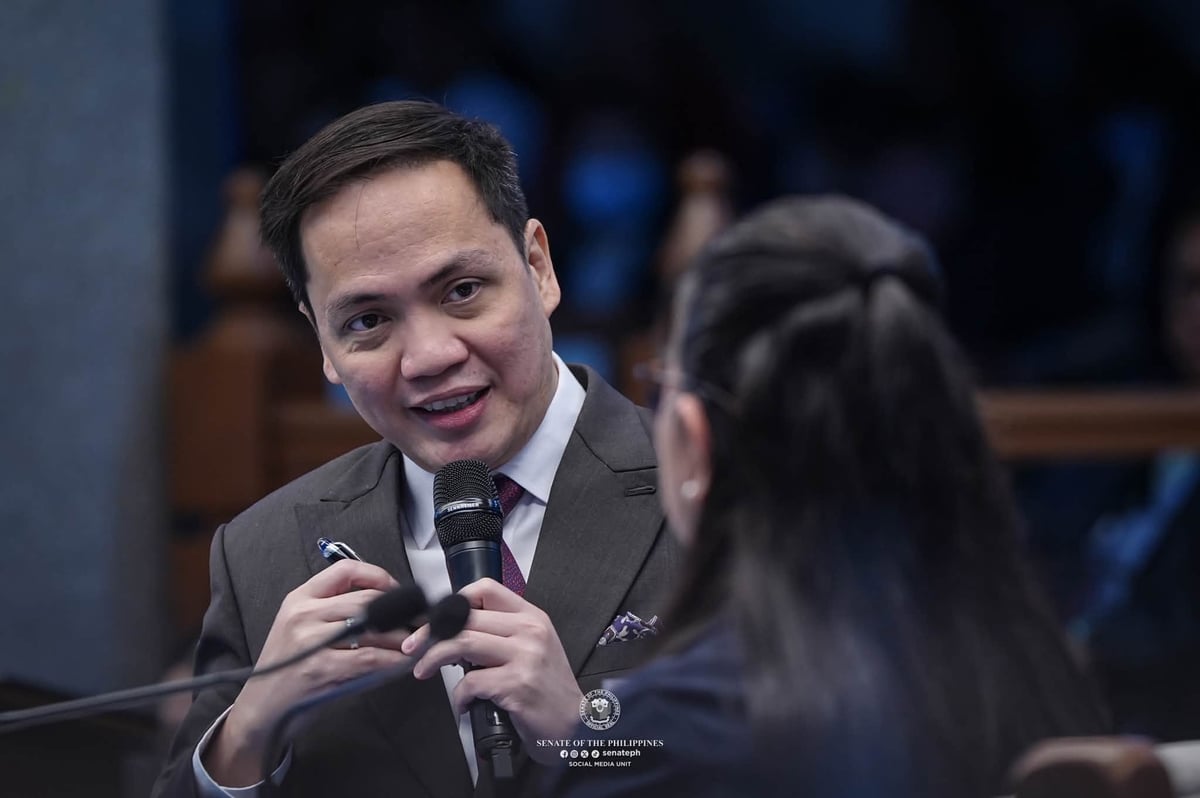
Atty. Amando Virgil Ligutan said the 1987 Philippine Constitution does not expressly state that 16 votes are required for a conviction in the impeachment trial. However, he said any attempt to challenge the impeachment court’s decision before the Supreme Court could create a constitutional issue.
Ligutan made the remarks during an interview on the sidelines of a forum hosted by the Rotary Club Manila on Thursday.
The dispute centres on the number of votes required to convict Duterte as the number of senator-judges participating in the proceedings has fallen from 24 to 21.
Two senators, Jinggoy Estrada and Rodante Marcoleta, are under arrest on plunder charges, while Senator Bato dela Rosa remains in hiding under an outstanding International Criminal Court warrant.
Article XI, Section 3(6) of the Philippine Constitution provides that conviction in an impeachment case requires the concurrence of two-thirds of all members of the Senate. With 24 senators, that amounts to 16 votes.
Ligutan said the defence could potentially seek Supreme Court intervention if the impeachment court changes the required threshold. He cautioned, however, that such a move could raise questions about whether the judiciary should review a matter assigned by the Constitution to the Senate sitting as an impeachment court.
He said the Constitution does not expressly state that an impeachment court decision cannot be brought before the Supreme Court. At the same time, he pointed to the principle of separation of powers as a possible limitation.
According to Ligutan, the Supreme Court would ultimately have to determine whether such a dispute amounts to a political question or is an issue that can be reviewed by the judiciary.
The question of the required votes has already generated different views among legal and political figures.
Senate President Win Gatchalian and impeachment court presiding officer Chiz Escudero have maintained that the 16-vote requirement remains applicable because the Senate has 24 members.
Escudero previously addressed the issue at the start of the trial on July 6, citing the Supreme Court’s 2000 ruling in Bayan v. Zamora, which affirmed that the Senate is composed of 24 members.
Impeachment court spokesperson Atty. Reginald Tongol also opposed the proposal to reduce the threshold, saying the rules should not be changed while the trial is ongoing.
Former Supreme Court Associate Justice Adolfo Azcuna, one of the framers of the 1987 Constitution, similarly argued that the impeachment court could not lower the conviction requirement unless a senator is expelled or possibly declared to have resigned.
The disagreement therefore remains focused on whether the 16-vote threshold can be changed during the ongoing impeachment proceedings and, if challenged, whether the Supreme Court would have authority to review the matter.