Politics
PRESIDENCY DEFENDS TINUBU’S FUEL PRICE STRATEGY, QUESTIONS ATIKU’S SUBSIDY PROPOSAL
The Federal Government has defended its approach to petrol pricing, arguing that Nigeria’s crude oil supply arrangements and existing financial obliga...
By Patience
The disagreement has brought renewed attention to the competing approaches being advanced to address high petrol prices, which continue to affect transportation, food distribution and the operating costs of businesses across the country.
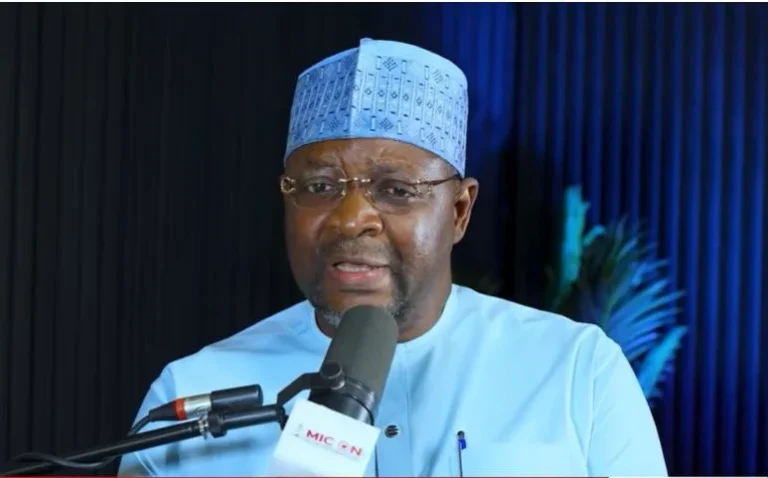
Sunday Dare, Special Adviser to President Bola Tinubu on Media and Public Communications, presented the administration’s position in a statement released on Sunday, October 11, 2026. He criticised Atiku’s proposal and defended the government’s temporary petrol discount and wider economic reforms.
PRESIDENCY SAYS CRUDE OIL PRODUCTION FIGURES DO NOT REFLECT AVAILABLE SUPPLIES
At the centre of the dispute is the quantity of crude oil the Federal Government can actually allocate to a subsidy programme.
Dare cited Finance Minister Taiwo Oyedele’s statement that Nigeria produces approximately 1.8 million barrels of crude oil daily. However, he argued that the country’s total production should not be treated as oil freely available to the government.
According to the Presidency, decades of joint venture agreements and production-sharing contracts determine how crude oil is distributed between the government and the companies involved in exploration and production.
These arrangements include provisions for recovering production costs, paying royalties and sharing profits. The administration maintains that these obligations substantially reduce the volume of crude oil the government can use without affecting existing agreements.
Dare put the quantity of unencumbered crude available to the state at fewer than 700,000 barrels per day.
The Presidency argued that any proposal to subsidise locally produced petrol through discounted crude oil must account for this limitation. It maintained that a subsidy programme based on crude oil volumes the government cannot freely access would face serious implementation difficulties.
The administration also warned that a poorly designed arrangement could create opportunities for fraudulent transactions, diversion of subsidised products and additional pressure on public finances.
These are the government's objections to Atiku's proposal. Determining the feasibility of the proposed arrangement would also require examining its precise design, eligible products, expected volumes and financing mechanism.
DOMESTIC REFINERIES ADD TO THE CRUDE OIL SUPPLY CHALLENGE
The Presidency also pointed to the crude oil requirements of Nigeria’s domestic refining industry, including the Dangote Petroleum Refinery.
It argued that local refineries require substantial and dependable supplies of crude oil, while the government must honour existing contractual obligations with international and domestic operators.
According to the administration, the volume of crude oil the state can freely allocate may be insufficient to meet all these demands while simultaneously supporting a large-scale production subsidy.
The issue has wider implications for Nigeria’s energy policy. Expanding domestic refining is intended to reduce dependence on imported petroleum products, but refineries still require reliable feedstock to maintain production.
The government’s position is that crude oil allocation must balance the needs of domestic refiners with contractual commitments and the country's revenue requirements.
Dare also rejected comparisons between crude oil allocation and agricultural commodities such as garri and cassava, arguing that crude oil operates within a more complex international market.
The Presidency further cited the United States and Qatar as examples of energy-producing countries that have moved away from broad fuel or energy subsidies. It used these comparisons to support its argument that substantial petroleum resources do not automatically make universal subsidies financially sustainable.
NNPC PETROL DISCOUNT DESCRIBED AS TEMPORARY RELIEF
The government also defended a temporary petrol discount introduced through Nigerian National Petroleum Company Limited retail outlets.
Dare said the discount was introduced to mark Nigeria’s 66th Independence anniversary and had been extended for another 30 days. He described it as a temporary response to rising international crude oil prices rather than a return to the previous petrol subsidy system.
Under the arrangement outlined by the Presidency, NNPC Retail would sell petrol at landing cost during the discount period, absorbing the immediate financial impact through its corporate balance sheet.
The government argued that this differs from the former subsidy system, under which public funds were used to cover the gap between regulated retail prices and the costs incurred by petroleum suppliers.
The administration maintains that a limited intervention of this nature can provide temporary relief without recreating the same long-term financial obligations associated with the previous system.
However, the extent of the relief depends on how the discount is implemented, how long it remains in place and the prices consumers face after the intervention ends.
GOVERNMENT DEFENDS PROPOSED ₦1,350 EX-GANTRY PRICE CEILING
Another measure highlighted by the Presidency is an interim ceiling of ₦1,350 per litre on ex-gantry petrol costs.
Ex-gantry costs refer to the price of petroleum products at the point where they leave a refinery or depot, before transportation, distribution expenses and retail margins are added.
Dare described the proposed ceiling as a mechanism for moderating sudden price increases rather than a return to comprehensive government price control.
Under the framework described by the administration, refiners and importers would absorb short-term increases above the agreed threshold and recover those costs later when market conditions improve. The Presidency also said the ceiling would be reviewed monthly using published cost audits.
The government’s argument is that a mechanism for smoothing sharp price fluctuations could provide greater predictability for consumers and transport operators.
When petrol prices rise abruptly, transport operators often face higher operating costs and may increase fares. Such increases can affect workers, traders and businesses that depend on road transportation to move people and goods.
However, the practical impact of the proposed arrangement would depend on its implementation, the reliability of the review process and whether refiners and importers can sustain the temporary absorption of additional costs.
The proposal is part of the government's broader effort to manage price volatility without formally restoring the former universal petrol subsidy.
CNG AND OTHER ENERGY MEASURES FORM PART OF THE GOVERNMENT’S RESPONSE
Beyond petrol discounts and the proposed price ceiling, the Presidency listed several other measures intended to improve energy security and reduce the cost of transportation.
These include expanding compressed natural gas (CNG) as an alternative vehicle fuel, maintaining strategic energy reserves and supporting crude oil supply arrangements for domestic refineries through the naira-for-crude initiative.
Dare said CNG could cost between 60 and 70 per cent less than petrol. That figure reflects the savings claimed by the Presidency; actual savings for individual users can vary depending on fuel prices, vehicle conversion expenses and access to refuelling infrastructure.
The administration also cited windfall taxes on energy operators that make substantial gains during periods of elevated prices. It said revenue from such measures was intended to support transport vouchers and minimum-wage assistance.
Enforcement of the 2025 tax reform laws was another measure highlighted by the government, which said it was intended to address illegal road levies affecting businesses and transportation operators.
The policies reflect the administration’s argument that energy affordability can be addressed through alternative fuels, targeted support and measures to moderate market volatility rather than a general petrol subsidy.
Their effectiveness, however, depends on implementation and whether the benefits reach the households and businesses facing the greatest pressure from fuel costs.
PRESIDENCY MAINTAINS SUBSIDY REMOVAL FREED PUBLIC FUNDS
Dare also defended the removal of the petrol subsidy and the unification of the foreign-exchange system, arguing that the reforms had reduced pressure on public finances.
He maintained that funds previously spent on petrol subsidies were now available for distribution to state and local governments through the Federation Account Allocation Committee.
The Presidency further argued that the reforms had helped eliminate fuel queues and narrow the gap between official and parallel foreign-exchange rates.
These claims form part of the administration’s justification for maintaining its current economic direction despite public concerns about fuel prices and the cost of living.
The central disagreement is whether the government's current approach offers sufficient relief or whether an alternative production-based subsidy could deliver better results without creating unsustainable financial obligations.
FUEL AFFORDABILITY REMAINS A MAJOR NATIONAL CONCERN
Petrol prices remain an important economic issue because they influence the cost of transporting passengers, distributing food, delivering goods and operating businesses.
Atiku has advocated a different approach to supporting petrol production, while the Presidency argues that crude oil availability, contractual obligations and the risks associated with the previous subsidy system make his proposal problematic.
The government has defended temporary discounts, a proposed price ceiling and alternative energy initiatives as ways to manage the pressure without returning to a broad subsidy programme.
Ultimately, the competing proposals raise questions about how relief would be financed, who would benefit, how long the measures could be sustained and what safeguards would prevent abuse.
For Nigerians dealing with high transportation and operating costs, the key issue is whether these policies will produce meaningful and lasting relief while ensuring a dependable supply of petroleum products.