Entertainment
NIGERIAN POET OGAGA IFOWODO WINS $100,000 LITERATURE PRIZE
Nigerian poet Ogaga Ifowodo has won the 2026 Nigeria Prize for Literature, receiving the $100,000 award for his poetry collection, Why Does God Need a...
By Patience
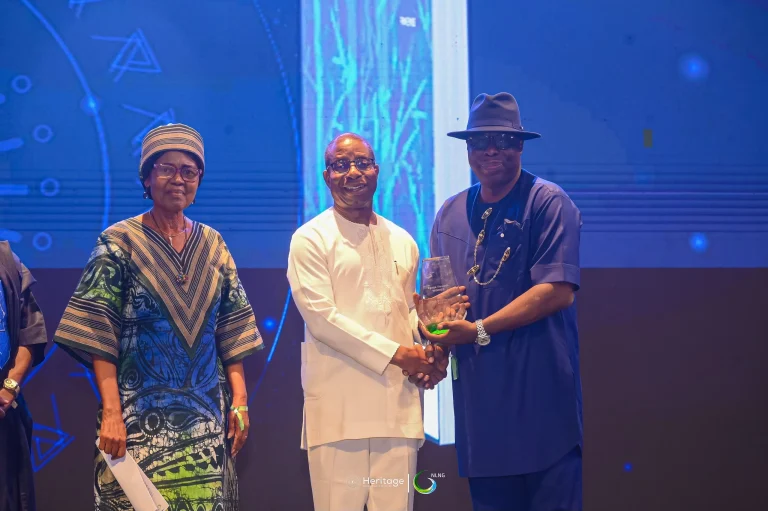
Ogaga Ifowodo wins $100,000 Nigeria Prize for Literature with poetry collection
The announcement was made at an awards ceremony organised by Nigeria LNG Limited (NLNG) in Lagos on Friday. Ifowodo's collection emerged as the winner from 223 entries submitted for this year's competition.
The ceremony also recognised achievements in creative arts, with filmmakers Peter Oghenetega Oke and Feranmi Abiola jointly winning the inaugural Nigeria Prize for Creative Arts.
POETRY COLLECTION EXPLORES VIOLENCE AND CONFLICT
Ifowodo's winning collection examines religious and political violence in Nigeria through the perspective of an imagined victim.
Professor Akachi Adimora-Ezeigbo, chair of the literature prize's advisory board, praised the work for its sensitive treatment of violence and its consequences for individuals and communities.
She also commended the shortlisted collections for their technical quality, confident writing and mature use of language.
The books explored themes including identity, belonging, national expectations, extremism, displacement and the lasting effects of conflict.
Although rooted in Nigerian experiences, the works also address issues relevant to readers beyond the country.
TWO FILMMAKERS SHARE CREATIVE ARTS AWARD
The inaugural Nigeria Prize for Creative Arts went jointly to Peter Oghenetega Oke for Beyond Tarkwa Bay and Feranmi Abiola for Mara Mania.
The award carries a combined prize value of $20,000 for the winning entries, which were selected from 98 submissions.
The organisers said the documentaries demonstrated how film can preserve cultural memory, highlight overlooked communities and present experiences that might otherwise receive little public attention.
Joel Kachi Benson, technical adviser to the creative arts prize's advisory board, praised the shortlisted documentaries for amplifying underrepresented voices and deepening public understanding of society.
The new award expands the Nigeria Prizes' recognition of creative work beyond literature and scientific innovation.
NLNG REAFFIRMS SUPPORT FOR NIGERIAN CREATIVITY
Speaking at the ceremony, NLNG Managing Director and Chief Executive Officer Adeleye Falade said the prizes were established to recognise exceptional achievement and encourage work capable of contributing to society.
He noted that the literature prize had helped Nigerian writers bring stories about identity, resilience and shared humanity to wider audiences.
Falade also described the creative arts award as an opportunity to recognise artists who preserve Nigeria's cultural heritage while presenting it in ways that connect with younger generations.
He congratulated the winners and finalists, highlighting the discipline and persistence required to achieve excellence.
SCIENCE PRIZE WINNER ANNOUNCED EARLIER
The literature and creative arts awards followed the September announcement of Mary-Brenda Akoda as the winner of the 2026 Nigeria Prize for Science and Innovation.
Akoda received the award for GenScan AI, also identified as GenMRI/C-MORE, an artificial intelligence-powered innovation designed to accelerate magnetic resonance imaging.
Her achievement marked the first time a Generation Z recipient and an individual woman had won the science prize.
The three awards form part of NLNG's broader effort to recognise Nigerian achievements in science, literature and the creative arts.
SOYINKA CALLS FOR CLOSER LINKS BETWEEN SCIENCE AND THE ARTS
Nobel laureate Professor Wole Soyinka also addressed the ceremony, highlighting imagination as a shared foundation of literature, artistic expression and scientific discovery.
He argued that imagination is not limited to the humanities, noting that scientific disciplines such as mathematics and physics also require people to explore possibilities beyond established knowledge.
Soyinka called for stronger cooperation between scientists and practitioners in the humanities, saying their combined abilities could contribute to the advancement of society.
The awards ceremony celebrated the winners while reinforcing the importance of investing in Nigerian talent, creative expression and innovation.